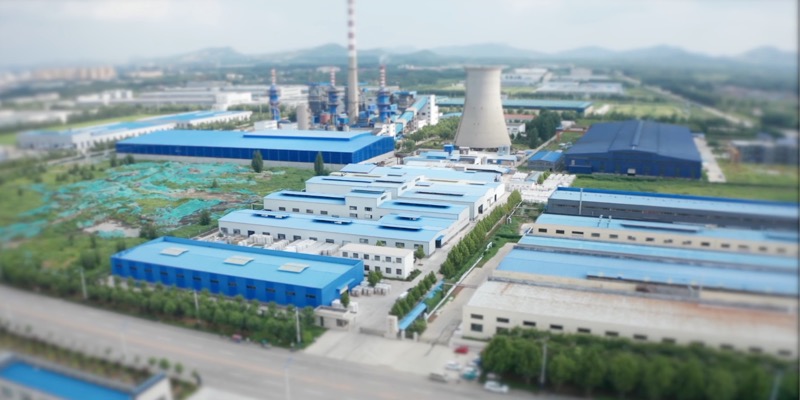
Shandong -- The Global Hub for Calcium Silicate Insulation Manufacturing
Shandong Province in eastern China is the world's largest concentration of calcium silicate insulation manufacturers, a position it has held since the industry took shape in the 1980s. The province combines abundant raw material reserves, a specialized industrial workforce, and direct access to Qingdao port, which handled approximately 30.9 million TEU in 2024. For international buyers sourcing calcium silicate insulation, understanding this regional cluster explains why Shandong dominates global supply and how to navigate the manufacturing landscape.
Why Shandong Dominates Calcium Silicate Production
Verified Manufacturing Data: Mingfa Insulation — established 1991, joint venture with China Building Materials Academy. 108,000 m² facility, ~20 national patents, ISO 9001:2015 certified. Annual capacity: 50,000+ tonnes. Full company profile
Shandong Province became the center of calcium silicate manufacturing in China through a combination of geography, geology, and industrial policy. The province sits on significant limestone and silica deposits, the two primary raw materials for calcium silicate production. Having raw material sources within the province reduces inbound logistics costs and supply chain risk compared to manufacturers that must truck raw materials across provincial boundaries. This geological advantage is not unique to Shandong, but what distinguishes the province is that it also has the industrial infrastructure and export logistics to convert those raw materials into products that reach international markets efficiently.
Standards: [1] ASTM C533-17(2023); [2] EN 14306:2015+A1:2018; [3] GB/T 10699. Certifications
The province's industrial heritage in refractory and insulation materials dates to the 1980s, when China's rapid industrialization created demand for high-temperature insulation in cement, steel, glass, and petrochemical plants. Shandong's provincial government supported the development of this industry through investment in technical institutes and industrial parks. The result was a self-reinforcing cycle: more manufacturers attracted more raw material suppliers and equipment makers, which made it easier for new manufacturers to set up, which deepened the talent pool of engineers and production workers with calcium silicate-specific experience. Today, multiple technical institutes in Shandong feed graduates directly into the insulation industry, giving manufacturers access to workers who understand autoclave operation, gel reaction chemistry, and quality control testing without needing to be trained from scratch.
Qingdao port is the logistics engine that makes the Shandong cluster viable for export. Qingdao ranked fourth among Chinese container ports in 2024 with approximately 30.9 million TEU throughput, an 8.8 percent increase from the previous year. The port operates nearly 240 shipping routes connecting to more than 700 ports in over 180 countries. For calcium silicate manufacturers in Laizhou and Zibo, the port is approximately two hours by truck. This proximity means that a container loaded at the factory gate in the morning can be at the port terminal by afternoon, with vessel departure within days. Compared to manufacturers in inland provinces who face one to three days of trucking to reach a port, Shandong manufacturers have a structural logistics cost advantage that directly benefits international buyers.
Major Manufacturing Clusters in Shandong
The Laizhou area on the coast of Laizhou Bay in the Jiaodong Peninsula developed early in the calcium silicate industry's history, with manufacturers established here in the early 1990s when the technology was still new in China. Laizhou's coastal location provides convenient access to both Qingdao port to the south and Yantai port to the northeast, giving manufacturers export routing flexibility. The area's calcium silicate manufacturers generally specialize specifically in this material rather than producing a broad range of insulation types, reflecting the technical depth required to master calcium silicate's gel reaction chemistry, autoclave curing cycles, and precision drying processes.
The Zibo area, located inland in central Shandong, is historically the largest concentration of refractory and insulation manufacturers in the province. Zibo has been a production base for ceramics and industrial refractories since the 1970s, predating the calcium silicate industry. This long industrial history means the Zibo cluster has deep supplier networks for kiln furniture, refractory raw materials, and high-temperature processing equipment. The Zibo cluster tends to include manufacturers with more diversified product lines spanning calcium silicate, ceramic fiber, and insulating bricks, serving a broad range of industrial applications. The area's long history also means it has a particularly deep pool of experienced furnace operators and production engineers, which helps explain the cluster's sustained growth.
The broader Jiaodong Peninsula region, which includes areas around Yantai, has attracted additional manufacturers more recently, drawn by the existing supplier ecosystem, skilled workforce, and port infrastructure that the older clusters established. Across these manufacturing zones, collective annual production capacity runs into the hundreds of thousands of cubic meters. Shandong manufacturers together produce the full range of calcium silicate products including boards, pipe sections, and custom shapes, with service temperature ratings from 650 degrees Celsius to 1050 degrees Celsius and densities from 170 to 1000 kilograms per cubic meter. All manufacturers serving export markets now produce asbestos-free products, with certifications that typically include ISO 9001 and compliance with ASTM C533 and EN 13501-1.
What Sets Shandong Manufacturers Apart
The scale of Shandong's calcium silicate industry creates advantages that individual manufacturers in other regions cannot match. Collective annual capacity in the hundreds of thousands of cubic meters means that even large project orders can be fulfilled without extended lead times. The density of the supplier ecosystem means that equipment maintenance parts, spare autoclave components, and laboratory consumables are available locally rather than requiring long-distance shipping. Raw material suppliers deliver to multiple factories in the same area, which keeps their pricing competitive and their delivery schedules reliable. This industrial density translates into operational efficiency and cost control that gets passed through to export pricing.
Specialization is a defining characteristic of the Shandong cluster. Some manufacturers have built their entire business around calcium silicate for 20 or 30 years, accumulating production data, formulation refinements, and application engineering knowledge that diversified manufacturers may not match. This is particularly relevant for calcium silicate because the material's performance depends on precise control of the gel reaction, autoclave curing cycle, and drying process. These are not generic manufacturing skills. They are material-specific competencies developed over decades of focused work. The depth of this specialized knowledge, concentrated within a single province, is one reason why Shandong has maintained its position as the global leader in calcium silicate production.
Export experience separates Shandong manufacturers from their counterparts in other Chinese provinces. Shandong factories have been exporting calcium silicate insulation for more than 20 years. Their export teams are familiar with international documentation requirements, including certificates of origin, material test reports per EN 10204 Type 3.1, packing lists in multiple languages, and compliance documentation for specific country regulations. Many Shandong manufacturers have English-speaking sales staff who can handle technical inquiries without translation delays. The cost structure of Shandong production also compares favorably to European manufacturers. Lower labor costs, lower energy costs, and the cluster's efficient raw material supply chain combine to produce calcium silicate insulation that meets the same ASTM and EN standards at a significantly lower delivered cost.
Quality Considerations When Sourcing from Shandong
Not all manufacturers in Shandong are equal. For every established factory with three decades of production history, there are trading companies that present themselves as manufacturers, and newer entrants that may not yet have the experience to produce consistent quality across the full temperature range. The distinction between a manufacturer and a trading company matters because a trading company cannot control the production process. It can only buy from whatever factory offers the lowest price at the time, which means product consistency across multiple shipments is not guaranteed. A buyer who places a trial order through a trading company and receives acceptable product may get different quality from a different factory on the next order.
ISO 9001 certification adoption varies across the cluster. Established manufacturers serving export markets typically hold current ISO 9001 certifications from recognized bodies. Smaller manufacturers focused on the domestic Chinese market may not have pursued international quality management certification, which does not necessarily mean their products are inferior, but it does mean there is no externally audited quality system. For any project that requires material certification, working with an ISO 9001 certified manufacturer is the safer choice. Factory audits remain the most reliable way to evaluate a Shandong manufacturer. A physical or video walkthrough should cover the autoclave bay, raw material storage, QC laboratory, finished product warehouse, and sample retention area. The condition of the autoclaves, the organization of the QC laboratory, and the labeling and storage of retained samples tell you more about a manufacturer's quality discipline than any certificate.
Third-party testing provides an independent check on product quality. Buyers should request test reports from ISO 17025 accredited laboratories for thermal conductivity, compressive strength, linear shrinkage at rated temperature, and density. Manufacturer-generated test data has some value but should be verified independently before placing a production order. Several international testing and inspection companies maintain offices in Qingdao and can conduct factory audits and product testing on behalf of overseas buyers. Using these services adds cost to the procurement process but provides assurance that the products shipped match the specifications ordered. For larger projects, on-site inspection during production and before shipment is a standard practice that many Shandong manufacturers are accustomed to accommodating.
Logistics Advantage -- Qingdao Port
Qingdao port is one of the world's most significant container ports, ranking fifth globally and fourth in China by container throughput. In 2024, the port handled approximately 30.9 million TEU, an increase of 8.8 percent year over year. The port has the highest route density among northern Chinese ports, operating nearly 240 shipping routes to more than 700 ports in over 180 countries. For calcium silicate insulation exporters in Shandong, this route density means that containers rarely wait long for a vessel. Multiple carriers compete on most major trade lanes, which keeps ocean freight rates competitive compared to ports with fewer service options.
Transit times from Qingdao are well-established and predictable. Southeast Asian destinations including Singapore, Vietnam, Thailand, and Indonesia typically see transit times of 8 to 15 days. Middle East destinations including Jebel Ali, Dammam, and Jeddah typically take 20 to 25 days. European destinations including Rotterdam, Antwerp, and Hamburg take 25 to 35 days depending on the route and whether transshipment is required. North American West Coast destinations including Los Angeles and Vancouver take approximately 15 to 20 days, while East Coast destinations including New York and Savannah take 25 to 30 days via Panama Canal routing. These are ocean transit times only and do not include port handling, customs clearance, or inland delivery at the destination.
Container loading optimization is a practical consideration that affects the delivered cost of calcium silicate insulation. The rigid nature of calcium silicate boards and pipe sections means that how they are stacked, palletized, and loaded into a container directly affects how much product fits in each shipment. Experienced Shandong manufacturers have developed loading patterns that maximize cubic meter utilization while preventing product damage during transit. A 40-foot high-cube container typically accommodates 55 to 60 cubic meters of calcium silicate boards when optimally loaded. Manufacturers with less export experience may achieve noticeably lower utilization. When comparing quotations from different Shandong manufacturers, ask for the estimated cubic meter capacity per container and confirm that the loading plan has been verified with actual shipments.
Frequently Asked Questions
Why are most calcium silicate manufacturers located in Shandong?
Shandong Province became the center of calcium silicate manufacturing for several reinforcing reasons. The province has significant deposits of limestone and silica, the two primary raw materials. Shandong developed a refractory and insulation materials industry starting in the 1980s, creating a pool of skilled workers and technical expertise. Qingdao port, handling approximately 30.9 million TEU in 2024, provides direct shipping routes to over 700 ports in 180 countries with the highest route density among northern Chinese ports. The concentration of manufacturers has created a complete supplier ecosystem with raw material suppliers, equipment manufacturers, and testing laboratories all located within the province, reducing costs and lead times across the entire cluster.
How do I verify a Shandong manufacturer is legitimate?
Check the manufacturer's business license through China's National Enterprise Credit Information Publicity System to confirm registration details including registered capital, establishment date, and business scope. Request a live video walkthrough of the production floor showing autoclaves, filter presses, drying kilns, and the QC laboratory. Ask for third-party test reports from ISO 17025 accredited laboratories. Verify ISO 9001 certification directly with the issuing certification body. Request references from customers in your region and contact them directly. A manufacturer that cannot provide verifiable documentation or refuses a video walkthrough of active production equipment should be treated with caution.
What is the typical lead time from Shandong factories?
Standard production lead time from Shandong calcium silicate factories is 15 to 30 days from order confirmation, depending on order volume and product specifications. Inland transport from factory to Qingdao port takes approximately half a day to one day for Laizhou-area factories and two to three hours for factories closer to the port. Ocean transit times vary by destination: Southeast Asia 8 to 15 days, Middle East 20 to 25 days, Europe 25 to 35 days, North America West Coast 15 to 20 days, East Coast 25 to 30 days. Total door-to-door time including production, inland transport, customs clearance, ocean transit, and destination handling typically ranges from 35 to 60 days. Peak shipping seasons around Chinese New Year can extend lead times by two to four weeks.
Further Reading
- About Mingfa -- company history since 1991, factory infrastructure, and production capabilities
- Factory and Quality Control -- detailed production equipment list, QC system, and batch traceability
- How to Evaluate Calcium Silicate Manufacturers -- buyer's guide covering certifications, audits, and red flags
- How to Import Calcium Silicate Insulation from China -- logistics, Incoterms, and customs documentation
- Country Supplier Pages: UAE · Saudi Arabia · India · Russia · Indonesia · Vietnam · Turkey · Egypt · Bangladesh · Nigeria · Dubai
- Contact Mingfa -- technical inquiries, factory visit arrangements, and quotation requests