Calcium Silicate Product Range , 650°C to 1100°C
Every calcium silicate insulation board Mingfa manufactures falls into one of three temperature-defined categories. Understanding these categories helps you match the right calcium silicate product range to your operating conditions.
Standard Temperature
650°C
Calcium Silicate Pipe Sections & Molded Parts
Pre-formed pipe insulation sections and custom molded shapes for service up to 650°C. Standard calcium silicate board types for general industrial pipework, tanks, and vessels. Low thermal conductivity with excellent dimensional stability.
High Temperature
1000°C - 1100°C
LG-Standard & LG-High Temperature Series
Our flagship calcium silicate insulation boards for rotary kilns, furnaces, and high-temperature process equipment. LG-Standard (HCS series) handles 1000°C; LG-High Temperature (SCS series) reaches 1100°C , exceeding ASTM C533 Type II requirements at 927°C.
High-Density & Refractory
300-900 kg/m³
Composite Bricks & Refractory Boards
For applications where calcium silicate insulation board must carry structural loads. MF-HD high-strength boards, MFDJ composite bricks (aluminum industry), MFGB steel ladle bricks, and MFBL glass furnace bricks. Density ranges from 300 to 900 kg/m³ with compressive strength reaching 13 MPa.
Calcium Silicate Board Types , Quick Comparison
Compare calcium silicate insulation specifications at a glance. Find the right calcium silicate insulation board for your application.
| Product Type | Series / Model | Max Temp | Density (kg/m³) | Compressive Strength (MPa) | Thermal Conductivity (W/m·K) | Best For |
|---|---|---|---|---|---|---|
| Standard Board | LG-Standard HCS-17 | 1000°C | 170 ±10% | , | ≤0.058 @100°C | General kiln backing, vessel insulation |
| Standard Board | LG-Standard HCS-20 | 1000°C | 200 ±10% | , | ≤0.062 @100°C | Furnace wall insulation, ductwork |
| Standard Board | LG-Standard HCS-23 | 1000°C | 230 ±10% | , | ≤0.064 @100°C | Heavy industrial pipe lagging |
| Standard Board | LG-Standard HCS-25 | 1000°C | 250 ±10% | , | ≤0.065 @100°C | Rotary kiln shell insulation |
| High-Temp Board | LG-High Temp SCS-25 | 1100°C | 250 ±10% | , | ≤0.065 @100°C | Calcining furnaces, extreme heat zones |
| Fireproof Board | GF-1100 | 1100°C | 230-300 | , | ≤0.072 @100°C | Fire doors, passive fire protection (A1 rated) |
| High-Strength Board | MF-HD | 1000°C | 800-850 | ≥8.0 | ≤0.18 @1000°C | Steel ladle backing, structural insulation |
| Composite Brick (Al) | MFDJ-30Q / MFDJ-40 | 1000°C | 300-400 | ≥2.0 - 2.5 | ≤0.11 @900°C | Electrolytic aluminum reduction cells |
| Steel Ladle Brick | MFGB-40 / MFGB-90 | 1000°C | 400-900 | ≥2.0 - 13.0 | ≤0.08-0.20 @1000°C | Steel ladle permanent lining |
| Glass Furnace Brick | MFBL-60 | 1000°C | 600 | ≥6.0 | ≤0.12 @1000°C | Glass furnace bottom, sidewall, crown |
| High-Purity Board | LG-High Purity | 1000°C | 170-250 | , | Consult datasheet | Non-ferrous metal casting (non-stick to Al) |
| Pipe Section | Calcium Silicate Pipe | 650°C | 170-250 | , | ≤0.058 @100°C | Steam pipes, hot oil lines, process piping |
How to Choose the Right Calcium Silicate Insulation
Selecting a calcium silicate insulation board does not need to be complicated. Follow these three steps to narrow down your options , or contact our technical team for a personalized recommendation.
Define Your Application
What are you insulating? The application dictates the product form factor and density class.
- Rotary kilns / furnaces → LG-Standard or LG-High Temp board
- Pipes & vessels → Calcium silicate pipe sections or standard boards
- Fire doors / barriers → GF-1100 fireproof board (A1 non-combustible)
- Structural / load-bearing → MF-HD or composite brick series
- Molten metal contact → LG-High Purity (non-stick to aluminum)
Match Your Temperature
Your peak operating temperature determines which calcium silicate board types are suitable.
- Up to 650°C → Standard calcium silicate pipe sections, molded parts
- 650°C - 1000°C → LG-Standard HCS series boards
- 1000°C - 1100°C → LG-High Temp SCS series or GF-1100
- Always add a safety margin , select a board rated at least 50-100°C above your peak operating temperature.
Select Density & Strength
Higher density means higher strength but also higher thermal conductivity. Balance these tradeoffs.
- 170-250 kg/m³ → Maximum thermal efficiency (lowest conductivity), non-load-bearing
- 300-600 kg/m³ → Moderate strength for light structural loads
- 800-900 kg/m³ → High compressive strength for load-bearing applications
- Unsure? We provide free technical consultation to help you find the optimal density for your specific requirements.
Calcium Silicate Insulation Products by Industry
Mingfa organizes its calcium silicate product range by application industry. Each industry has specific product grades and performance characteristics. Select your industry below to view the complete product calcium silicate board types and technical data.
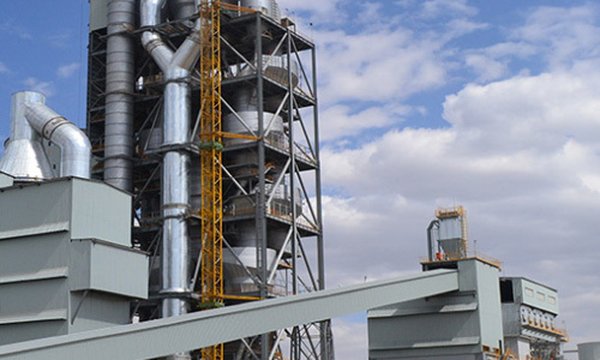 1000-1100°C
Cement Industry
LG-Standard (1000°C) and LG-High Temperature (1100°C) for rotary kilns. Hard Silica-Calcium Composite Brick. Insulation Coating.
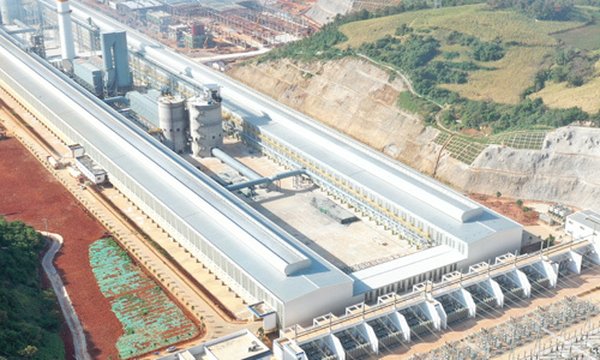 1000°C
Electrolytic Aluminum
High-temperature calcium silicate for reduction cells. MFDJ series composite brick (300-400 kg/m³, 1000°C).
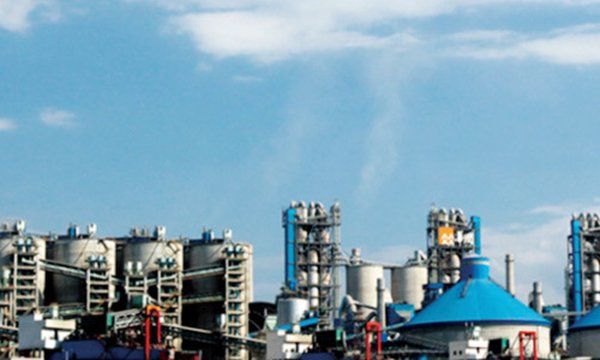 Custom
Carbon Industry
Hard Silica-Calcium Composite Brick for carbon baking furnaces. Stable physical and chemical properties.
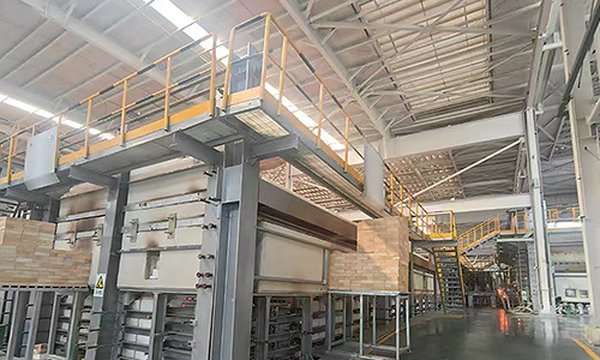 300-850 kg/m³
Glass Industry
MFBL series (300-850 kg/m³) for furnace bottom, sidewall, crown. LG-High Temp (1100°C).
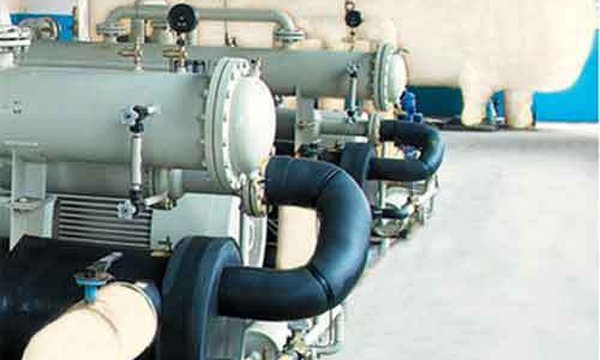 800-900 kg/m³
Steel Ladle
LG-High Strength Board (MF-HD) 800-850 kg/m³. MFGB brick up to 900 kg/m³, ≥13 MPa.
 A1 Rated
Fire Protection
GF-1100 Super Calcium Silicate Fireproof Board. A1 non-combustible. Fireproof door core material.
 Non-Stick
Casting Industry
LG-High Purity Board. Non-stick aluminum. For non-ferrous metal casting.
 Paste
PasteInsulation Coating
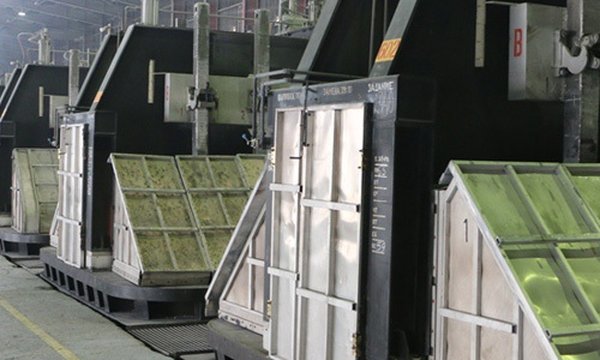
Paste form. Small drying shrinkage. Good thermal stability. For irregular surfaces.
B2B Ordering Information
As a trusted calcium silicate insulation supplier and China calcium silicate factory with over three decades of manufacturing experience, Mingfa makes procurement straightforward , whether you need a sample or a container load.
Minimum Order Quantity
Flexible MOQ for standard calcium silicate board sizes
- Standard boards: 1 pallet (approx. 50-100 pcs)
- Custom sizes / OEM: 1 m³ minimum
- Trial orders & samples: Contact us for special arrangements
Lead Times & Logistics
Typical production and delivery windows
- Standard products: 15-20 days
- Custom / OEM orders: 20-30 days
- Sea freight: FOB Qingdao / CIF to your port
- Air freight: Available for urgent orders
Free Sample Policy
Test before you commit
- Free A4-sized samples of standard calcium silicate insulation boards
- Custom-sized samples at production cost
- Material test reports (MSDS, thermal conductivity, compressive strength) included
- Freight: customer covers shipping; freight costs are deducted from your first order
- Request: lzmfgr@163.com
Detailed Technical Specifications
Complete technical data for our calcium silicate insulation product lines. For full datasheets including thermal conductivity curves across temperature ranges, contact our engineering team.
| Product Series | Model | Density (kg/m³) | Max Temp | Compressive (MPa) | Thermal Cond. (W/m·K) | Typical Application |
|---|---|---|---|---|---|---|
| LG-Standard | HCS-17 | 170 ±10% | 1000°C | , | ≤0.058 @100°C | Rotary kiln backing insulation |
| LG-Standard | HCS-20 | 200 ±10% | 1000°C | , | ≤0.062 @100°C | Furnace wall & ductwork insulation |
| LG-Standard | HCS-23 | 230 ±10% | 1000°C | , | ≤0.064 @100°C | Industrial pipe & vessel insulation |
| LG-Standard | HCS-25 | 250 ±10% | 1000°C | , | ≤0.065 @100°C | Heavy-duty kiln shell insulation |
| LG-High Temp | SCS-25 | 250 ±10% | 1100°C | , | ≤0.065 @100°C | Calcining furnaces, extreme thermal environments |
| Composite Brick (Al) | MFDJ-30Q | 300 ±10% | 1000°C | ≥2.0 | ≤0.11 @900°C | Aluminum reduction cell sidewall |
| Composite Brick (Al) | MFDJ-40 | 400 ±10% | 1000°C | ≥2.5 | ≤0.11 @900°C | Aluminum reduction cell bottom |
| Steel Ladle Brick | MFGB-40 | 400 ±10% | 1000°C | ≥2.0 | ≤0.08 @1000°C | Steel ladle safety lining |
| Steel Ladle Brick | MFGB-90 | 900 ±10% | 1000°C | ≥13 | ≤0.20 @1000°C | Steel ladle permanent lining (high-load) |
| Glass Industry Brick | MFBL-60 | 600 ±10% | 1000°C | ≥6 | ≤0.12 @1000°C | Glass furnace bottom, sidewall, crown |
What Determines Insulation Board Price — Key Factors
Insulation board price varies with technical specifications and order parameters. Understanding these factors helps procurement teams budget accurately and optimize specifications for cost-effectiveness.
Density Grade
Density is the primary cost driver — higher density requires more raw material per board. Standard grades (170-270 kg/m³) are most economical; high-density grades (450-900 kg/m³) for steel ladle and structural applications use more lime and silica per cubic meter. Density selection guide
Temperature Rating
Higher temperature ratings (1000-1100°C) require advanced xonotlite crystallization and specialized raw materials. Grade 650 (Type I) products are most cost-effective for moderate-temperature applications. LG-High Temp (1100°C) formulations involve additional processing for thermal stability at extreme temperatures.
Order Volume
Container-load quantities benefit from production batch efficiency and consolidated shipping. Full container loads (20ft/40ft) optimize per-unit freight cost. Mixed specifications within a container allow flexible inventory planning. Bulk ordering guide
Custom Processing
Cut-to-size, routed edges, drilled holes, radius-curved profiles, and OEM-branded packaging add processing steps. Standard board sizes (1000×500mm, 600×300mm) ship fastest. Complex shapes and tight tolerances require additional production time. OEM capabilities
Minimum Order Quantity — Flexible Options for Every Project Scale
Standard Boards
Minimum 1 pallet per thickness and density specification. Multiple specifications can share a container. Common pallet quantities: 50-200 boards depending on thickness.
Custom & OEM Orders
Minimum 1 cubic meter for custom dimensions, special density grades, or OEM-branded products. Rapid prototyping available for new specifications.
Trial Orders & Samples
Free A4-sized samples for initial evaluation. Small trial orders available for in-situ testing before full production commitment. Freight costs for samples are deducted from the first production order.
Compare Calcium Silicate with Other Insulation Materials
Not sure which insulation material fits your application? Our engineering comparison guides help you evaluate calcium silicate against other common industrial insulation materials across temperature range, compressive strength, moisture resistance, and cost.
Bulk Supply — Industrial Insulation Board Wholesale & Factory Pricing
As a direct calcium silicate board manufacturer in China with 50,000+ tonnes annual capacity, Mingfa supplies thermal insulation board in bulk volumes to industrial projects, distributors, and OEM partners worldwide. Our industrial insulation board pricing reflects factory-direct economics — no trading company margins, no intermediary markups.
Bulk Insulation Board Supply
Standard bulk insulation board orders ship in full container loads (20ft/40ft). Minimum 1 pallet per thickness and density combination. For large-scale industrial projects, we hold safety stock of common specifications for accelerated dispatch. Learn more about bulk ordering
Insulation Board Price Factors
Insulation board price is determined by density grade (170-900 kg/m³), temperature rating (650°C-1100°C), board dimensions, order volume, and any custom processing requirements. Larger quantities benefit from economies of scale in production and shipping. Read our pricing guide
Insulation Board Wholesale Export
Insulation board wholesale shipments depart from Qingdao port to 20+ countries. We handle export documentation, fumigation certificates, and customs clearance support. Regular container shipments to Middle East, Southeast Asia, Africa, and South Asia markets.
Industrial Insulation Products Range
Our industrial insulation products cover the full thermal management spectrum: boards (flat and curved profiles), pipe sections (split and pre-formed), high-temperature panels for furnace linings, fireproof boards (A1 rated), composite bricks for aluminum and steel, and trowelable coatings. All manufactured to ASTM C533 and EN 13501-1 standards.
Product Selection Decision Framework
Mingfa's product range spans boards, pipe sections, fireproof panels, bricks, and coatings. The selection framework below walks through the four questions that determine the correct product and grade, in the order they matter.
| Step | Question | Answer Drives | Typical Result |
|---|---|---|---|
| 1 | What is the peak operating temperature? | Grade family (650°C / 1000°C / 1100°C) | >800°C → LG-Standard or LG-High Temp; <650°C → standard pipe sections |
| 2 | What geometry is being insulated? | Form factor (board / pipe section / custom shape / coating) | Pipes → half-shells; flat surfaces → board; irregular → coating or custom |
| 3 | Does the insulation carry mechanical load? | Density class (170-270 / 300-600 / 800-900 kg/m³) | Ladle backup → MF-HD; kiln backing → LG-Standard |
| 4 | What environment is it installed in? | Fire rating, moisture treatment, chemical resistance | Marine → A60 + waterproof; fire door → GF-1100 |
Working through these four questions in order eliminates most wrong specifications. Temperature first, because it is non-negotiable: a board selected below the peak temperature fails regardless of every other consideration. Geometry second, because it decides the product form and therefore the installation method. Load third, because density is the trade-off axis between thermal performance and mechanical strength. Environment last, because fire rating and moisture treatment are additive requirements, not substitutes.
Where the four answers conflict, the higher-cost requirement wins. A load-bearing zone that also sees 1050°C, for example, needs the 1100°C LG-High Temp grade in a high-density variant, even though high density raises thermal conductivity — the load requirement cannot be engineered away. Mingfa's engineering team applies this same framework to every inquiry and will confirm the recommended product, grade, density, and thickness in a written specification before you order.
OEM & Custom Manufacturing Capabilities
Beyond standard catalog products, Mingfa manufactures to customer specification: custom dimensions, custom densities, private labeling, and proprietary formulations under NDA. The OEM workflow below is the same for a distributor branding a standard board or an equipment manufacturer specifying a one-off composite brick.
1. Specification Lock
Target density, temperature rating, dimensions, tolerance, and packaging are agreed in writing. For proprietary formulations, an NDA is executed before formulation samples are released.
2. Sample & Test
A production-route sample is tested to the agreed specification (density, compressive/flexural strength, thermal conductivity, shrinkage). Customer-side testing is welcome; third-party lab testing can be arranged.
3. Trial Batch & Scale
A trial batch validates production repeatability. Once approved, volume production runs on the same autoclave lines with batch certificates issued per lot, and private-label packaging is applied.
OEM packaging: customer-branded cartons and pallet labels, neutral packaging for distributor programs, and language-specific documentation. Typical OEM lead time: 20-30 working days after sample approval for standard formulations; custom formulations add formulation and trial time. See the OEM / ODM page for the full capability statement and MOQ terms.
Quality Control & Batch Traceability
Calcium silicate performance is determined in the autoclave, and batch-to-batch consistency is what separates a reliable supplier from a commodity trader. Mingfa's QC protocol tests every production batch, not periodic samples.
| Property | Test Method | Frequency | Certificate Content |
|---|---|---|---|
| Density | ASTM C302 / C303 | Every batch | Nominal ±10% |
| Compressive strength | ASTM C165 | Every batch | Value per grade |
| Flexural strength | ASTM C203 | Every batch | Value per grade |
| Thermal conductivity | ASTM C518 | Every batch | λ at 100/200/400°C mean |
| Linear shrinkage | ASTM C356 | Every batch | 24 h at rated temperature |
| Moisture content | ASTM C533 | Every batch | ≤4% |
Each batch certificate carries the batch number that also appears on the pallet labels, so the test data is traceable to the specific material delivered. Raw material lot numbers used in the production run are recorded against the batch for full backward traceability. This is the documentation chain that project quality auditors and insurance assessors increasingly require, and it is included with every shipment at no charge. Third-party inspection by SGS, Bureau Veritas, or a customer-nominated agency can be added where the project specification requires it.
Industry Application Matrix
The same calcium silicate chemistry serves very different duties across industries. This matrix maps each major industry to the recommended product line, the performance requirement that drives the choice, and the typical specification.
| Industry | Product Line | Driving Requirement | Typical Spec |
|---|---|---|---|
| Cement & Lime | LG-Standard / LG-High Temp board | Dimensional stability behind rotary kiln refractory | HCS-23/25, 230-270 kg/m³, 1000-1100°C |
| Steel | MF-HD board, MFGB brick | Compressive strength under ladle refractory load | 800-900 kg/m³, ≥8-13 MPa |
| Aluminum | MFDJ composite brick, LG-High Purity | Chemical stability in fluoride atmosphere, non-stick | 300-400 kg/m³, 1000°C |
| Glass | MFBL brick, LG-High Temp | Low iron content for glass quality | 600 kg/m³, Fe&sub2O&sub3 <0.4% |
| Petrochemical | LG-Standard board, pipe sections | Consistent thermal performance, CUI resistance | 200-250 kg/m³, 1000°C |
| Power Generation | LG-Standard board | Non-settling, long-term stability in boilers | 200-250 kg/m³, 1000°C |
| Fire Protection | GF-1100 fire board | A1 non-combustibility, endothermic behavior | 350-450 kg/m³, 1100°C |
| Carbon / Graphite | Composite brick | Stability in reducing atmosphere | 400-600 kg/m³, 1000°C |
| Marine & Offshore | GF-1100, waterproof board | A60 fire divisions, moisture resistance | 350-450 kg/m³, water-repellent |
| Non-Ferrous Casting | LG-High Purity | Non-stick contact with molten aluminum | 230-270 kg/m³, Fe&sub2O&sub3 <0.4% |
Two patterns recur across the matrix. First, temperature rating and density are set by the application's duty, not by preference: a rotary kiln backing at 1050°C peak selects LG-High Temp regardless of whether the buyer would prefer a cheaper grade. Second, the industries with the most demanding chemical environments — aluminum, glass, carbon — all resolve to specialized grades (MFDJ, MFBL, composite brick) rather than the standard board, which is why Mingfa maintains the full grade family rather than a single product. When a project spans multiple industries (a cement plant with steam pipework and a fire-protected electrical room), a single supplier covering the full range simplifies procurement and documentation.
Insulation Thickness & Thermal Design Basics
Selecting the board is half the engineering; the other half is thickness. The thermal design method below is the one used in most industrial insulation specifications and is the basis of our online calculator.
For a flat surface or pipe, steady-state heat flow through an insulation layer follows q = λ × ΔT / t, where q is heat flux (W/m²), λ is thermal conductivity at the mean temperature (W/m·K), ΔT is the temperature difference across the layer (K), and t is thickness (m). Because λ rises with temperature, the calculation is iterative: you assume a thickness, estimate the mean temperature across the layer, read λ at that mean, compute the heat flux, and adjust until the result meets the design target (maximum heat loss or maximum cold-face temperature).
Worked example: a furnace wall with hot face 650°C and cold face 150°C. Mean temperature (650+150)/2 = 400°C. LG-Standard grade: λ = 0.056 + 0.00011 × 400 = 0.100 W/m·K. For a 50mm layer, R = t/λ = 0.050/0.100 = 0.50 m²·K/W, and q = 500/0.50 = 1,000 W/m². Halving the layer to 25mm doubles the heat loss to 2,000 W/m²; doubling to 100mm halves it to 500 W/m². The relationship is linear in thickness only because the mean temperature (and therefore λ) changes with thickness — at very high temperatures the non-linearity of λ matters and the iteration is required.
Economic thickness: the optimum thickness is not the maximum — it balances insulation cost against energy saved over the project life. Industry practice targets the thickness where the marginal cost of another layer equals the marginal energy saving, commonly 50-150mm for high-temperature process equipment. Our insulation thickness calculator implements the ASTM C680 method and returns a thickness recommendation for your pipe or surface temperature inputs.
Shipping, Packaging & Container Loading
Calcium silicate boards are heavy, rigid, and moisture-sensitive in transit. Export packaging and container loading follow a documented standard at Mingfa so the material arrives in specification.
Packaging Standard
Boards stacked on ISPM 15 fumigated hardwood pallets, wrapped in 0.15mm polyethylene sheeting (waterproof, not dust-only), 3mm cardboard corner protectors on all edges, PET steel strapping in two directions at two levels per pallet. Each pallet labeled with grade, dimensions, quantity, batch number, and production date.
Container Loading
A 20GP carries approximately 28 pallets of standard-density board (about 25 tons, weight-limited); a 40HQ roughly doubles volume but is weight-limited to about 27 tons, so it only adds capacity for low-density grades. Loading plan: three rows along the container length, dunnage airbags between rows, base-layer lashing. Pre-sealing photographs provided.
Transit & Incoterms
FOB Qingdao, CIF destination port, or EXW Laizhou. Qingdao is the primary export gateway with sailings to every major industrial region; transit 18-22 days to the Middle East, 28-32 to Europe, 7-10 to Southeast Asia. Full export documentation (invoice, packing list, B/L, certificate of origin, batch certificates) ships with every order.
Why Calcium Silicate Over Alternative Insulation Materials
Every insulation material occupies a niche defined by temperature limit, mechanical strength, moisture behavior, and cost. Calcium silicate's niche is the high-temperature, load-bearing, long-service-life segment — and the comparison below shows where each material wins and loses.
| Material | Temperature Limit | Compressive Strength | Moisture Behavior | Calcium Silicate Wins When |
|---|---|---|---|---|
| Calcium Silicate | 1000-1100°C | ≥2.0 MPa (up to 13) | Hygroscopic, dries with recovery | Baseline: high temp + load + long life |
| Mineral Wool | ~650°C (rock wool) | Low, soft | Absorbs, loses performance | Above 650°C, or where compression matters |
| Ceramic Fiber | 1260-1430°C | Very low, fragile | Sheds water | Load is absent and cost of higher temp rating matters |
| Perlite Block | ~650°C | Moderate | Absorbs | Budget projects below 650°C without mechanical duty |
| Microporous / Aerogel | 900-1000°C | Low | Sensitive | Space-constrained applications (thinnest profile) |
| Fiberglass | ~230-260°C | Low | Absorbs, CUI risk | Above ~250°C; outdoor or load-bearing service |
The practical rule: below 250°C in dry indoor service, cheaper materials (fiberglass, mineral wool) perform adequately. Between 250-650°C, the field narrows to calcium silicate and mineral wool, with calcium silicate winning wherever moisture or compression is a factor. Above 650°C, calcium silicate and ceramic fiber are the viable rigid insulations — calcium silicate when the insulation must carry load or survive mechanical abuse (kiln backing, ladle backup), ceramic fiber when weight is critical and load is absent. Full material-by-material comparisons are on our insulation comparison hub, with seven detailed head-to-head pages.
Frequently Asked Questions
Can calcium silicate board be used outdoors?
Standard calcium silicate is hygroscopic and must be protected from weather — for outdoor service specify the water-repellent treated grade and cover with a proper weather jacket or cladding. The treated grade resists water absorption while maintaining A1 fire classification. If the installation will be exposed to rain before cladding is applied, protect the board during the installation window.
How does calcium silicate compare to ceramic fiber on cost?
At comparable temperature ratings, calcium silicate board typically costs more per cubic meter than ceramic fiber blanket but offers much higher compressive strength and rigidity, so it can replace structural framing in some assemblies. Installed cost depends on the system: where the insulation must carry load or resist abuse, calcium silicate often delivers lower installed cost; where weight and thermal performance dominate with no load, ceramic fiber wins. Our engineering team can compare installed cost for your specific configuration.
What is the shelf life of calcium silicate insulation?
Stored correctly — off the ground, dry, protected from weather, in original packaging — calcium silicate board has effectively unlimited shelf life. The xonotlite crystal structure does not degrade with age; moisture absorption is the only failure mode, and even wetted board recovers fully after gradual drying (ramp ≤50°C/hour to 150°C). Keep stacks below six pallets high to avoid crushing lower layers.
Environmental Profile & Lifecycle Energy
Calcium silicate is one of the few insulation materials whose manufacturing energy is fully recovered within the first weeks of service, which makes it a defensible choice in sustainability assessments for industrial projects.
The material is manufactured from lime and silica sand — both naturally occurring minerals — through autoclave synthesis at about 190°C, one of the lowest-energy conversion processes in the insulation industry. Industry lifecycle data (Insulation Outlook, NIA) puts the manufacturing energy for a linear foot of calcium silicate pipe insulation near 154,000 BTU, against an energy saving of roughly 575 times that amount in the first year of service and a ratio exceeding 11,000:1 over a 20-year equipment life. The material itself is inert after service: it contains no fibers that require special handling, no organics that decompose, and can be recycled as fill or disposed of as mineral waste. For projects compiling environmental product declarations, Mingfa provides manufacturing energy inputs and material composition data on request. See our sustainability page for the full lifecycle discussion.
For buyers evaluating calcium silicate for the first time, the practical summary is: temperature rating and density are non-negotiable engineering inputs set by your process; form factor (board, pipe section, brick, or coating) is set by geometry; and the grade family (LG-Standard, LG-High Temp, MF-HD, MFDJ, MFGB, MFBL, GF-1100, LG-High Purity) covers the full industrial spectrum from steam pipework at 170 kg/m³ to ladle backup at 900 kg/m³. All grades are manufactured and tested in the same Laizhou facility, so mixed-grade orders carry consistent documentation and quality standards.
The full range, with specifications and ordering terms, is documented on this page and the linked product pages; our engineering team confirms every recommendation against your operating conditions before quotation.
Why Source from a Calcium Silicate Board Manufacturer in China
Mingfa is not a trading company , we are a specialized China calcium silicate factory with in-house R&D, production, and quality control since 1991.
In-House R&D
~20 patents, dedicated laboratory, continuous formulation improvement since 1991
Certified Quality
ISO 9001, EN 13501-1 A1, ASTM C533 , every batch tested before shipment
OEM / Custom
Custom dimensions, densities, and formulations. Private labeling and packaging available
Technical Support
Application engineering, installation guidance, on-site technical consultation available
Thermal Insulation Coating
Trowelable calcium silicate-based insulating coating for irregular surfaces, valves, and fittings
View DetailsCalcium Silicate Insulation Brick
Hard silica-calcium composite bricks for kiln car decks, furnace backup, and tunnel kilns
View DetailsCustom Shaped Parts
CNC machined valve covers, flange insulation, pipe half-shells, and special shapes from your CAD drawings, ±0.5mm
View Details