Calcium Silicate Insulation Supplier in Egypt
Egypt is one of Africa's largest industrial economies, with significant cement production capacity, a growing petrochemical sector, and iron and steel manufacturing. The country's high-temperature insulation market covers cement, petrochemical, and iron and steel applications, all of which use calcium silicate products. Mingfa supplies calcium silicate insulation to Egyptian industrial buyers with sea freight from Qingdao through the Suez Canal to Alexandria, Port Said, and Damietta.
1. Industrial Insulation in Egypt
Key Takeaways
- Shipping: Qingdao to Alexandria 40-45 days, Port Said ~35 days via Suez Canal; one of Africa's best-served shipping corridors from China
- Specs: ASTM C533 compliant, EN 13501-1 A1, EN 10204 Type 3.1 certificates; products for cement kilns, petrochemical piping, and steel ladle backup
- Market benefit: 30-50% below European equivalents; Chinese sourcing rising as Egyptian buyers seek to reduce material costs
- Mingfa advantage: CCPIT-authenticated documentation for Egyptian customs; existing Middle East logistics experience with Suez Canal corridor
Mingfa Manufacturing Note: All calcium silicate products shipped from our 108,000 m² Shandong facility (50,000+ tonnes annual capacity) undergo batch testing per ASTM C533 before export. Test certificates included with every shipment. Quality assurance details
Egypt's industrial base is concentrated along the Nile Delta and the Suez Canal corridor. Key sectors driving calcium silicate demand:
Standards: [1] ASTM C533-17(2023); [2] EN 14306:2015+A1:2018; [3] GB/T 10699. Certifications
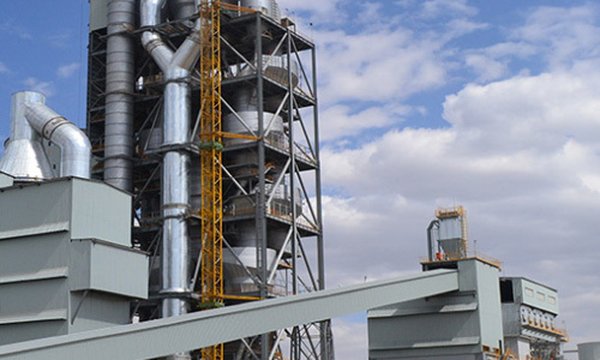
- Cement. Egypt is one of Africa's largest cement producers, with annual production capacity exceeding 80 million tonnes. Major producers include Heidelberg Materials Egypt (formerly Suez Cement), Lafarge Egypt, CEMEX Egypt, and Arabian Cement. Cement plants require calcium silicate for kiln backup insulation, preheater external insulation, and ductwork. The Egyptian cement industry has excess capacity in recent years, but kilns continue to operate and require ongoing maintenance materials including insulation for relines.
- Petrochemical. Egypt has a growing petrochemical sector concentrated in the Suez Canal Economic Zone (Ain Sokhna) and Alexandria. Facilities include the Egyptian Refining Company (ERC) refinery, MIDOR refinery expansion, and various petrochemical plants. These projects use calcium silicate pipe sections for steam and process piping insulation, board for equipment and heater backup, and low-chloride grades for stainless steel applications.
- Iron and steel. Egypt's steel industry is led by Ezz Steel (the largest steel producer in the Middle East and North Africa), Beshay Steel, and Suez Steel. Calcium silicate is used for ladle and tundish backup insulation, reheat furnace lining backup, and EAF roof insulation. The 230 kg/m³ standard board is the most common specification.
2. Why Source from Mingfa for Egypt Projects
- Suez Canal route. Qingdao to Egyptian Mediterranean ports (Alexandria, Port Said, Damietta) via the Suez Canal takes 35-45 days. This is a well-established shipping route with frequent sailings from multiple carriers. The Suez Canal transit adds approximately 1-2 days to the voyage compared to direct Mediterranean destinations.
- Cost vs European suppliers. Mingfa calcium silicate is priced 30-50% below European equivalents. Egyptian industrial buyers have traditionally sourced insulation from European manufacturers (Promat, Skamol) due to proximity and established trade relationships, but Chinese sourcing is increasing as Egyptian companies seek to reduce material costs.
- Documentation support. Egyptian customs requires certificate of origin (typically authenticated by the Chinese Chamber of Commerce) and detailed product documentation. Mingfa provides full documentation packages including authenticated certificates, material test reports (EN 10204 Type 3.1), and packing lists that meet Egyptian customs requirements.
- Limitations to note: Mingfa has limited direct project experience in Egypt compared to Middle Eastern markets. The company has shipped to Egypt, but the volume of Egypt-specific business is smaller than for Gulf-region markets. Egyptian buyers should request samples and review documentation before placing production orders. Mingfa does not have Egyptian standards (ES) certification; buyers should confirm that ASTM C533 / EN 14306 compliance is accepted by their project or end-user.
3. Product Recommendations for Egyptian Industries
| Industry | Typical Product | Temperature Range | Notes |
|---|---|---|---|
| Cement (kiln backup) | LG-Standard Board (HCS-23) | 200-650°C | 50 mm typical for Egyptian cement kilns |
| Cement (preheater/ducts) | LG-Standard Board (HCS-23) | 250-500°C | 50-75 mm; external application |
| Steel (ladle backup) | LG-Standard Board (HCS-23) | 200-400°C | 25-50 mm; standard grade |
| Petrochemical (pipe) | HCS-P Pipe Sections | 150-650°C | Standard for CS; low-chloride for SS pipe |
| Petrochemical (equipment) | LG-Standard Board (HCS-23) | 200-500°C | 50-75 mm board |
4. Shipping to Egypt
- Transit time: Qingdao to Alexandria takes 40-45 days. Qingdao to Port Said takes approximately 35 days. Qingdao to Damietta takes 38-43 days. Transit times can extend by 5-10 days during Suez Canal congestion periods. The Suez Canal expansion (completed 2015) has generally improved transit reliability, but periodic delays can still occur.
- Main ports: Alexandria (El-Dekheila container terminal) is the primary container port serving the Nile Delta industrial region including cement plants and steel mills. Port Said East is a major transshipment hub and serves the Suez Canal Economic Zone. Damietta serves the northern Delta region.
- Container options: 20GP and 40HQ containers. Egyptian ports have good container handling infrastructure at the main terminals. For project sites in Upper Egypt (Sohag, Assiut, Aswan), factor in additional inland transport time of 1-3 days from Alexandria.
- Documentation: Certificate of origin authenticated by the China Council for the Promotion of International Trade (CCPIT). Commercial invoice and packing list. Bill of lading. Material test certificates. Egyptian import regulations may require additional documentation; confirm with your Egyptian customs broker before shipment.
- Import duties and taxes: Confirm the applicable HS code (typically 6806.90) and duty rate with your Egyptian customs broker. Egypt applies VAT on imported industrial materials; ensure this cost is included in your project budget.
5. Related Projects
Mingfa has supplied calcium silicate insulation to industrial projects in the Middle East and North Africa region. The company has experience with Suez Canal shipping routes through its existing Middle East business (Saudi Arabia, UAE), so the logistics corridor to Egypt is operationally familiar. Mingfa has shipped calcium silicate to Egypt for cement industry applications, though the volume of Egypt business is relatively modest compared to the company's total export volume.
Egyptian buyers are encouraged to request product samples (A4-size board samples shipped by air courier, delivery to Cairo/Alexandria within 5-7 days) and review the documentation package before placing an order. Mingfa can also arrange a video factory inspection to demonstrate production and quality control processes.
6. How to Order
- Inquiry process: Email lzmfgr@163.com with product requirements and preferred Egyptian port. Quotation provided within 2-3 working days.
- MOQ: One 20GP container. Mixed products in a single container are possible.
- Payment terms: 30% T/T deposit, 70% before shipment. L/C at sight available for orders above 50,000 USD.
- Lead time: 15-30 days production plus 35-45 days sea transit, total approximately 50-75 days from order to arrival at Egyptian port. Add 5-10 days for customs clearance and inland transport to project site.
- Samples: A4 size samples of standard board grades can be shipped by DHL/FedEx for evaluation, delivery to Cairo/Alexandria within 5-7 working days.
- Africa regional overview — see all countries in this region
Egyptian Market Requirements: Standards, Documentation & Compliance
Egyptian industrial projects reference international standards for insulation materials, but the acceptance regime — import licensing, documentation, and third-party verification — has its own local requirements that buyers should confirm at tender stage.
Standards Referenced
Egyptian oil and gas projects (EGPC, EGAS) and industrial specifications typically cite ASTM standards (ASTM C533 for calcium silicate). Construction and building projects reference the Egyptian Fire Code, which aligns with international practice on reaction-to-fire classification. Confirm at tender whether ASTM C533, EN 14306, or both are cited, and ensure supplier certificates use the same test methods.
Import Documentation
Egypt requires the standard commercial set: invoice, packing list, bill of lading, and certificate of origin. Imported goods are subject to Egypt's import registration system; consignees need a valid importer code, and some product categories require conformity assessment. Confirm with your Egyptian forwarder whether HS 6806.90.0000 material needs a conformity certificate for your consignment.
Third-Party Verification
For project acceptance, material is often verified by accredited labs (e.g., SGS Egypt, Intertek). Pre-shipment inspection at the factory is the economical path: SGS or Bureau Veritas can witness batch testing and issue a PSI report satisfying most project specs without destination-side retesting. Sample batches for independent lab testing are welcomed before production orders.
Mingfa's documentation package is structured to support all three gates: standards-aligned test certificates, PSI coordination, and vendor registration documentation. The engineering team answers specification questions with the standard and test method cited, so the tender document can be completed without ambiguity.
Product Applications Across Egyptian Industries
Egyptian industrial demand for calcium silicate insulation concentrates in four sectors. The application detail below helps buyers match the right grade to their specific plant duty.
Oil & Gas / Petrochemical
Refinery and gas plant piping at 250-650°C specifies calcium silicate pipe sections and board for fired heater casings, reformer piping, and hot oil lines. Egypt's refining expansion program and the Zohr gas field development drive continuous specification activity. Pipe sections 1/2"-24" NPS cover the range from instrument lines to main steam headers, with CUI protection specifications on outdoor lines.
Power Generation
Egypt's power sector — the largest in Africa — uses calcium silicate for HRSG casing insulation in combined-cycle plants, steam pipework, and boiler casing. The 1000°C rating covers HRSG internals; standard board grades serve the balance. Long service life matters where units run baseload and re-insulation downtime is expensive.
Cement & Construction Materials
Egypt is one of the largest cement producers in Africa and the Middle East. Rotary kiln backing insulation (LG-Standard HCS-23/25, 230-270 kg/m³) is the core specification, with preheater and clinker cooler insulation on the same material family. Plant expansion and maintenance cycles create a steady specification stream.
Marine & Suez Canal Economy
Shipyards along the Suez Canal corridor and the Red Sea specify waterproof-treated calcium silicate for A60 divisions, accommodation insulation, and exhaust insulation. Moisture-repellent treatment is essential in the marine atmosphere, and IMO-recognized non-combustibility certification is required for A-class divisions.
The unifying specification advice across all four sectors: state the standard (ASTM C533 / EN 14306), the grade, and the density, and require batch certificates matching the delivered pallets. That combination eliminates the substitution risk that project teams most often encounter with third-party supply.
Shipping & Logistics to Egypt
Egypt imports through two primary corridors: the Mediterranean ports (Alexandria, Dekheila, Damietta) and the Red Sea ports (Ain Sokhna, Safaga). Route selection affects transit time, clearance, and cost.
| Route | Transit | Notes |
|---|---|---|
| Qingdao → Alexandria / Dekheila | 25-35 days | Mediterranean gateway for Delta industrial projects; weekly services via transshipment hubs |
| Qingdao → Ain Sokhna (Red Sea) | 20-28 days | Closest port to the Suez Canal industrial zone and New Administrative Capital projects |
| Qingdao → Damietta | 25-32 days | Alternative Mediterranean gateway, often used for containerized cargo |
| Air freight (urgent) | 3-5 days | Samples and small urgent consignments; cost per m³ roughly 10x sea freight |
Container configuration: 20GP (~25 t payload, ~28 pallets of standard board) is the workhorse because calcium silicate hits the weight limit before volume; 40HQ adds volume only for low-density grades. Mixed loads of boards, pipe sections, and shaped parts are arranged with shaped parts top-stowed. LCL is available for small orders via the Qingdao container freight station, with the standard warning about additional handling steps.
Duty and clearance: Egyptian import duty on mineral insulation products varies by tariff line and by origin agreements; confirm the applicable rate with your customs broker before committing to landed-cost calculations. The documentation package — invoice, packing list, bill of lading, certificate of origin, and batch certificates — is assembled to support clearance, and our team coordinates with your forwarder on requirements before sailing.
FAQ — Egypt Supply & Delivery
What MOQ applies to Egypt orders?
Standard board and pipe sections: 1 pallet per size/density combination. Custom shapes and OEM: 1 cubic meter. Container-load quantities (20GP minimum for high-density material) achieve the best per-unit pricing. Trial orders of 2-3 pallets via LCL are accepted for first-time validation, and sample batches for independent laboratory testing are provided free of charge (freight at buyer's cost, credited against the first order).
How are payments structured for Egyptian buyers?
Standard terms are 30% T/T deposit on order confirmation with 70% against the bill of lading copy for sea freight. Letters of credit at sight are accepted for orders above USD 50,000; L/C is a common requirement in Egyptian public-sector procurement, and our team is experienced with L/C documentation for Egyptian banks. All quotations are FOB Qingdao, CIF Alexandria/Ain Sokhna, or EXW Laizhou.
Can you support vendor registration with EGPC or Egyptian operators?
Yes. Mingfa supplies the documentation set used in operator vendor registration: ISO 9001:2015 certificate (verifiable), batch test certificates per ASTM C533, EN 13501-1 A1 classification, EN 10204 Type 3.1 certificates where specified, and reference projects in the region under confidentiality agreements. Pre-shipment inspection by SGS or Bureau Veritas can be arranged to satisfy project-specific QA requirements.
Project Lifecycle: From Inquiry to Site Delivery in Egypt
The procurement path for calcium silicate insulation in Egypt runs from technical specification through vendor qualification to container delivery at the port. This section walks the full lifecycle with the timelines and documents that apply at each stage.
| Stage | Typical Timeline | Key Actions | Documents Exchanged |
|---|---|---|---|
| 1. Specification | Week 1 | Define temperature, geometry, density, standards (ASTM C533 / EN 14306) | Technical data sheets, sample certificates |
| 2. Vendor qualification | Week 1-2 | ISO 9001 verification, batch test review, reference projects | ISO certificate, batch CoA, project references |
| 3. Quotation & PO | Week 2 | FOB/CIF pricing, Incoterm selection, payment terms (30/70 TT or L/C) | Commercial quotation, PI, purchase order |
| 4. Production | Week 3-5 | Batch production, QC testing, PSI if required | Batch certificates, PSI report (SGS/BV) |
| 5. Shipping | Week 6-8 | Container loading, booking to Alexandria/Ain Sokhna, B/L issue | Packing list, B/L, certificate of origin |
| 6. Clearance & delivery | Week 9-10 | Egyptian customs, import registration checks, transport to site | Customs declaration, delivery note |
Total cycle time from confirmed order to arrival at an Egyptian port is typically 8-10 weeks for standard products, including the 25-35 day ocean transit. For repeat orders of established specifications, production slots and container bookings can be pre-arranged to compress the cycle to 6-7 weeks. Rush air freight is available for small urgent consignments (samples, repair quantities) at substantially higher cost per cubic meter.
Comparing Local Stock vs China-Direct Supply
Egyptian buyers have three sourcing routes for calcium silicate insulation: local Egyptian trading stock, regional GCC or Turkish distributors, and direct from the Chinese manufacturer. The comparison below is the one procurement teams should run before committing.
| Dimension | Egypt Local Stock | Regional Distributor | China Direct (Mingfa) |
|---|---|---|---|
| Lead time | Immediate to days | 3-5 weeks | 8-10 weeks (incl. transit) |
| Price level | Highest (holding cost + margin) | Medium | Factory-direct, lowest |
| Batch traceability | Often limited to purchase records | Depends on distributor | Full: batch CoA matching pallet labels |
| Custom / OEM capability | Limited to stock sizes | Limited | Full: CNC shapes, custom densities, OEM |
| Technical support | Sales-level | Distributor-level | Manufacturer engineering team |
| Best when | Emergency quantities, small runs | Medium orders, no factory relationship | Project volumes, custom specs, OEM programs |
The pragmatic pattern in the Egyptian market: local stock for emergencies and small trial quantities; China-direct for project volumes and any custom specification, with stock held in-country by the buyer or a preferred forwarder to smooth lead time on repeat projects. Many Egyptian buyers run this hybrid — a China-direct framework agreement with a local stock arrangement for call-offs.
Why Source from Mingfa for Egypt Projects
Egyptian projects share the procurement challenges of other large infrastructure markets: specification discipline, documentation completeness, and supply reliability. Mingfa's factory-direct model addresses each of these directly.
True Manufacturer Status
Mingfa is a specialized calcium silicate manufacturer operating since 1991 in Laizhou, Shandong — not a trading company. The distinction matters in Egypt procurement: a manufacturer produces batch test certificates from its own laboratory, holds inventory for rapid dispatch, accepts technical responsibility for product performance, and can show customs export records under its own name for vendor qualification.
Standards-Aligned Certification
All grades are manufactured and tested to ASTM C533, EN 14306, and GB/T 10699, with EN 13501-1 A1 fire classification. Batch certificates carry measured values per the cited test methods — the documentation that Egyptian project quality teams and insurance assessors review before acceptance.
Engineering Support
Specification questions receive written answers with the standard and test method cited. The engineering team supports grade selection, thickness calculation, CUI specification review, and pre-shipment inspection coordination — the technical layer that trading intermediaries cannot provide.
For Egyptian buyers, the practical value of manufacturer-direct supply shows up in three places: the documentation set satisfies vendor registration without gaps, batch traceability survives project audit, and specification questions are answered by the people who make the product, not a sales desk. Sample batches for independent laboratory testing are welcomed before production orders, and the documentation set used for the sample order scales directly to container-load project deliveries.
Thermal & Mechanical Specification Data for Egyptian Projects
When writing the specification for Egyptian projects, the reference values below cover the properties that appear most often in tender documents. They are representative of production grades; exact values for the specified grade and batch are issued in the technical data sheet and batch certificate.
| Property | LG-Standard | LG-High Temp | MF-HD High Density | Test Method |
|---|---|---|---|---|
| Max service temperature | 1000°C | 1100°C | 1000°C | ASTM C533 |
| Bulk density | 170-250 kg/m³ | 250-270 kg/m³ | 800-850 kg/m³ | ASTM C302 |
| Compressive strength | ≥2.0 MPa | ≥2.5 MPa | ≥13 MPa | ASTM C165 |
| Thermal conductivity @ 100°C | ≤0.058 W/m·K | ≤0.065 W/m·K | ≤0.095 W/m·K | ASTM C518 |
| Thermal conductivity @ 400°C | ≤0.088 W/m·K | ≤0.095 W/m·K | ≤0.150 W/m·K | ASTM C518 |
| Linear shrinkage (24 h) | ≤1.5% @ 1000°C | ≤1.5% @ 1100°C | ≤1.5% @ 1000°C | ASTM C356 |
| Fire classification | A1 | A1 | A1 | EN 13501-1 |
| Flame spread / smoke | 0 / 0 | 0 / 0 | 0 / 0 | ASTM E84 |
Standard sizes: boards 600×300, 1000×500, 1220×2440 mm with thickness 20-120 mm; pipe sections 1/2" to 24" NPS with insulation thickness 25-150 mm; custom shapes machined to drawing (DXF/DWG/STEP) with ±0.5 mm accuracy. Dimensional tolerance ±1 mm on length/width, ±0.5 mm on thickness for boards ≤50 mm. When the specification cites values outside these ranges, confirm with the technical team before tender submission — the grade range is the full industrial spectrum, but not every value combination is produced as stock.
Industrial Insulation Market Context in Egypt
Understanding the demand structure helps buyers position their specification correctly. Egypt's industrial insulation consumption is driven by four macro factors that shape the material mix.
Energy Sector Investment
The Zohr gas field development and the national grid expansion program sustain demand for high-temperature insulation in gas processing, power generation, and transmission infrastructure. Combined-cycle additions use calcium silicate in HRSG and steam systems where service temperatures exceed the range of conventional fiber insulations.
Cement & Building Materials
Egypt's cement industry is among the largest in Africa and the Middle East, with kiln modernization programs in progress across multiple plants. Rotary kiln backing insulation and preheater insulation are steady specification items, and plant energy-efficiency programs favor materials with documented thermal performance.
Suez Canal & Marine Corridor
The Suez Canal economic zone and Red Sea shipbuilding activity create demand for marine-grade fire protection insulation — A60 divisions, accommodation insulation, and exhaust systems. The marine specification path adds moisture-repellent treatment and IMO-recognized certification requirements.
Passive Fire Protection
Building and infrastructure projects — including the New Administrative Capital development — specify non-combustible fire protection board for fire door cores, structural steel cladding, and service shafts. The A1 classification under EN 13501-1 is the common specification language for this sector.
Across these sectors, the common thread is specification discipline: Egyptian project teams increasingly require standards-aligned documentation and batch traceability, which is the procurement environment factory-direct manufacturers are structured to serve. The material mix is consistent with global practice — calcium silicate for high-temperature and load-bearing duty, with fiber insulations limited to their temperature range.
Related Projects & Regional References
Mingfa has supplied calcium silicate insulation for industrial projects across the Middle East and North Africa, providing reference installations in comparable operational environments to Egypt's.
Regional project history includes cement industry projects in the broader Middle East region, including kiln and preheater insulation for plant expansions, and petrochemical plant pipe insulation in the UAE. These reference projects are reviewed under confidentiality agreements with prospective buyers during vendor qualification. For Egypt specifically, project references are available on request, and sample batches can be dispatched for independent laboratory testing at accredited facilities before production orders.
The projects page shows the portfolio across industries; the kiln retrofit case study documents a measured heat-loss improvement program that illustrates the engineering support available for Egyptian plant teams planning insulation upgrades.
Procurement Checklist for Egyptian Buyers
The checklist below consolidates the practical steps for a first direct import of calcium silicate insulation into Egypt, based on the recurring questions from buyers in this market.
- Confirm the specification basis: ASTM C533 (Type I/II) or EN 14306, with the test method cited for each property.
- Verify manufacturer status: batch certificates from the supplier's own laboratory, customs export records under its own name, live or recorded factory tour.
- Lock the Incoterm: FOB Qingdao for buyers managing freight, CIF Alexandria/Ain Sokhna for single-responsibility delivery, EXW only with a China-based forwarder.
- Confirm import documentation: commercial invoice, packing list, bill of lading, certificate of origin, importer code, and any conformity assessment required for HS 6806.90.0000.
- Plan the payment structure: 30/70 T/T with B/L copy, or L/C at sight for public-sector procurement and orders above USD 50,000.
- Arrange third-party verification: pre-shipment inspection by SGS/Bureau Veritas where the project spec requires it; sample batches for local lab testing before production.
- Budget the logistics window: 25-35 days ocean transit plus production time — order 8-10 weeks ahead of the site need date for standard products.
- Require batch traceability: batch certificates matching delivered pallet labels, retained for the project quality file.
Working through these eight points at order stage eliminates the delays and substitutions that surface at clearance and site acceptance. Mingfa's team walks each point with the buyer during quotation, so the first order establishes the documentation baseline that repeat orders inherit.
Technical Support for Specification and Installation
Beyond supply, Egyptian project teams draw on Mingfa's technical support for the specification and installation phases. The support available is summarized below so buyers know what to request.
Specification Review
Tender specifications are reviewed against the grade range: temperature rating, density, thickness, fire classification, and the cited test methods are checked for internal consistency and manufacturability. Confirmed spec statements are returned in writing for insertion into the tender document.
Thickness & Thermal Design
For pipe and vessel insulation, the engineering team runs the thickness calculation (ASTM C680 method) for your operating conditions and target surface temperature, and provides the thermal conductivity values at the mean temperature for your design basis. The online thickness calculator covers standard cases directly.
Installation Guidance
Installation manuals and site guidance cover cutting, fitting, banding, jacketing, and acceptance checks. Remote training sessions for site teams can be arranged, and installation questions receive written answers with the applicable standard cited. The installation guides in the technical library cover the common configurations.
All technical support is provided without charge as part of the supply relationship. The same engineering team that answers specification questions supports the site team during installation, so the documentation chain and the technical advice stay consistent from tender to acceptance.
For buyers planning an Egypt supply relationship, the practical first step is a specification call: share your operating temperatures, product forms, and target delivery port, and receive a written recommendation covering grade, density, packaging, and landed-cost structure. Sample batches for independent testing can be dispatched within days of the call, and the documentation set used for the sample order scales directly to container-load project deliveries.
Mingfa exports calcium silicate insulation to 70+ countries with full documentation in English and response within one business day.
Quotations are issued FOB Qingdao unless CIF requested.
Payment terms and Incoterms per order.
Contact us for current pricing and availability.
All quotations include batch certificates.
Free A4 samples available.
Request a Quotation for Egypt Delivery
Tell us your product requirements and preferred Egyptian port. We provide CIF Alexandria/Port Said quotations with full documentation for Egyptian customs clearance.
Contact Mingfa Sales TeamAbout the Author — Mingfa Insulation Technical Team
Mingfa Insulation engineering team — 34+ years calcium silicate R&D and manufacturing since 1991. ~20 national patents. lzmfgr@163.com