Factory & Quality
Tour the production infrastructure behind Mingfa's calcium silicate insulation. Two manufacturing bases, 108,000 m², 50,000+ tonnes annual capacity, ISO 9001 certified quality systems. Located in Laizhou, Shandong — 2 hours from Qingdao port.
1. Production Infrastructure
Key Takeaways
- Two Production Bases: Laizhou headquarters + Sishui satellite facility — total 108,000 m², 50,000+ tonnes annual capacity, 560 skilled employees under one ISO 9001 quality system.
- Purpose-Built Equipment: 15 reaction kettles, 8 × 400-ton filter presses, 9 × 62m tunnel kilns, 3 × 2.5 MPa autoclaves — every machine purpose-built for calcium silicate, not repurposed from other product lines.
- Full Traceability: Every batch tested against ASTM standards; retained samples kept 24 months. Batch certificates with actual measured values accompany every shipment.
- Mingfa Differentiator: 2 hours from Qingdao port — one of China's top 10 container ports. Factory audits and live video tours available for buyer verification before order commitment.
Verified Manufacturing Data: Mingfa Insulation — established 1991, joint venture with China Building Materials Academy. 108,000 m² facility, ~20 national patents, ISO 9001:2015 certified. Annual capacity: 50,000+ tonnes. Full company profile
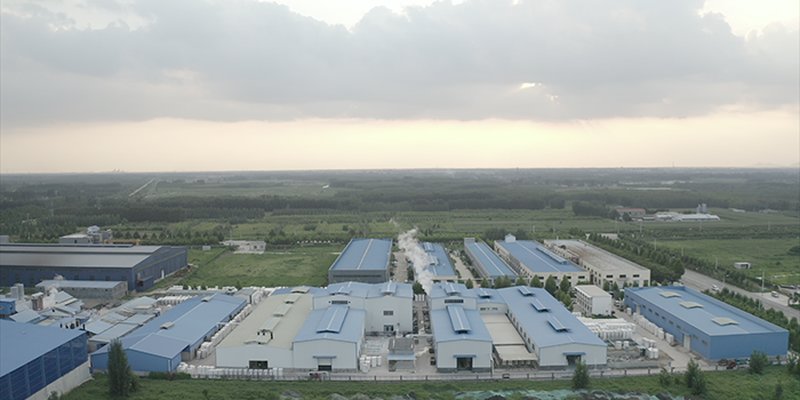
Mingfa Insulation operates two production bases in Shandong Province, China , a strategic location at the heart of the world's primary calcium silicate manufacturing cluster. With 108,000 m² of total facility area, 50,000+ tonnes annual production capacity, 560 employees, and fixed assets of RMB 46.24 million, Mingfa is one of the largest dedicated calcium silicate insulation factories in China.
Standards: [1] ASTM C533-17(2023); [2] EN 14306:2015+A1:2018; [3] GB/T 10699. Certifications
Dedicated calcium silicate production lines run across both facilities: automated batching systems precisely meter raw materials; hydraulic molding presses shape boards, pipes, and custom profiles; industrial autoclaves perform steam curing under controlled pressure and temperature; and CNC precision trimming lines achieve final dimensional tolerances. Every stage is purpose-built for calcium silicate — this is not a general insulation factory repurposing equipment from other product lines.
Laizhou Headquarters
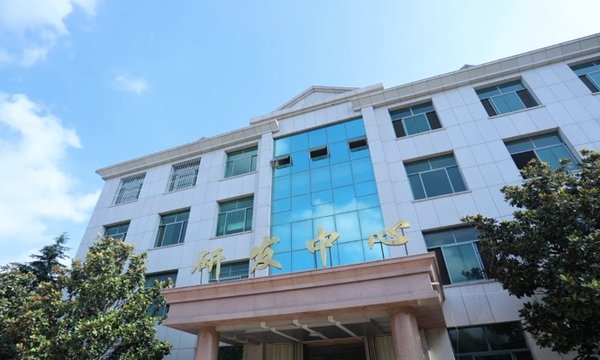
The primary production base is located in Laizhou City on the Jiaodong Peninsula, Shandong Province. This is the original factory established in 1991, housing the main production lines, R&D center, quality laboratory, and export logistics operations. The facility is just a two-hour drive from Qingdao port , one of China's top 10 container ports , enabling efficient global shipping.
Sishui Facility (Surabaya Mingfa Jinyu)
The second production base in Sishui County, Jining City, provides additional manufacturing capacity for large-volume orders and is a satellite production center. Both facilities operate under the same ISO 9001-2015 quality management system, ensuring consistent product quality regardless of which plant fulfills an order.
2. Key Manufacturing Equipment
Mingfa's calcium silicate board production factory operates a fully integrated manufacturing line , from raw material processing through to finished product packaging. Every piece of critical equipment is listed below so buyers can verify manufacturing capability before placing an order.
| Equipment | Quantity | Specification | Purpose |
|---|---|---|---|
| Reaction Kettles | 15 | 30m³ each | Gel reaction , raw material mixing under controlled temperature and pressure |
| Vacuum Filter Presses | 8 | 400-ton | Slurry dewatering to achieve target moisture content and bulk density |
| Hydraulic Presses | Multiple | 100-ton | Shape forming , boards, pipes, custom profiles at controlled density |
| Tunnel Drying Kilns | 9 | 62m each | Multi-zone product drying with computer-monitored temperature profiles |
| Autoclave Boilers | 3 | 2.5 MPa | Saturated steam curing at 190-220°C , xonotlite crystal formation |
| Hot Air Furnaces | 9 | , | Supplemental drying capacity for high-volume production runs |
Additional equipment includes CNC sanding and finishing lines, automated cutting systems, dust extraction systems, and automated packaging lines with export-standard fumigated pallet wrapping. This calcium silicate production line is capable of producing boards from 170 kg/m³ (standard insulation) through to 900 kg/m³ (high-density refractory brick).
3. Manufacturing Process Walkthrough
Understanding how calcium silicate insulation is made helps buyers assess quality. Mingfa uses the xonotlite (6CaO·6SiO&sub2·H&sub2O) crystal phase , the preferred calcium silicate hydrate for high-temperature applications. Unlike tobermorite-based products that degrade above 650°C, xonotlite remains dimensionally stable to 1050°C. All products are 100% asbestos-free and reinforced with alkali-resistant glass fibers.
Raw Material Preparation
High-purity calcareous (CaO) and siliceous (SiO&sub2) sources are precisely proportioned at a controlled CaO/SiO&sub2 molar ratio of 0.85-1.00 , critical for achieving the target xonotlite crystal phase. Alkali-resistant glass fibers and carbon fibers are integrated at this stage for mechanical reinforcement.
Gel Reaction & Molding
Raw materials react in 30m³ kettles at 80-230°C to form a tobermorite-gel precursor. The slurry is filter-pressed at up to 400 tons to achieve the target bulk density (170-900 kg/m³), then shaped into boards, pipes, or custom profiles via 100-ton hydraulic presses.
Autoclave Curing
Shaped products are loaded onto kiln cars and cured under saturated steam at 190-220°C and 12-18 bar pressure for 5-8 hours in 2.5 MPa autoclave boilers. This is the critical phase where the tobermorite precursor transforms into interlocking xonotlite crystals , the key to the product's thermal performance and dimensional stability.
CNC Finishing & QC
Cured products pass through 62m tunnel drying kilns at 150-200°C for moisture control. CNC sanding achieves precise thickness tolerances and surface finish. Every batch undergoes density, compressive strength, thermal conductivity (per ASTM C518), and linear shrinkage testing before release.
The entire calcium silicate board production process takes 7-10 days from raw material to finished product, with quality checks at every stage. This vertical integration , from raw material through to packaged export , is what allows Mingfa to control quality and offer competitive pricing compared to Western manufacturers.
4. Quality Control Systems
Mingfa operates a 4-stage quality control system under ISO 9001-2015 certification. Every production batch is tracked from raw material intake through to shipment release, with retained samples maintained for 24 months for full traceability. Products comply with ASTM C533 (Type I 649°C / Type II 927°C), EN 13501-1 Class A1 (non-combustible), and relevant Chinese GB standards.
Stage 1: Incoming Inspection
All raw materials , quicklime, silica, reinforcing fibers , are tested against purchase specifications before warehouse acceptance. Chemical composition, particle size distribution, and purity verified. Non-conforming materials are rejected at the gate.
Stage 2: In-Process Control
CaO/SiO&sub2 ratio, slurry viscosity, gel reaction temperature, filter press pressure, and mold dimensions are monitored and recorded at each production stage. Real-time adjustments prevent batch variation before products enter the autoclave.
Stage 3: Batch Testing
Every production batch is sampled and tested for: bulk density (±10% tolerance), compressive strength, thermal conductivity (guarded hot plate method per ASTM C518), linear shrinkage at rated temperature, dimensional accuracy, and visual inspection.
Stage 4: Certificate & Release
Each shipment includes a Batch Certificate of Analysis documenting all test results. Retained samples are kept for 24 months for full traceability. Third-party testing reports from accredited laboratories are available upon request. No batch ships without passing all QC gates.
5. Production Capacity & Logistics
With two production bases and a high temperature insulation factory optimized for export, Mingfa can fulfill orders from single container loads through to large-scale industrial project supply. Understanding production lead times and logistics helps international buyers plan procurement cycles accurately.
Flexible Incoterms
Mingfa ships under FOB, CIF, CFR, and EXW terms. Buyers can choose the most cost-effective shipping arrangement based on their freight forwarder relationships and destination port requirements.
Container Optimization
Export-standard fumigated pallets, waterproof wrapping, corner protection, and optimized loading plans for 20GP and 40HQ containers minimize freight cost per unit. Mixed container loads available for multi-product orders.
Strategic Location
The Laizhou factory is 2 hours from Qingdao port , one of China's top 10 container ports with direct sailings to North America, Europe, Middle East, Southeast Asia, and Africa. The Jiaodong Peninsula is the world's largest calcium silicate manufacturing cluster.
Export Documentation
Each shipment includes: commercial invoice, packing list, bill of lading, certificate of origin (Form E/Form F available), batch certificate of analysis, and fumigation certificate. MSDS and third-party test reports provided on request.
Cumulative exports exceed 360,000 m³ to over 70 countries. Whether a single trial container or a multi-container project supply, Mingfa's export logistics team manages documentation, loading, and customs clearance to ensure on-time delivery.
China Calcium Silicate Insulation Manufacturer — What That Means in Practice
Buyers searching for a China insulation manufacturer or factory are usually trying to separate two very different supply models. The distinction matters more than location: a trading company registered in China cannot control the variables that determine whether the delivered board matches the specification.
| Capability | Manufacturer (Mingfa) | Trading Company |
|---|---|---|
| Autoclave cycle control | In-house; tuned per grade for xonotlite crystallinity | None — sourced from whoever quotes lowest |
| Batch testing | Own QC laboratory; measured values per batch | Pass-through of supplier documents, or generic brochures |
| Customized production | Custom densities, dimensions, and formulations to drawing or spec | Limited to what the factory already stocks |
| Composite product capability | Composite brick series (MFDJ / MFGB / MFBL) produced in-house | Resold from multiple sources, often mixed origin |
| OEM / private label | Customer-branded packaging and formulations under NDA | Usually unavailable |
| Technical accountability | Accepts responsibility for product performance | Disclaims technical responsibility |
How to verify which you are dealing with: ask for the factory's customs export records under its own name — a manufacturer exports consistently under one company. Request a live video walk-through of the production line from raw material storage through the autoclave to the finished goods warehouse; a trading company cannot show a plant it does not operate. Ask for batch-specific test data (not "typical values"), and check that the certificate batch numbers can be matched to delivered pallet labels. Any of these requests is routine for a manufacturer and awkward for an intermediary.
Customized and Composite Insulation Manufacturing
Beyond standard board and pipe sections, the factory produces customized industrial insulation and composite refractory products to specification — the capability that distinguishes a manufacturer from a reseller when a project does not fit a catalogue.
Customized Insulation
Custom densities outside the standard range, non-standard dimensions, machined profiles to DXF/DWG/STEP drawings with ±0.5mm accuracy, and proprietary formulations developed under NDA. Minimum order 1 m³ for custom shapes.
Composite Products
Composite brick series produced in-house: MFDJ for electrolytic aluminum reduction cells (300-400 kg/m³), MFGB for steel ladle permanent linings (400-900 kg/m³), MFBL for glass furnace bottom and crown (600 kg/m³). Each series is formulated for its specific chemical environment.
OEM / ODM Programs
Private-label packaging, customer-branded cartons and pallet labels, neutral packaging for distributor programs, and language-specific documentation. Formulation development for proprietary grades with confidentiality agreements. OEM capability statement
The manufacturing sequence behind all of these is the same: high-shear slurry mixing of silica and lime, forming and pre-curing, high-pressure autoclave curing at approximately 190°C where the xonotlite crystal structure forms, controlled drying, precision finishing, and batch testing. Customization changes the inputs and the tooling, not the process discipline — which is why custom grades carry the same batch certificate format as standard production.
Frequently Asked Questions — Working with a China Factory
How do I verify a China insulation manufacturer is a real factory?
Five checks: (1) request a live video walk-through of the production line including the QC laboratory — a manufacturer can show the autoclaves, compression tester, and heat-flow apparatus it actually uses; (2) ask for customs export records under the company's own name, since a manufacturer exports consistently under one entity; (3) require batch-specific test certificates rather than "typical values" brochures; (4) verify the unit price is consistent with production economics rather than a mark-up on someone else's quote; (5) request reference customers in your region. A trading company can satisfy none of these without a factory's cooperation.
What customized insulation products can be manufactured to order?
Custom densities outside the catalogue range, non-standard board dimensions, CNC-machined shaped parts from DXF/DWG/STEP drawings (±0.5mm accuracy), curved segments machined to a vessel or kiln radius, and proprietary formulations developed under NDA. The composite brick series (MFDJ for aluminum, MFGB for steel ladles, MFBL for glass furnaces) is produced in-house for specific chemical environments. Custom orders carry a 1 m³ minimum for machined shapes; formulations follow a sample-and-approve sequence before volume production.
Can I visit the factory or arrange an audit?
Yes. Prospective buyers are welcome to visit the Laizhou facility, and live video walk-throughs are conducted routinely for buyers in other time zones — covering raw material storage, production lines, autoclaves, the QC laboratory, and the finished goods warehouse. Third-party audits by SGS, Bureau Veritas, or a customer-nominated agency can be arranged for pre-shipment inspection or vendor qualification. Contact the sales team with your preferred dates and audit scope.
What is the production capacity and lead time?
The Laizhou facility operates two production bases across 108,000 m² with annual capacity in the 50,000+ tonne range. Standard board and pipe sections ship in 15-20 working days; custom dimensions, machined shapes, and OEM orders in 20-30 working days depending on complexity and quantity. Where a project has a fixed shutdown or construction window, production can be scheduled backward from the required on-site date.
6. Planning a Factory Visit
International buyers are welcome to visit Mingfa's calcium silicate factory in Shandong for a first-hand assessment of production capability, quality systems, and working conditions. A factory visit is the most reliable way to verify a supplier before committing to a procurement relationship.
Travel Information
- Nearest International Airports: Qingdao Jiaodong International Airport (TAO) , 2 hours by road. Yantai Penglai International Airport (YNT) , 1.5 hours. Both airports have direct flights from major Asian, European, and Middle Eastern hubs.
- High-Speed Rail: Laizhou is accessible via the Jinan-Qingdao high-speed rail corridor. We can arrange pickup from Qingdao or Yantai station.
- Accommodation: Multiple international-standard hotels are available in Laizhou city center, 20 minutes from the factory. We can recommend and assist with booking.
- Language: English-speaking sales staff will accompany your visit. Technical discussions can be supported with translated documentation.
What to Inspect
- Raw Material Storage: Check material quality, storage conditions, and supplier documentation.
- Production Line: Walk the full line , reaction kettles, filter presses, hydraulic forming, autoclave curing, tunnel drying, CNC finishing.
- QC Laboratory: Review testing equipment, batch records, calibration certificates, and retained sample storage.
- Finished Goods Warehouse: Inspect packaged inventory, pallet quality, labeling accuracy, and container loading procedures.
- Documentation: Request to see ISO 9001 certificate, batch test reports, and third-party lab reports for recent production.
Further Reading
- Shandong -- The Global Hub for Calcium Silicate Insulation Manufacturing -- why Shandong Province dominates global calcium silicate production
- About Mingfa -- company history, R&D capabilities, and global reach
- Product Range -- full calcium silicate insulation product catalog
- Factory & Installation Videos -- production processes, QC testing, and installation demonstrations
- Arrange a Factory Visit -- schedule an in-person audit or live video tour
About the Author — Mingfa Insulation Technical Team
Mingfa Insulation engineering team — 34+ years calcium silicate R&D and manufacturing since 1991. ~20 national patents. lzmfgr@163.com