How to Evaluate and Select Calcium Silicate Insulation Manufacturers
Evaluating calcium silicate insulation manufacturers requires checking whether the supplier is a true factory or a trading company, verifying independent certifications, inspecting production equipment, and comparing quotations on total cost rather than unit price alone. This guide covers the seven things every buyer should check before selecting a calcium silicate supplier. It is based on the practices of manufacturers operating in Shandong, China, where the majority of global calcium silicate production is concentrated.
What to Look for in a Calcium Silicate Manufacturer
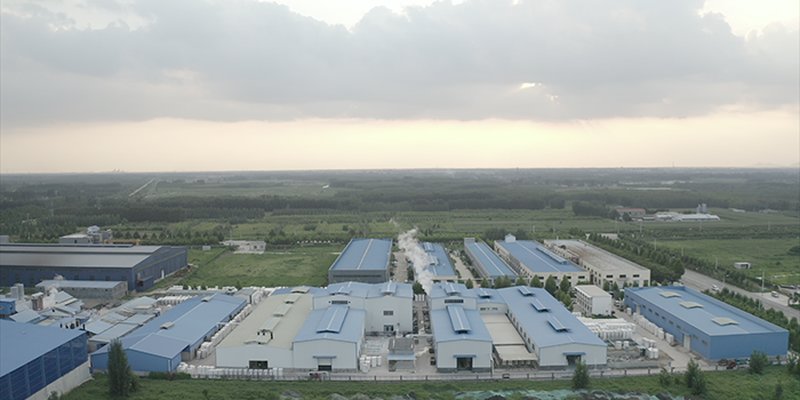
Verified Manufacturing Data: Mingfa Insulation — established 1991, joint venture with China Building Materials Academy. 108,000 m² facility, ~20 national patents, ISO 9001:2015 certified. Annual capacity: 50,000+ tonnes. Full company profile
When evaluating calcium silicate insulation manufacturers, the most important thing to verify is whether you are dealing with a true manufacturer or a trading company. A true manufacturer owns and operates its own production line, including autoclaves, filter presses, and drying kilns. A trading company buys from a factory and resells under its own name. Trading companies can offer competitive prices, but they cannot control production quality, batch traceability, or formulation consistency. If your project requires material certifications, compliance with ASTM C533 or EN 13501-1, or consistent performance across multiple shipments, a direct manufacturer relationship matters. One way to check is to ask for a live video walkthrough of the production floor. A manufacturer can do this on short notice. A trading company will need to coordinate with a third party and may refuse or delay.
Standards: [1] ASTM C533-17(2023); [2] EN 14306:2015+A1:2018; [3] GB/T 10699. Certifications
Years in business is another indicator that deserves attention. Calcium silicate manufacturing is a specialized industrial process that involves gel reaction chemistry, autoclave curing under saturated steam at 190 to 220 degrees Celsius, and precise control of the CaO/SiO2 molar ratio. The difference between a product that maintains dimensional stability at 1050 degrees Celsius and one that shrinks and cracks at 650 degrees Celsius comes down to production experience. Manufacturers with 20 or more years in the industry have accumulated the production data and formulation knowledge needed to produce consistent xonotlite-phase calcium silicate. Newer entrants, particularly those that started production within the last five to ten years, may not have encountered the full range of customer application conditions and may lack the data to guarantee performance at the upper end of the temperature range.
Independent research and development capability separates manufacturers who own their technology from those who copy it. A manufacturer with a patent portfolio, an in-house laboratory equipped for XRD or SEM crystal phase analysis, and documented relationships with materials science research institutions has invested in understanding the material rather than simply replicating a known formula. Patents covering formulations, manufacturing equipment, or application methods indicate that the company can adapt products to specific customer requirements. This matters when you need a custom density, a low-chloride grade for stainless steel, or a non-standard board size. A manufacturer without R&D capability can only produce what its equipment was originally configured to produce. Production capacity thresholds are also worth checking. Annual capacities below 20,000 cubic meters may indicate limited autoclave capacity, which can create bottlenecks during peak demand periods. Capacities above 50,000 cubic meters generally indicate multiple production lines and the ability to handle large-volume orders without delaying other customers.
Certifications That Matter
ISO 9001 certification is the minimum expected for a calcium silicate insulation manufacturer supplying industrial projects. This standard covers quality management systems and requires documented processes for raw material inspection, in-process control, finished product testing, non-conformance handling, and corrective action. It does not, by itself, guarantee product quality. What it does guarantee is that when a quality problem occurs, the manufacturer has a documented system for identifying the root cause and preventing recurrence. When evaluating a supplier, ask for the ISO 9001 certificate and verify it with the issuing certification body. A certificate that cannot be verified, or one issued by an unrecognized body, should raise concern.
ASTM C533 is the standard specification for calcium silicate block and pipe thermal insulation used in North American and many international projects. It defines two types: Type I for service temperatures up to 649 degrees Celsius and Type II for service up to 927 degrees Celsius. The standard specifies minimum values for compressive strength, flexural strength, thermal conductivity at multiple mean temperatures, linear shrinkage after heating, and moisture content. A manufacturer claiming ASTM C533 compliance should be able to provide third-party test reports from an ISO 17025 accredited laboratory that demonstrate conformance to every parameter in the specification. Manufacturer self-declarations without independent test data do not carry the same weight.
EN 13501-1 Class A1 is the European fire classification for non-combustible materials. Achieving A1 classification means the material contributes zero to fire growth and produces no smoke or flaming droplets when exposed to fire. This classification is important for any installation where fire safety is a design requirement, including petrochemical plants, tunnels, and building fire protection systems. CE marking under the Construction Products Regulation requires that the manufacturer has a factory production control system audited by a notified body and that the product meets the declared performance values. For European projects, CE marking is often mandatory. Buyers should request the Declaration of Performance and the CE certificate, and verify the notified body number against the European Commission's NANDO database.
Factory Audit Checklist -- What to Inspect
The autoclave is the heart of calcium silicate production. It is where the shaped precursor material transforms into crystalline xonotlite under saturated steam at 12 to 18 bar pressure. During a factory visit, check the number, size, and condition of the autoclaves. Autoclaves should be pressure vessels with valid inspection certificates. Rust, steam leaks, or missing pressure gauges indicate poor maintenance. The autoclave capacity determines the factory's maximum throughput. A factory with two or more large autoclaves can maintain production during maintenance periods. One with a single small autoclave will stop entirely if that vessel goes offline.
Raw material storage tells you a lot about a manufacturer's quality discipline. High-purity calcareous and siliceous raw materials should be stored in covered, dry conditions, not exposed to rain or ground moisture. Look for labeled storage areas that separate different grades of raw material. Reinforcing fibers should be stored in their original packaging with manufacturer labels intact. Ask whether the factory tests incoming raw materials before acceptance. A manufacturer that does not test incoming materials cannot guarantee that what goes into the product matches the formulation.
The quality control laboratory should have equipment for density testing, compressive and flexural strength measurement, thermal conductivity testing by the guarded hot plate method or heat flow meter, and linear shrinkage testing at rated temperature. A furnace capable of reaching at least 1000 degrees Celsius is needed for high-temperature products. More advanced laboratories may have XRF for elemental analysis and XRD for crystal phase verification. Batch traceability systems should track each production batch from raw material receipt through to shipment. Each batch should have a unique identifier that links raw material lot numbers, production parameters, test results, and shipping documentation. A sample retention policy of at least 12 to 24 months allows retesting if a quality dispute arises after installation.
How to Compare Quotations
Unit price per cubic meter is the most visible cost in a quotation, but it is not the same as total cost. A lower unit price from a manufacturer farther from a major port can result in higher inland transport costs that erase the savings. A manufacturer with poor container loading practices may fit 10 to 15 percent less material per container, which increases the freight cost per cubic meter significantly. When comparing quotations, calculate the total landed cost per cubic meter, which includes the ex-works price, inland transport to the port, ocean freight, insurance, customs duties, and inland transport at the destination. This is the number that matters for project budgeting, not the FOB price alone.
Container loading optimization deserves specific attention. Calcium silicate boards and pipe sections are rigid products. How a manufacturer stacks, palletizes, and loads them into a container affects how many cubic meters fit into each 40-foot high-cube container. A well-optimized load fits approximately 55 to 60 cubic meters of calcium silicate product into a 40HQ. A poorly planned load may fit only 45 to 48 cubic meters. At ocean freight rates of 2000 to 4000 USD per 40HQ container depending on the destination, a 20 percent difference in loading efficiency translates to a significant cost difference per unit of usable insulation material.
Incoterms define who pays for what and where risk transfers from seller to buyer. FOB Qingdao means the seller is responsible for costs and risks until the goods are loaded onto the vessel. The buyer arranges and pays for ocean freight and insurance. CIF means the seller arranges and pays for freight and insurance to the destination port, though risk still transfers at loading. DDP means the seller handles everything including import customs clearance and delivery to the buyer's door. Most experienced buyers use FOB terms because it gives them control over the freight forwarder and shipping schedule. Payment terms also vary. A 30 percent deposit with 70 percent against shipping documents is common. A manufacturer asking for 100 percent payment before production should be approached with caution, unless it is a small trial order.
Sample testing protocol should be established before placing a production order. Request samples from current production stock, not specially prepared samples. Specify the tests you want conducted and who will conduct them. Third-party testing at an ISO 17025 laboratory carries more weight than manufacturer in-house test reports. If the sample test results are acceptable, retain the tested sample as a physical reference. Include a clause in the purchase contract stating that production shipments must match the performance of the approved sample.
Red Flags -- What to Avoid
The absence of independent test reports is a red flag. A manufacturer that cannot produce test reports from a recognized third-party laboratory for thermal conductivity, compressive strength, linear shrinkage, and density is either not testing its products or not confident in the results. Manufacturer-generated test certificates have some value, but without independent verification, there is no way to confirm the numbers are accurate. Ask for test reports that show the laboratory name, accreditation number, test date, and test standards used. Reports without these details should not be accepted as evidence of product quality.
An unwillingness to provide factory access, whether in person or by live video, should trigger caution. Legitimate manufacturers have nothing to hide and are accustomed to customer visits. A supplier that makes excuses, offers only to show an office or a warehouse, or insists on meeting at a hotel rather than at the production site may be a trading company representing itself as a factory. Prices significantly below the market average are another warning sign. Calcium silicate manufacturing involves energy-intensive processes including high-pressure steam curing and long-duration kiln drying. There is a floor below which quality must be compromised, either through lower-purity raw materials, reduced curing time, or skipping quality control steps. If one quotation is 30 percent or more below the average of other quotations, investigate why before accepting it.
Vague or missing batch traceability is a problem for any project that requires material certification. If the manufacturer cannot explain how each production batch is tracked from raw material to shipment, there is a risk that you will receive products from different production runs mixed together in one shipment, with no way to verify which test report applies to which batch. A manufacturer should be able to show you a sample batch record that links raw material lot numbers, production date, autoclave cycle number, test results, and shipping documentation. Finally, any ambiguity about asbestos content should be treated seriously. Calcium silicate insulation for industrial applications should be certified asbestos-free. If a manufacturer cannot provide a clear statement and independent test evidence confirming zero asbestos content, do not proceed. Asbestos is banned or heavily restricted in most markets, and products containing it cannot be legally imported into many countries.
Why Shandong, China Is the Global Hub for Calcium Silicate
Shandong Province in eastern China is home to the largest concentration of calcium silicate insulation manufacturers in the world. The province has held this position since the 1980s, when the first factories were established in the Laizhou and Zibo areas to serve China's growing industrial base. Today, Shandong accounts for the majority of China's calcium silicate production, supported by local reserves of limestone and silica, a skilled industrial workforce, and direct access to Qingdao port. Qingdao is consistently among the top five container ports in China by throughput and handled approximately 30.9 million TEU in 2024.
For international buyers, sourcing from this cluster offers several practical advantages. The concentration of manufacturers within a two-hour drive of Qingdao port means that inland logistics costs are predictable and low. Container loading is a routine operation at these factories. Multiple shipping lines serve Qingdao with direct routes to the Middle East, Europe, North America, and Southeast Asia, which means competitive freight rates and frequent sailings. The density of the cluster also means that buyers can visit multiple factories in a single trip, comparing production capabilities and quality standards directly. For a deeper look at the Shandong manufacturing cluster, see our Shandong industry overview.
Frequently Asked Questions
What is the minimum order quantity for calcium silicate insulation?
Minimum order quantities typically start at 20 to 50 cubic meters. Some factories accept smaller trial orders of 5 to 10 cubic meters for first-time buyers who want to evaluate product quality before committing to a full container load. A 20-foot container holds approximately 25 to 28 cubic meters of calcium silicate boards. A 40-foot high-cube container holds approximately 55 to 60 cubic meters. Most manufacturers offer better per-unit pricing at the 40HQ level. When requesting a quotation, specify whether you need a trial order or a full container load, as this affects both pricing and the manufacturer's willingness to adjust payment terms.
How long does it take to ship calcium silicate from China?
Standard production lead time is 15 to 30 days, depending on order volume and product specifications. Custom sizes, special densities, or low-chloride grades may add 5 to 10 days. Ocean freight transit times from Qingdao port are approximately 8 to 15 days to Southeast Asia, 20 to 25 days to the Middle East, 25 to 30 days to Europe, and 20 to 25 days to North America. Total door-to-door time including production, inland transport, customs clearance, and ocean transit typically ranges from 35 to 60 days. Buyers should factor this lead time into project scheduling and order well in advance of installation deadlines.
Can I visit the factory before placing an order?
Yes, most legitimate calcium silicate manufacturers in China welcome factory visits. Before visiting, request a production schedule to confirm the factory will be operating during your visit dates. Plan to spend at least half a day on site to tour the full production line, review QC laboratory equipment, inspect sample retention storage, and meet the technical team. Shandong factories are accessible from Qingdao Liuting International Airport, with most manufacturing sites located within a two-hour drive. A manufacturer that refuses or avoids a factory visit request should be treated as a red flag.
Evaluating Suppliers? Start With Technical Documentation
Contact Mingfa for product data sheets, third-party test reports, ISO 9001 certification documents, and factory visit arrangements. Our technical team responds to buyer inquiries within 24 hours.
Request Technical DocumentationFurther Reading
- About Mingfa -- company profile, production capacity, certifications, and factory overview
- Factory and Quality -- production equipment details, QC system, and batch traceability
- Products -- full calcium silicate product range with specifications
- Technical Certifications -- detailed certification documentation and test reports
- Shandong Manufacturing Hub -- why Shandong dominates global calcium silicate production
- How to Import Calcium Silicate Insulation from China -- logistics and import guide