Distributor and Wholesale Programs
Buyers searching for a bulk calcium silicate insulation distributor are usually either a regional distributor building stock or a contractor sourcing for a project. The two have different requirements, and both are served directly from the factory rather than through a chain of intermediaries.
| Buyer Type | Typical Requirement | How the Factory Serves It |
|---|---|---|
| Regional distributor | Repeatable specifications, consistent packaging, private label | OEM packaging and stable batch specifications; scheduled production slots for repeat orders |
| Insulation contractor | Project-quantity boards and pipe sections, mixed specifications | Mixed specifications in one container; cut-to-size and machined shapes on the same order |
| EPC / project buyer | Full documentation package, third-party inspection | Batch certificates, ISO 9001, EN 13501-1 A1, EN 10204 3.1 where specified; SGS/BV pre-shipment inspection |
| Trading company | Competitive FOB pricing, flexible consolidation | Factory-direct FOB Qingdao pricing; consolidation with other suppliers arranged by the buyer's forwarder |
Why distributor programs run factory-direct: a distributor's margin depends on the price at which it buys, but its reputation depends on the consistency of what it ships. Buying through an intermediary adds a margin without adding control over the variables that matter — density consistency, batch documentation, and packaging integrity. Factory-direct supply lets a distributor set its own resale pricing while keeping the batch traceability that its own customers increasingly require.
Private label for distributors: customer-branded cartons, pallet labels, and documentation are applied at the factory under the distributor's own brand. Neutral (unbranded) packaging is also available where the distributor prefers to apply its own labeling locally. Both options carry the same batch certificate format as standard production.
Distributor Program — What Is Included
| Program Element | Standard Arrangement | Notes |
|---|---|---|
| Territory | Non-exclusive by default; exclusivity reviewed against an agreed annual volume | Protects both sides from a territory that is claimed but not developed |
| Initial stock order | One pallet per size and thickness; mixed containers allowed | Lets a distributor open a product line without a full container of one SKU |
| Lead time | 15-20 working days for standard board and pipe sections; scheduled releases for stock programs | Quarterly forecast allows production slots to be reserved |
| Branding | Neutral packaging, or distributor-branded cartons and pallet labels applied at the factory | Camera-ready artwork and label data required before the run |
| Documentation | Batch certificate, ASTM C533 and C356 reports, ISO 9001:2015, commercial invoice and packing list | Batch numbers match pallet labels for the distributor's own customers |
| Logistics | FOB Qingdao; CIF or CFR to a named port; container loading plan issued before shipment | Pallet marks and mixed-SKU plans set to the distributor's warehouse layout |
| Technical support | Datasheets, installation guides and specification language for the distributor's tenders | Distributor staff can quote and support the product without reformulating the data |
A distributor program is not a discount code. It works when the distributor can forecast demand, hold stock in the right mix, and support the product technically in its market. We ask for a six-month forecast, the target industries and the application mix before setting the release schedule. That information also determines which grades are stocked and which are made to order.
Bulk Quantities and Container Loading Reference
Bulk purchasing economics turn on container loading, not just unit price. The reference figures below show what fits and where weight limits bind — the calculation that determines whether a given order is economical to ship.
| Product | Density | 20GP Approx. | 40HQ Approx. | Binding Limit |
|---|---|---|---|---|
| Standard board | 170-250 kg/m³ | ~28 pallets / ~25 t | ~56 pallets, weight-limited ~27 t | Weight |
| High-temp board | 250-270 kg/m³ | ~25 pallets / ~25 t | Weight-limited | Weight |
| Pipe sections | 170-250 kg/m³ | Cartons on pallets; volume-efficient | Volume-efficient | Volume |
| High-density grades | 800-900 kg/m³ | Reaches weight limit with fewer pallets | Not beneficial | Weight (early) |
| Shaped parts | Any | Top-stowed over boards | Top-stowed over boards | Protection |
The practical rule: for standard-density board, a 20GP carries roughly the same tonnage as a 40HQ because the container weight limit binds first — so the extra volume of a 40HQ only pays for low-density grades. This is why bulk board orders are commonly built around 20GP units. Low-density material (170-200 kg/m³) and pipe sections are the exception: they are volume-limited, and a 40HQ materially increases the payload.
Mixed-specification containers: boards, pipe sections, and shaped parts load together in one container, with shaped parts top-stowed to protect projecting profiles from stacking loads. Each specification carries its own 1-pallet minimum, so an order can combine several grades and thicknesses without paying for separate shipments. Dunnage airbags between rows and base-layer lashing are standard, and photographs of the loaded container are provided before sealing.
Frequently Asked Questions — Bulk and Distributor Orders
What is the minimum order for a distributor program?
There is no separate distributor minimum — the standard terms apply: 1 pallet per size and density combination for boards and pipe sections, and 1 m³ for custom or OEM-branded production. Distributors typically begin with a mixed-specification container to establish which products move in their market, then move to scheduled repeat orders once demand patterns are clear. Private-label packaging has no additional minimum beyond the standard OEM terms.
How is bulk pricing determined?
Pricing follows the specification, not the volume alone: density grade is the primary cost driver, followed by temperature rating, dimensions, custom processing, and order quantity. Container-load quantities benefit from production batch efficiency and consolidated freight, which is where bulk economics come from. Quotations are issued against a specific specification — product form, density, dimensions, quantity, and destination port — rather than as a list price.
Can I combine different products in one bulk shipment?
Yes, and it is common practice. Boards, pipe sections, and shaped parts load together with shaped parts top-stowed; multiple grades and thicknesses can share a container, each with its own 1-pallet minimum. A distributor establishing a product range can therefore test several specifications in one shipment rather than committing container-by-container. Consolidation with other suppliers is arranged by the buyer's own forwarder.
What documentation accompanies a bulk order?
Every shipment includes batch test certificates (density per ASTM C302, compressive strength per ASTM C165, thermal conductivity per ASTM C518, shrinkage per ASTM C356) carrying batch numbers that match the delivered pallet labels, plus ISO 9001:2015 certification, EN 13501-1 A1 classification, and the standard export documentation set. EN 10204 Type 3.1 certificates are available where specified, and SGS or Bureau Veritas pre-shipment inspection can be arranged for project or distributor qualification.
Bulk, Wholesale & Distributor Calcium Silicate Insulation — Factory-Direct Supply
1. Why Buy Calcium Silicate Insulation in Bulk
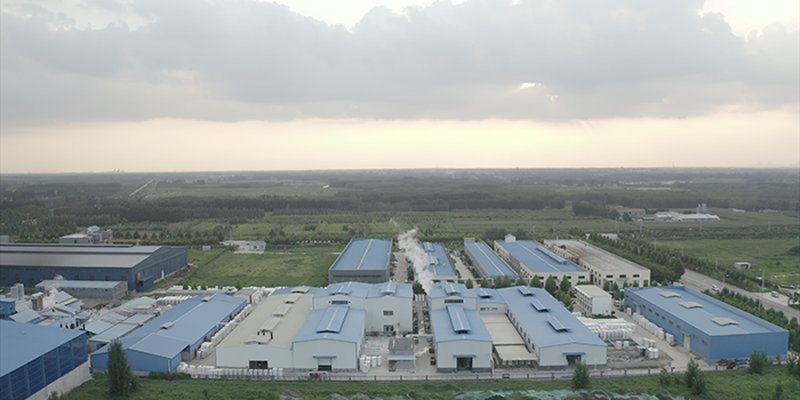
Mingfa Manufacturing Note: All calcium silicate products shipped from our 108,000 m² Shandong facility (50,000+ tonnes annual capacity) undergo batch testing per ASTM C533 before export. Test certificates included with every shipment. Quality assurance details
Buying calcium silicate insulation in bulk quantities directly from the manufacturer changes the economics of industrial projects. When you order container loads rather than pallet loads, the per-unit cost drops because production can be scheduled in continuous runs, raw materials can be purchased in larger quantities at better prices, and ocean freight costs are spread across more product. For projects requiring consistent thermal performance across multiple pieces, bulk ordering also ensures that all material comes from the same production batch, giving uniform density, thermal conductivity, and dimensional accuracy throughout the installation.
Standards: [1] ASTM C533-17(2023); [2] EN 14306:2015+A1:2018; [3] GB/T 10699. Certifications
Bulk orders also simplify logistics. A single 40-foot high-cube container can hold approximately 55 to 60 cubic meters of calcium silicate boards when optimally loaded. This is enough material to insulate a complete cement kiln section or outfit a substantial pipe insulation project. Rather than managing multiple small shipments with different arrival dates, documentation sets, and quality variations, a bulk order arrives as one coordinated delivery.
2. How Bulk Ordering Works with Mingfa
Mingfa is a factory-direct calcium silicate insulation supplier. There is no trading company or distributor between the production line and your project. This direct relationship matters for bulk buyers in several practical ways. First, it eliminates intermediary margins. Second, it gives you direct access to the technical team that designed and manufactured your products. If you need a material test report, a batch certificate, or a technical recommendation, you are talking to the factory engineers, not a sales agent reading from a brochure.
The bulk ordering process follows a standard industrial procurement sequence. You provide your specifications, we prepare a detailed quotation including FOB or CIF pricing, you approve samples, we schedule production, and the order ships from Qingdao port. Standard lead time is 15 to 30 days from order confirmation. For very large orders, production can be phased across multiple shipments with consistent quality across all batches.
Price breaks occur at natural volume thresholds. A full 20-foot container achieves better per-unit pricing than less-than-container-load shipments because production runs are longer and material changeovers are fewer. A 40-foot high-cube container achieves the best per-unit economics. The exact savings depend on product specifications, but as a general guide, each step up in order volume typically reduces the unit cost by a meaningful percentage as fixed costs of production setup, documentation, and freight are distributed across more product.
3. Wholesale Calcium Silicate Pipe Insulation
Calcium silicate pipe insulation is manufactured in pre-formed half-shell sections that wrap around pipes. For wholesale pipe orders, the key specifications are the pipe outer diameter, the insulation thickness, and the length of each section. Standard half-shell sections are produced for pipes from half an inch to 24 inches in diameter, with insulation thicknesses from 25 to 100 millimeters. Custom diameters up to 48 inches are available for larger industrial piping.
Wholesale pipe orders benefit particularly from factory-direct supply because pipe insulation involves multiple SKUs. A typical industrial project may require dozens of different diameter and thickness combinations to cover the full range of pipe sizes in a facility. A wholesale order placed directly with the manufacturer ensures that all sizes are produced to the same density specification and quality standard, and that the complete set arrives together. Individual sections can be custom-labeled with tag numbers corresponding to isometric drawings, simplifying on-site installation.
4. Bulk Calcium Silicate Block and Board Supply
Standard calcium silicate boards and blocks for industrial insulation are produced in common sizes. Boards are typically 600 by 300 millimeters, 1000 by 500 millimeters, or 1220 by 2440 millimeters, with thicknesses ranging from 20 to 120 millimeters. Blocks and bricks for furnace lining applications are produced in denser formats with higher compressive strength.
For bulk block orders, the density grade determines both the thermal performance and the mechanical load capacity. Low-density blocks in the 170 to 270 kilogram per cubic meter range are used for general equipment insulation. Medium-density blocks at 270 to 450 kilograms per cubic meter suit applications requiring some structural strength, such as fire door cores. High-density blocks at 450 to 900 kilograms per cubic meter are specified for steel ladle backup insulation and glass furnace bottom paving, where the insulation layer carries significant compressive load. Mingfa produces all three density ranges, and bulk orders can mix densities within the same shipment.
5. Container Loading and Logistics for Bulk Orders
| Container Type | Approximate Capacity (Calcium Silicate) | Best For |
|---|---|---|
| 20-foot General Purpose (20GP) | 25 to 28 cubic meters | Smaller projects, trial orders, mixed specifications |
| 40-foot High Cube (40HQ) | 55 to 60 cubic meters | Large projects, single-specification bulk orders, best per-unit economics |
Boards are packed on ISPM 15 fumigated wooden pallets, wrapped in waterproof polyethylene film, and secured with steel or PET strapping. Corner protectors prevent edge damage during transit. Pallet dimensions are optimized for maximum container utilization. Pipe sections are packed in cartons or on pallets depending on size and quantity. All packaging is designed to withstand ocean transit, port handling, and inland trucking at the destination.
6. Quality Assurance for Bulk Orders
Bulk orders receive the same quality control as any Mingfa production run, with the additional benefit of batch-level consistency. Every bulk order comes with a complete documentation package including the commercial invoice, packing list, certificate of origin, bill of lading, and material test certificates showing density, compressive strength, thermal conductivity, and linear shrinkage for the production batch. Retained samples from each batch are kept for 24 months for full traceability.
7. How to Place a Bulk Order
To receive a bulk quotation, prepare the following information: product type (board, pipe section, block, custom shape), density grade and temperature rating, dimensions and thicknesses, estimated order volume (cubic meters or pieces), preferred Incoterms (FOB, CIF, or other), and target delivery port and timeline. Contact us through the inquiry form or email, and include any special requirements such as custom sizes, private labeling, or specific packaging needs.
Minimum order quantities for bulk pricing start at one pallet per specification. Container-load orders achieve the best per-unit pricing. Samples are available for evaluation before placing a production order. Typical payment terms include telegraphic transfer with a deposit against the proforma invoice and the balance against shipping documents.
Frequently Asked Questions
What is a typical bulk order size for calcium silicate insulation?
A typical bulk order fills a 20-foot or 40-foot container. A 20GP holds approximately 25 to 28 cubic meters of calcium silicate boards. A 40HQ holds 55 to 60 cubic meters. For pipe insulation, orders are often specified by the number of sections per diameter and thickness combination. The minimum order for bulk pricing is one pallet per specification.
How much can I save buying factory-direct instead of through a distributor?
Buying directly from the manufacturer eliminates the distributor markup, which varies by market and product type. Industrial buyers typically find that factory-direct purchasing reduces their per-unit cost compared to buying the same specification through a local distributor or trading company. The savings are most significant on container-load orders. For a specific quotation, contact us with your requirements.
What export documents are included with a bulk shipment?
Every bulk shipment includes a commercial invoice, packing list, certificate of origin, bill of lading, and material test certificates. Test certificates document density, compressive strength, thermal conductivity, and linear shrinkage measured on samples from your production batch. Additional documentation such as a certificate of conformity or fumigation certificate can be provided on request.
Related Guides
- Calcium Silicate Pipe Insulation for Contractors — pre-formed sections and installation guide
For block types, density, sizes and installation, see the calcium silicate block insulation guide.
Shipping & Logistics Guide: container loading, Qingdao routes, customs documentation