Calcium Silicate Insulation Pricing Guide — What Affects the Cost
1. What Determines Calcium Silicate Board Pricing
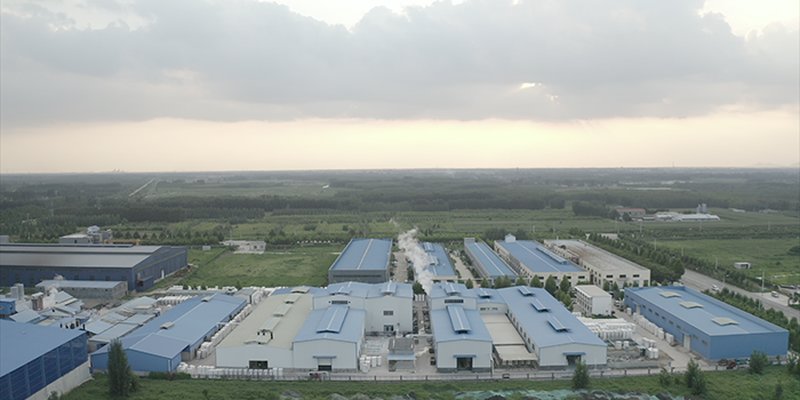
Verified Manufacturing Data: Mingfa Insulation — established 1991, joint venture with China Building Materials Academy. 108,000 m² facility, ~20 national patents, ISO 9001:2015 certified. Annual capacity: 50,000+ tonnes. Full company profile
Seven main factors influence the cost of calcium silicate insulation board. Understanding these helps buyers evaluate quotations on a comparable basis and identify where specifications can be adjusted to meet budget constraints without compromising performance.
Standards: [1] ASTM C533-17(2023); [2] EN 14306:2015+A1:2018; [3] GB/T 10699. Certifications
Density grade. Density is the single largest cost driver. Low-density boards in the 170 to 270 kilogram per cubic meter range use less raw material per unit volume and have shorter autoclave cycle times. Medium-density boards at 270 to 450 kilograms per cubic meter require more raw material and longer curing. High-density boards above 450 kilograms per cubic meter, such as those used for steel ladle backup insulation, use the most raw material per unit and require the longest autoclave cycles, making them the most expensive per cubic meter.
Thickness. Thicker boards use more material and take longer to cure through the full cross-section in the autoclave. A 100-millimeter board costs more than a 25-millimeter board of the same density, though not proportionally because some production costs are fixed regardless of thickness.
Dimensions. Standard sizes like 600 by 300 millimeters or 1000 by 500 millimeters are produced in high volumes and are the most economical. Custom dimensions require dedicated mold setups or CNC cutting from larger boards, adding to the unit cost. Very large formats such as 1220 by 2440 millimeters may require special handling during production and packaging.
Order volume. This is the factor you control most directly. A full container load achieves the lowest per-unit cost because production runs are longer, material changeovers are fewer, and ocean freight is spread across more product. Less-than-container-load shipments have higher per-unit freight costs and may require consolidation with other orders.
Customization. Standard products from the regular production program are the most economical. Any deviation from standard specifications increases cost. CNC machining of custom shapes, special surface finishes, non-standard thicknesses, and custom packaging all add to the unit price. For custom work, the first piece is the most expensive because of programming and setup time. Larger quantities of custom parts amortize these setup costs.
Shipping terms. FOB Qingdao means you pay the product cost plus inland transport to the port, and you arrange ocean freight and insurance separately. CIF means the product price includes ocean freight and insurance to your destination port. The choice between FOB and CIF affects the quoted price but not necessarily the total landed cost. Experienced importers often prefer FOB because they can negotiate freight rates independently.
Raw material and energy costs. Calcium silicate production uses lime, silica, reinforcing fibers, water, and substantial energy for autoclave curing at 190 to 220 degrees Celsius under 12 to 18 bar pressure. Raw materials typically account for approximately 35 to 45 percent of unit manufacturing cost. Energy for autoclave curing represents 20 to 30 percent. These input costs fluctuate with global commodity markets.
2. Calcium Silicate Pipe Insulation Pricing Factors
Pipe insulation pricing depends on the pipe diameter, the insulation wall thickness, and whether standard half-shell sections or custom fittings are required. Standard pipe sections for common diameters from half an inch to 24 inches are the most economical. Custom diameters, thick-walled sections above 100 millimeters, and shaped fittings such as elbows, tees, and flanges involve additional production steps and cost more per unit. As with boards, larger quantities of each size reduce the per-unit cost by allowing efficient production runs.
3. How Order Volume Affects Unit Pricing
The relationship between volume and unit cost follows a step function rather than a smooth curve. Each container size represents a natural threshold. A 20-foot container load achieves better per-unit pricing than a less-than-container-load shipment. A 40-foot high-cube container achieves the best per-unit economics because it maximizes the ratio of product volume to shipping cost. Within each container tier, adding more product up to the container capacity improves unit economics. Beyond one container, additional containers maintain the per-unit rate without further volume discounts unless the total order reaches a level that justifies dedicated production scheduling.
4. Understanding Price Trends in Calcium Silicate Insulation
Calcium silicate prices are influenced by several external factors. Lime and silica prices fluctuate with construction and industrial demand in China. Energy costs affect autoclave-cured products more than materials produced at ambient temperature because the autoclave cycle consumes significant steam. Ocean freight rates between Asia and destination markets vary seasonally, typically rising in the months before Chinese New Year and during the late summer peak shipping season. Exchange rates between the US dollar and Chinese yuan add another variable for buyers paying in currencies other than renminbi. Most manufacturers adjust their export pricing periodically to reflect sustained changes in these input costs rather than passing through every short-term fluctuation.
5. Custom and Shaped Part Pricing Considerations
Custom calcium silicate parts involve an additional layer of cost beyond the base material. CNC programming and setup is a one-time cost for each new part design. Once programmed, the per-part machining cost depends on the complexity of the shape, the number of machining operations, and the quantity produced. Simple two-dimensional profiles cost less to machine than complex three-dimensional shapes requiring multiple fixturing setups. As with standard products, larger production quantities reduce the per-unit cost by spreading the setup and programming costs across more parts.
6. How to Get an Accurate Quotation
To receive a quotation that reflects your actual requirements, provide the product specifications, estimated order volume in cubic meters or pieces, preferred Incoterms and destination port, target delivery timeline, and any special requirements. The more complete your initial inquiry, the faster and more accurate the quotation will be. If you are comparing multiple suppliers, provide identical specifications to each so that quotations are directly comparable. Differences in density, thickness, or shipping terms between quotations can create apparent price differences that do not reflect the actual value being offered.
Frequently Asked Questions
Why do calcium silicate prices vary between suppliers?
Prices vary because of differences in raw material sourcing, production efficiency, factory location relative to export ports, and whether the supplier is a manufacturer or a trading company. A manufacturer in Shandong with its own autoclaves and direct access to Qingdao port can offer different pricing than a trading company that buys from multiple factories and adds a margin. Density, temperature rating, and certification level also create legitimate price differences between products that appear similar on the surface.
How often do calcium silicate prices change?
Export pricing for calcium silicate insulation is typically reviewed quarterly. Sustained changes in raw material costs, energy prices, or exchange rates may trigger a price adjustment. Short-term fluctuations are usually absorbed by the manufacturer rather than passed through to customers on every order. Quotations are generally valid for 30 days unless otherwise stated.
What is the price difference between calcium silicate and ceramic fiber?
Calcium silicate and ceramic fiber serve different temperature ranges and applications, so direct price comparison by volume can be misleading. Ceramic fiber is typically less expensive per cubic meter for standard grades because it is less dense and requires less raw material. However, calcium silicate provides compressive strength and moisture resistance that ceramic fiber does not, meaning the total installed cost including support structures, replacement frequency, and energy savings should be compared rather than material cost alone. For a detailed technical comparison, see our calcium silicate versus ceramic fiber comparison page.