Thermal Insulation Coating , Paste Calcium Silicate for Complex Geometry Applications
1. What Is Thermal Insulation Coating?
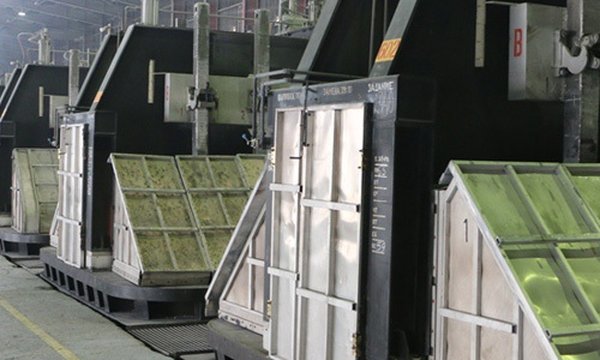
Thermal insulation coating is a paste-form calcium silicate material designed for insulating surfaces where rigid boards cannot be practically installed. The product shares the same fundamental chemistry as Mingfa's pressed and autoclaved boards: it is a water-based suspension of xonotlite (6CaO·6SiO2·H2O) crystals, produced through the same hydrothermal autoclave process, then wet-milled into a workable paste with controlled rheology for application by trowel or spray equipment.
Unlike rigid board insulation which requires flat or gently curved surfaces and precise cutting to fit, this high temperature coating is applied wet and conforms to any surface geometry before curing. It fills gaps, wraps around curved profiles, and coats irregular shapes to form a seamless, monolithic insulation layer after drying. There are no joints, no gaps, and no thermal bridging through fastener penetrations.
The paste dries by evaporation of water at ambient temperature (accelerated by gentle heating or exposure to the hot surface in service) to form a hard, crack-resistant layer chemically identical to the xonotlite matrix in Mingfa's board products. Because it is water-based, the paste emits no volatile organic compounds (VOCs), has no solvent odor, and is safe to apply in confined spaces with standard ventilation. The dried coating is pH neutral and does not cause chloride-induced stress corrosion cracking of austenitic stainless steels , an important consideration for petrochemical and power plant applications where stainless steel pipework is common.
The calcium silicate paste product is not intended as a wholesale replacement for board or brick insulation on large flat areas. Board insulation provides higher and more consistent thermal resistance per unit thickness, and is more cost-effective per square meter for accessible geometries. The paste product is complementary: it handles the 10-20% of a typical industrial insulation project where rigid materials are impractical, while board insulation handles the other 80-90%.
Key Takeaways
- Paste-Form Calcium Silicate: Same xonotlite chemistry as Mingfa rigid boards, applied wet by trowel or spray to conform to any surface geometry — seamless, joint-free insulation after drying.
- 800°C Rated (up to 1000°C): Far exceeds typical spray-on coatings (177-260°C limit) — suitable for high-temperature valves, flanges, expansion joints, and irregular ductwork.
- Geometric Conformity: Ideal for the 10-20% of industrial insulation projects where rigid board is impractical — valve bodies, pipe elbows, kiln nose rings, and complex duct transitions.
- Mingfa Advantage: Zero-VOC water-based formulation, chloride content below 50 ppm (safe for stainless steel), corrosion inhibitor package, on-site applicator training for large projects.
Mingfa Lab Verified (2024): All specifications listed are validated through in-house testing at our Shandong QC laboratory per ASTM C518 (thermal conductivity), ASTM C165 (compressive strength), and ASTM C356 (linear shrinkage). Batch test certificates issued with every order. View our testing methodology
2. Product Specifications
| Property | Value | Notes |
|---|---|---|
| Wet Density (as supplied) | ~800 kg/m³ | Ready to use from pail |
| Dry Density (after curing) | 300-400 kg/m³ | Depending on compaction during application |
| Thermal Conductivity (dry, 100°C mean) | ~0.07 W/m·K | Steady-state guarded hot plate, ASTM C518 |
| Maximum Service Temperature | 800°C | Continuous; coating retains integrity |
| Volume Shrinkage on Drying | <3% | Linear shrinkage equivalent; accounted for in application thickness |
| Water Content (as supplied) | 45-55% by weight | Evaporates during curing |
| pH (as supplied) | 10-11 | Mildly alkaline; pH neutral when fully dry |
| VOC Content | Zero | Water-based; no organic solvents |
| Chloride Content | <50 ppm | Safe for stainless steel contact |
| Application Temperature Range | 5-40°C | Substrate and ambient; do not apply below 5°C |
| Drying Time (per 5mm coat, 20°C, 50% RH) | 8-12 hours | Touch dry; full cure after first heat-up |
| Shelf Life | 12 months in sealed pail | Store at 5-35°C; protect from freezing |
References: [1] ASTM C533-17(2023); [2] EN 14306:2015+A1:2018; [3] GB/T 10699. Full certification details
The dried high temperature coating forms an open-pore structure that allows residual moisture to escape during the first heat-up cycle without causing spalling or delamination. The coating reaches its final mechanical properties after this first thermal cycle. The thermal conductivity value of ~0.07 W/m·K is higher than board insulation of equivalent density because the paste application introduces slightly more porosity variability, but this is offset by the seamless nature of the applied layer , there are no joint gaps creating localized heat leakage paths.
3. Application Guide
Surface preparation. Surfaces must be clean, dry, and free of loose rust, scale, oil, grease, or old paint. For steel surfaces, SSPC-SP2 (hand tool cleaning) or SP3 (power tool cleaning) is normally sufficient. For new steel, remove mill scale if loosely adherent. For previously painted surfaces, confirm the existing coating is rated for the service temperature and is well-adhered. No primer is required on bare steel; the paste adheres directly and the alkaline nature of the wet paste provides a degree of flash rust protection during application.
Mixing. The paste is supplied ready to use. If the material has settled during storage, re-stir with a low-speed paddle mixer (150-300 rpm) until uniform. Do not add water unless the material has dried past its workable consistency during extended storage; if thinning is essential, add clean water in small increments (maximum 5% by volume) while mixing. Over-dilution increases drying shrinkage and reduces thermal performance.
Trowel application. Apply with a steel plastering trowel in even strokes, pressing the material firmly against the substrate to ensure good contact and eliminate air pockets at the interface. Each pass should build a layer of 3-5mm wet thickness. For total thickness up to 15mm, build up in 2-3 passes, allowing each layer to become touch-dry before applying the next. For total thickness above 15mm, install alkali-resistant glass fiber reinforcing mesh between layers to control drying shrinkage cracking. Mesh should be embedded in the wet paste of the intermediate layer with 50mm overlap at seams.
Spray application. For large or complex surfaces, the paste can be applied by airless spray equipment with a minimum 4.8mm (3/16 inch) nozzle orifice and a minimum 2,000 psi (138 bar) operating pressure. The paste is pre-screened to remove any particles larger than 1mm that could clog the spray tip. Spray in overlapping passes to build thickness. Spray application is faster than trowel for large areas but requires masking of adjacent surfaces that should not receive coating.
Drying and curing. After application, the coating dries by water evaporation. Drying time depends on temperature, humidity, ventilation, and coating thickness. At 20°C and 50% relative humidity, a 5mm layer dries to touch in 8-12 hours. Full through-drying of a 15mm multi-coat application takes 48-72 hours. Drying can be accelerated by gentle heating (warm air blower or low-intensity infrared lamps). Do not apply direct flame or temperatures above 150°C to uncured coating as this can cause steam spalling within the layer.
First heat-up. The coating achieves its final mechanical properties during the first process heat-up. Heat up gradually: 50°C/hour heating rate up to 200°C, then at process rate above 200°C. The gradual initial heating allows residual moisture to escape without generating internal steam pressure. After the first full thermal cycle, the coating is fully cured and subsequent heating/cooling cycles do not affect its properties.
Overhead and vertical surfaces. For vertical surfaces, apply the paste at the stiffer end of its workable consistency range to prevent sagging. For overhead (soffit) applications, the paste can be applied in thinner layers (2-3mm per pass) with reinforcing mesh embedded in each intermediate layer. Mechanical support , such as stainless steel wire mesh fixed to the substrate with studs , is recommended for overhead applications exceeding 20mm total thickness.
4. Where Coating Outperforms Board Insulation
The thermal insulation coating product is specified for surfaces where rigid board insulation is impractical, inefficient, or impossible. The key advantage is geometric conformity: the paste flows into re-entrant angles, wraps around curved profiles, and coats irregular surfaces to produce an insulation layer with no joints, no gaps, and no fasteners creating thermal bridges.
Specific geometries where coating is the preferred solution:
- Valve bodies and flanges. Gate valves, globe valves, butterfly valves, and check valves have complex external profiles. Insulating them with rigid board requires cutting multiple small pieces, fitting them around the valve body, and filling gaps. The paste coating is troweled or sprayed directly over the valve body, conforming to all contours and providing a uniform insulation thickness in a fraction of the time. Once the coating is cured, the valve can still be operated normally.
- Pipe elbows and tees. Long-radius and short-radius elbows require segmenting board insulation into multiple mitre-cut pieces. Each joint is a heat leak path. Paste coating applied to the elbow forms a continuous insulation layer with no joints.
- Expansion joints and bellows. Metallic expansion bellows require a flexible insulation that accommodates thermal movement without cracking. The paste coating, particularly when applied over a layer of ceramic fiber paper as a slip plane, provides insulation while tolerating the thermal expansion and contraction of the joint.
- Kiln nose rings and burner pipes. Cement kiln nose ring castings have compound curves that are impractical to insulate with board. The paste is troweled directly onto the casting to form a conformal insulation layer that reduces heat loss from the kiln nose area.
- Furnace door seals. The perimeter of a furnace door requires insulation that conforms to the door frame geometry and can tolerate repeated door opening and closing. The paste coating applied over a wire mesh reinforcement forms a durable, impact-resistant insulation layer at door edges.
- Irregular ductwork. Hot air ducts with changes in cross-section, branch connections, and damper housings present cutting challenges for rigid board. The paste coating is applied directly, conforming to all geometry changes without cutting or jointing.
- Patch repairs. Damaged board insulation on operating plant can be repaired by cleaning the damaged area and applying paste coating to restore the insulation thickness. This avoids a full board replacement during a running campaign.
5. Industrial Application Examples
Cement kiln nose ring and burner pipe seals. The kiln nose ring casting operates at 300-400°C shell temperature with complex curved geometry around the burner pipe penetration. 15-20mm of paste coating applied to the nose ring and burner pipe sealing area reduces shell temperature by approximately 80-100°C, protecting the kiln seal mechanism and reducing heat radiation to the kiln hood area. A Chinese cement producer reported replacement of the nose ring coating at 12-month kiln inspection intervals.
Steam valve and flange insulation in power plants. Main steam isolation valves (DN200-DN400) in coal-fired power plants operate at 540°C and 16.7 MPa. Board insulation of the valve body requires 40-60 individually cut pieces per valve. Paste coating reduces installation time from approximately 8 hours per valve (board) to 2-3 hours (paste, including drying between coats). Thermal imaging has confirmed no hot spots at the coating surface, demonstrating the absence of joint heat leakage.
Petrochemical pipe elbow and fitting insulation. A refinery crude distillation unit in the Middle East specified paste coating for all pipe elbows, tees, and reducers on the hot oil transfer line (350°C operating temperature), with board insulation on straight pipe runs. The combined board-and-coating system achieved a uniform cold-face temperature of 55°C (±5°C) across the entire pipe circuit, verified by thermographic survey.
Furnace expansion joint sealing. A steel reheating furnace with 50mm expansion gaps between roof sections had chronic heat leakage through the joints. Board insulation pieces inserted into the gaps consistently fell out during thermal cycling. Paste coating applied with reinforcing mesh and anchored to the roof steelwork has provided stable joint insulation through 18 months of continuous operation.
Hot air duct irregular sections. A glass container plant installed paste coating on the transition sections and branch connections of recuperator hot air ductwork (600°C air temperature, 800mm diameter duct). The conformal coating eliminated hot spots that were consistently present at duct transitions with board insulation alone, reducing duct shell temperature by 70°C at transition points.
Glass furnace crown thermocouple penetration seals. Thermocouple penetrations through the silica crown of a glass furnace are difficult to seal effectively with rigid board. Paste coating applied around the thermocouple well forms a tight seal that prevents hot gas leakage while allowing thermocouple replacement during furnace operation.
6. Packaging, Storage, and Shelf Life
The paste is supplied in 25kg plastic pails with resealable lids. Each pail covers approximately 2.0-2.5 m² at 10mm dry thickness, depending on surface profile and application method. Larger containers (200kg drums) are available for spray-application projects.
Storage conditions: Store between 5°C and 35°C in the original sealed container. Protect from freezing , the paste is water-based and a freeze-thaw cycle will irreversibly separate the solid and liquid phases, rendering the material unusable. If frozen in transit, do not accept the shipment; contact Mingfa for replacement. Store out of direct sunlight to prevent the container from heating above 35°C, which can accelerate water evaporation through the lid seal.
Shelf life: 12 months from date of manufacture when stored as specified. After 12 months, the material may still be usable but should be checked for consistency and re-stirrability. If the paste can be re-stirred to a uniform consistency without adding more than 5% water, it remains fit for use. If the paste has dried to a crumbly consistency that cannot be reconstituted, it should be replaced. The date of manufacture is stamped on the pail lid.
After opening: Reseal the pail lid immediately after removing material. Minimize the time the pail is open to reduce water evaporation from the paste surface. Part-used pails should be used within 4 weeks of first opening. Before using a part-used pail, re-stir the contents thoroughly as some water separation may have occurred during storage.
7. Ordering and Technical Support
To receive a quotation for thermal insulation coating, provide the following in your inquiry:
- Application temperature , the continuous operating temperature of the surface to be insulated. This confirms the paste grade is suitable.
- Surface geometry , description of the components to be coated (valves, flanges, ducts, etc.) and photographs if available.
- Required insulation thickness , the dry film thickness you need. Mingfa can provide a thickness recommendation based on your application temperature and target surface temperature if you are unsure.
- Approximate area , total square meters to be coated, or a count of components and their approximate sizes.
- Application method , trowel or spray. For spray applications, indicate the spray equipment you intend to use.
Coverage calculator. Mingfa provides a coverage calculator on request: for your specified dry thickness and surface area, we calculate the number of pails required with allowance for application waste (typically 10-15% for trowel, 15-20% for spray). This ensures you order the correct quantity without costly over-ordering or project-delaying under-ordering.
Trial pails. Single 25kg pails are available for trial applications. We recommend testing the paste on a representative surface in your facility to confirm compatibility with your application method, drying conditions, and process environment before committing to a full project order.
Technical support for large-scale projects. For projects exceeding 500 kg of coating material, Mingfa provides technical support including: an application procedure document specific to your project, a coverage calculation and pail quantity recommendation, and remote support during application (video call or WeChat). On-site applicator training by a Mingfa technician is available for projects exceeding 2,000 kg. Trained applicators achieve better coverage consistency, lower waste, and shorter application time.
Lead time. Standard lead time for paste orders is 10-20 working days. Small trial orders (1-5 pails) can ship in 5-7 working days. Lead time for large project orders (200+ pails) is confirmed at quotation.
Request Quotation8. Trowelable Paste vs Spray-On Coatings
The term thermal insulation coating covers several fundamentally different product categories. Understanding the distinction between a trowelable calcium silicate paste and a thin-film spray-on coating is essential for correct specification.
Mingfa's product is a trowelable calcium silicate paste -- applied with a trowel like plaster, built up in layers of 3-5mm per pass, to a total dry thickness that can reach 60mm or more. It is designed for irregular surfaces where rigid board insulation cannot be fitted: valve bodies, flanges, pipe fittings, expansion joints, and complex duct geometries. After drying and curing, the paste forms a hard, monolithic insulation layer with the same xonotlite crystal chemistry as Mingfa's pressed and autoclaved boards.
Spray-on coatings sold under the "thermal insulation coating" label are typically acrylic, aerogel, or ceramic microsphere-based liquid products applied in thin films (0.5-3mm). These products serve a different purpose: they reduce surface temperature through a combination of reflective and insulative mechanisms, but they do not provide the thickness-dependent thermal resistance that a paste or board system delivers. Most spray-on coating formulations are rated to maximum service temperatures of 177-260°C (350-500°F), well below industrial process temperatures.
Mingfa's calcium silicate coating is rated to 650-1000°C depending on formulation, making it suitable for steam systems, process heaters, and high-temperature pipework where spray-on products would fail. The trade-off is application method: the paste requires a trowel and multiple coats, while spray-on products can be applied with standard airless spray equipment in a single pass. For large flat areas accessible to a spray gun, spray-on coatings offer faster coverage; for irregular geometries at high temperature, the calcium silicate paste is the appropriate product.
| Property | Calcium Silicate Paste (Mingfa) | Spray-On Coatings (Typical) |
|---|---|---|
| Base Material | Xonotlite calcium silicate | Acrylic / aerogel / ceramic microspheres |
| Application Method | Trowel or spray, multiple coats | Airless spray, single coat |
| Typical Thickness | 10 – 60 mm (buildable) | 0.5 – 3 mm |
| Max Service Temperature | 650 – 1000°C | 177 – 260°C |
| Thermal Conductivity | ~0.07 W/m·K (dry, 100°C mean) | 0.03 – 0.05 W/m·K (depends on formulation) |
| Best For | High-temperature irregular surfaces; valves, flanges, fittings; where board insulation is impractical | Low-temperature personnel protection; tank and vessel exterior; condensation control |
9. CUI (Corrosion Under Insulation) Prevention
Corrosion under insulation (CUI) is the leading cause of unplanned downtime in chemical plants, refineries, and power stations. When moisture penetrates the insulation layer and reaches the steel substrate, corrosion proceeds undetected beneath the insulation jacketing until wall thickness loss triggers a leak or structural failure. CUI-related repairs account for an estimated 40-60% of piping maintenance costs in hydrocarbon processing facilities.
Calcium silicate coatings contribute to CUI prevention in two ways. First, when properly applied in multiple coats with full compaction, the paste forms a dense, well-bonded layer that reduces moisture penetration pathways compared to fibrous or granular insulation materials. The seamless nature of the coating eliminates the joints and gaps that are the primary water ingress routes in conventional insulation systems.
Second, modern calcium silicate formulations incorporate corrosion inhibitors. Mingfa's paste product contains a proprietary inhibitor package that passivates the steel surface at the coating-substrate interface. Even if moisture reaches the interface -- for example, during a shutdown when the system cools and condensation forms -- the inhibitor chemistry suppresses the electrochemical reactions that drive corrosion. Independent testing confirms the paste meets the requirements of ASTM C1617 for corrosion under insulation when tested against carbon steel and 304 stainless steel coupons.
It should be noted that no insulation material eliminates CUI risk entirely. CUI prevention requires a system-level approach: proper surface preparation, correct application thickness, effective weatherproof jacketing, and regular inspection. The coating contributes one element of this system -- a well-bonded, inhibitor-containing layer that reduces moisture access and suppresses corrosion when moisture is present.
10. Application Thickness Guide
The required coating thickness depends primarily on the operating temperature of the substrate and the target cold-face temperature. The following table provides approximate guidelines based on typical industrial requirements for personnel protection (cold-face temperature below 60°C) and heat loss reduction. These are starting points for project planning; contact Mingfa's technical team for a project-specific thermal calculation.
| Substrate Temperature | Recommended Dry Thickness | Approx. Number of Coats | Typical Applications |
|---|---|---|---|
| Up to 200°C | 10 – 15 mm | 3 – 4 | Low-pressure steam piping, hot water lines, condensate return |
| 200 – 400°C | 15 – 25 mm | 4 – 6 | Medium-pressure steam, hot oil lines, process heater shells |
| 400 – 650°C | 25 – 40 mm | 6 – 10 | High-pressure steam, refinery pipework, reformer components |
| 650 – 1000°C | 40 – 60 mm (multiple layers with reinforcing mesh) | 10 – 15 | Furnace components, kiln nose rings, burner pipes, hot gas ducts |
Notes on thick applications: For total thicknesses above 25mm, embed alkali-resistant glass fiber mesh between intermediate coats to control drying shrinkage and improve mechanical integrity. For thicknesses above 40mm (typically required at substrate temperatures above 650°C), apply in two or more layers with mesh reinforcement in each layer, allowing each layer to cure before applying the next. For overhead and vertical applications above 20mm thickness, mechanical support such as stainless steel wire mesh fixed with studs is recommended. Consult Mingfa's technical team for a detailed application procedure tailored to your project conditions.
Related Guides & Comparisons
Continue exploring calcium silicate insulation topics relevant to this product.
About the Author — Mingfa Insulation Technical Team
Mingfa Insulation engineering team — 34+ years calcium silicate R&D and manufacturing since 1991. ~20 national patents. lzmfgr@163.com