Key Takeaways
- African demand concentrates in cement, power, and oil and gas. Kiln backing insulation for cement plants, HRSG and boiler casing for power generation, and refinery piping are the primary applications. Transit from Qingdao runs 20-35 days depending on coast, making order timing the critical planning variable.
Frequently Asked Questions
Which African markets do you supply?
Mingfa exports across Africa, with established reference projects and dedicated country pages for Nigeria, Egypt, and South Africa, plus regional coverage for East and North Africa. Regional project history includes cement industry insulation in the broader Middle East and Africa, and the same documentation package supports vendor qualification in each market.
How long does shipping from China to African ports take?
Transit depends on the coast and port: Mombasa (Kenya) runs about 20-25 days; Durban about 28-32 days; Lagos and Tema about 30-35 days; Alexandria and Ain Sokhna about 20-35 days depending on routing. Add production lead time of 15-20 working days for standard products and clearance time at destination. Planning 8-12 weeks from order to site is realistic.
What documentation accompanies shipments to Africa?
The standard export set: commercial invoice, packing list, bill of lading, certificate of origin, and batch test certificates (density per ASTM C302, compressive strength per ASTM C165, thermal conductivity per ASTM C518, shrinkage per ASTM C356). Fumigation certificates are available where destination countries require documentation beyond ISPM 15 pallet marking. SGS or Bureau Veritas pre-shipment inspection can be arranged where the project specifies it.
Can you support a project with mixed grades in one shipment?
Yes. Boards, pipe sections, and shaped parts load together in one container with shaped parts top-stowed. Multiple grades and specifications can share a container, each with its own 1-pallet minimum. This is the common pattern for cement plant projects that need kiln backing board, preheater insulation, and steam pipe sections delivered together.
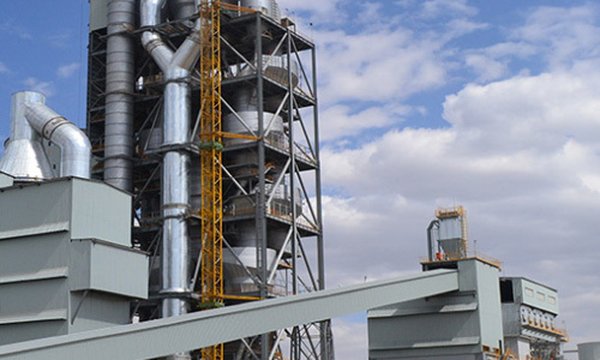
Calcium Silicate Insulation for Africa
Africa's industrial insulation market is growing, driven by infrastructure development, industrialization, and energy sector investment. The Middle East and Africa (MEA) industrial insulation market was valued at approximately 636 million USD in 2022 with projected growth to 779 million USD by 2028 (3.4% CAGR). China is a major supplier of industrial materials to Africa, and calcium silicate insulation from Chinese manufacturers represents a significant cost advantage over European alternatives. This page covers the five key African markets: Egypt, Nigeria, South Africa, Ethiopia, and Kenya.
1. Industrial Insulation Across Africa
Mingfa Manufacturing Note: All calcium silicate products shipped from our 108,000 m² Shandong facility (50,000+ tonnes annual capacity) undergo batch testing per ASTM C533 before export. Test certificates included with every shipment. Quality assurance details
| Country | Key Industries | Market Characteristics | Typical Projects |
|---|---|---|---|
| Egypt | Cement (80M+ tonnes/year), petrochemical (Suez Canal zone), steel (Ezz Steel) | Most developed African industrial market; established infrastructure | Cement plant maintenance, refinery insulation, steel mill consumables |
| Nigeria | Cement (Dangote, largest in Africa), petrochemical (Dangote Refinery 650k bpd), steel | Largest African economy; major infrastructure investments; port challenges | Refinery piping packages, cement kiln relines |
| South Africa | Cement (PPC, AfriSam), steel (ArcelorMittal SA), petrochemical (Sasol, Engen refineries) | Most sophisticated African market; higher specification requirements | Refinery maintenance, steel mill backup insulation, power plant insulation |
| Ethiopia | Cement (emerging production), manufacturing growth, infrastructure construction | Rapid growth but smaller base; import-dependent for industrial materials | New cement plant construction, industrial park insulation |
| Kenya | Cement (Bamburi/Lafarge, Mombasa Cement), power generation, manufacturing | East African hub; growing industrial base; Mombasa port serves regional market | Cement plant maintenance, power plant pipe insulation |
2. Why Source from Mingfa for Africa Projects
- Cost advantage for budget-constrained markets. African industrial buyers typically face tighter capital budgets than their European or Middle Eastern counterparts. Mingfa's 30-50% cost advantage over European manufacturers is a significant factor for African project economics. For a cement plant kiln reline requiring 1,000 m² of 50 mm board, this represents savings of 12,000-35,000 USD depending on the European benchmark.
- Established China-Africa trade routes. China is Africa's largest trading partner. Shipping routes from Chinese ports to Africa (East Africa via Malacca Strait and Indian Ocean, West Africa via the Cape of Good Hope or Suez, North Africa via Suez/Mediterranean) are well-served by multiple shipping lines with competitive freight rates.
- Qingdao port advantages. Qingdao has good connectivity to African destinations. For East Africa (Mombasa, Dar es Salaam), Qingdao has similar transit times to Shanghai/Ningbo ports. For North Africa (Alexandria, Port Said), the Suez Canal route is well-established.
- Limitations to note: Mingfa's direct project experience in Africa is more limited than in Asia and the Middle East. The company's African business is primarily through trading companies and project procurement rather than established direct distribution channels. Buyers in African markets should verify that Mingfa's product certifications (ASTM C533, EN 14306, EN 13501-1) are accepted by their end-users or project specifications. Some African countries may require additional local standards certification. Mingfa does not hold Africa-specific certifications (e.g., SABS for South Africa, KEBS for Kenya).
3. Product Recommendations
| Industry | Typical Product | Temperature | Primary African Applications |
|---|---|---|---|
| Cement | LG-Standard Board (HCS-23) | 200-650°C | Kiln backup insulation, preheater external, tertiary air duct, clinker cooler ductwork |
| Steel | LG-Standard Board (HCS-23) | 200-400°C | Ladle/tundish backup, reheat furnace backup, EAF roof insulation |
| Petrochemical (pipe) | HCS-P Pipe Sections | 150-650°C | Steam/process piping; low-chloride for stainless steel applications |
| Petrochemical (equipment) | LG-Standard Board (HCS-23) | 200-500°C | Fired heater backup, reactor/vessel/column insulation |
| Power generation | HCS-P Pipe Sections + Board | 150-500°C | Steam pipe insulation, boiler casing, turbine insulation, HRSG insulation |
| High-temperature (all) | LG-High Temperature (SCS-25) | Up to 1,050°C | Heater stacks, hot gas ducts, kiln hood areas |
4. Shipping to Africa
| Destination | Main Ports | Transit Time (Qingdao) | Notes |
|---|---|---|---|
| North Africa (Egypt) | Alexandria, Port Said, Damietta | 35-45 days | Via Suez Canal; frequent sailings; Egyptian customs documentation important |
| West Africa (Nigeria) | Lagos (Apapa, Tin Can), Onne | Approx 40 days | Lagos port congestion may add 5-15 days; SONCAP certification required |
| Southern Africa (South Africa) | Durban, Cape Town | 25-35 days | Direct route via Indian Ocean; Durban is main container port |
| East Africa (Kenya) | Mombasa | 20-30 days | Via Malacca Strait and Indian Ocean; Mombasa serves East African hinterland |
| East Africa (Ethiopia) | Djibouti (landlocked; cargo transits via Djibouti port) | 20-30 days to Djibouti + 2-3 days inland | Ethiopia uses Djibouti as gateway; plan inland transport from Djibouti |
Container options: 20GP and 40HQ. A 40HQ typically holds 35-45 m³ of calcium silicate. For landlocked destinations (Ethiopia via Djibouti), containers may continue inland on truck or rail. Ensure containers are properly packed and weather-protected for the longer inland journey.
Standards: [1] ASTM C533-17(2023); [2] EN 14306:2015+A1:2018; [3] GB/T 10699. Certifications
5. Related Projects
Mingfa has supplied calcium silicate insulation to African markets, though the volume of African business is smaller than the company's Asian and Middle Eastern trade. Known experience includes:
- Calcium silicate board and pipe section shipments to Egypt for cement and industrial applications
- Shipments to Nigeria through trading company channels for cement and industrial maintenance
- Limited direct shipments to South Africa and East Africa; these markets are developing for Mingfa
African buyers interested in establishing Mingfa as a supply source are encouraged to begin with a trial order of one container. Mingfa can provide product samples (A4 board samples by air courier, delivery to most African business centers within 5-10 days), full technical documentation, and video factory tour to support supplier evaluation.
6.
Related: Egypt supplier page
Related: Nigeria supplier page
How to Order- Inquiry: Email lzmfgr@163.com with product requirements and destination country/port. Quotation provided within 2-3 working days.
- MOQ: One 20GP container. Trial orders of one container recommended for first-time African buyers.
- Payment: 30% T/T deposit, 70% before shipment. L/C at sight for orders above 50,000 USD, subject to issuing bank review. For African buyers, L/C is the more common payment method for initial transactions. Confirm that your issuing bank is acceptable to the advising bank in China.
- Lead time: 15-30 days production plus transit per the table above. Total order-to-delivery ranges from 35 days (East Africa) to 75 days (West/North Africa). Factor in port clearance time, which varies by country.
- Local certification: African buyers should verify whether their country requires additional product certification beyond ASTM C533/EN 14306 compliance. Some projects may require local standards body approval. Mingfa can provide test reports and product documentation to support local certification applications, but does not manage this process.
Request a Quotation for Africa Delivery
Tell us your product requirements and African destination. We provide CIF quotations with full documentation to support your import clearance and project acceptance.
Contact Mingfa Africa Sales Team