Key Takeaways
- Two positions, two materials. The hot face is governed by process chemistry and abrasion (firebrick, castable, or basic brick); the backup layer behind it is where calcium silicate board delivers its value — low conductivity, 2-13 MPa compressive strength, and dimensional stability. Specifying the wrong material in either position is the most common kiln lining error.
Frequently Asked Questions
Should I insulate the hot face or the backup layer?
Both, and they are different materials. The hot face sees process chemistry, slag, and abrasion — it is firebrick or castable by necessity. The backup layer behind it sits at 300-900°C where calcium silicate board is at its most efficient: it carries the brickwork load (2-13 MPa by grade), blocks heat from reaching the shell, and keeps the steel cool over a full campaign. Attempting to use board at the hot face above its 1000-1100°C rating leads to shrinkage and failure.
How thick should kiln backup insulation be?
Thickness is set so the shell temperature after insulation stays below the refractory manufacturer's recommended backing limit, typically 250-300°C. For a rotary kiln burning zone, 25-50mm of calcium silicate board behind the brick is the common range; the exact figure comes from the heat-loss calculation using the shell survey data and your fuel cost. Thicker is not automatically better — the backing-temperature limit and the annulus geometry set the upper bound.
What density grade for kiln and furnace backup?
Low density (170-250 kg/m³, LG-Standard) for kiln backing and vessel insulation where the board carries only its own weight and the brick load. High density (800-900 kg/m³, MF-HD) for load-bearing zones such as ladle backup. The rule: specify the lowest density that meets the mechanical requirement, because higher density also raises thermal conductivity.
Can calcium silicate be used in a batch furnace that cycles daily?
Yes, and it is often preferred. Calcium silicate has low thermal mass and high thermal-shock tolerance — it does not store significant heat to be purged each cycle and does not spall under rapid temperature change. In batch duty this shows up as faster heat-up and lower fuel per cycle compared with a high-thermal-mass dense brick lining.
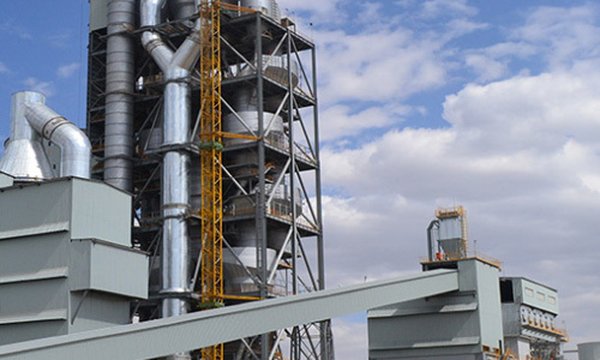
Best Insulation for Kilns and Furnaces -- Backup and Hot-Face Materials
Kilns and furnaces operate at the highest temperatures of any industrial equipment -- cement rotary kilns reach flame temperatures of 2000 deg C, glass melters hold molten glass at 1570 to 1600 deg C, and steel reheat furnaces run at 1200 to 1300 deg C. Insulating these vessels requires an understanding that goes beyond material selection: the insulation is not a single layer but a carefully designed system of hot-face refractory and backup insulation layers, each graded for a specific temperature window. This guide explains the layer structure, the materials used at each position, and the design principles that determine whether a lining lasts one campaign or ten.
1. Hot-Face vs. Backup: Two Distinct Functions
Verified Manufacturing Data: Mingfa Insulation — established 1991, joint venture with China Building Materials Academy. 108,000 m² facility, ~20 national patents, ISO 9001:2015 certified. Annual capacity: 50,000+ tonnes. Full company profile
In any kiln or furnace lining, the insulation system serves two separate functions performed by two different material types:
Standards: [1] ASTM C533-17(2023); [2] EN 14306:2015+A1:2018; [3] GB/T 10699. Certifications
Hot-Face (Refractory) Layer
- Directly exposed to flame, molten material, or hot gas
- Must resist chemical attack, slag penetration, abrasion, and thermal shock
- Provides structural integrity to the lining
- Materials: dense firebrick, high-alumina brick, basic brick (magnesia, dolomite), silicon carbide, castable refractory
- Service temperature: up to 1800 deg C depending on material
- Thermal conductivity is relatively high -- insulation is not its job
Backup (Insulation) Layer
- Positioned behind the hot-face refractory, never exposed to flame or process
- Primary function is thermal resistance -- reducing heat flow to the shell
- Must maintain dimensional stability at the temperature it sees (not the process temperature)
- Materials: insulating fire brick, calcium silicate board, ceramic fiber blanket, lightweight castable
- Service temperature: 200 to 1100 deg C depending on position in the lining stack
- Low thermal conductivity is the key performance metric
Confusing these two roles is a common specification error. Placing a backup insulation material in a hot-face position will cause rapid failure. Similarly, specifying a dense refractory where an insulating layer belongs wastes energy and adds unnecessary weight.
2. Typical Kiln Wall Cross-Section
A modern industrial kiln or furnace wall is a multi-layer composite. The diagram below (described in text) shows the typical arrangement from the hot process side to the cold shell:
Kiln Wall Cross-Section (Hot Face to Cold Shell)
| Layer | Material | Typical Thickness | Temperature at Inner Face | Temperature at Outer Face | Function |
|---|---|---|---|---|---|
| Layer 1: Working Lining | Dense firebrick, high-alumina brick, or basic brick | 150 - 250 mm | Process temp (up to 2000 deg C) | 800 - 1200 deg C | Chemical and mechanical resistance |
| Layer 2: Intermediate Insulation | Insulating fire brick (IFB) or ceramic fiber board | 50 - 115 mm | 800 - 1200 deg C | 300 - 600 deg C | Primary thermal barrier |
| Layer 3: Backup Insulation | Calcium silicate board or ceramic fiber blanket | 25 - 75 mm | 300 - 600 deg C | 80 - 150 deg C | Final thermal break |
| Steel Shell | Carbon steel (typically ASTM A36 or equivalent) | 20 - 50 mm | 80 - 150 deg C | Ambient (target below 80 deg C) | Structural containment |
In practice, not every kiln uses four distinct layers. Some designs combine the intermediate and backup insulation into one thicker layer, particularly when using IFB at lower grades. Others add a safety layer of ceramic fiber paper (2 to 6 mm) between layers to absorb differential expansion. The principles, however, remain the same: grade the temperature down layer by layer, using materials that are chemically and mechanically stable in their operating temperature window.
3. Material Options by Position
3.1 Insulating Fire Brick (IFB) -- Intermediate Layer
IFB is the most common material for the intermediate insulation layer directly behind the hot-face refractory. It is available in temperature grades from 1100 deg C (Grade 23) to 1650 deg C (Grade 32), making it one of the few insulation materials that can survive the temperatures immediately behind a dense refractory hot-face.
Key properties: Density 500 to 1300 kg/m3. Compressive strength 1.5 to 8 MPa. Thermal conductivity 0.20 to 0.45 W/m.K at 400 deg C mean.
When to use: When the temperature at the back of the hot-face refractory exceeds approximately 1000 deg C, IFB is the only practical insulation choice for the intermediate layer. It also provides structural support for the hot-face brickwork, which is important in tall furnace walls and arches.
Limitations: Higher thermal conductivity than board insulation (two to four times higher than calcium silicate). More expensive per unit of thermal resistance. Heavier, requiring stronger steel support structures. Higher thermal mass means longer heat-up times.
3.2 Calcium Silicate Board -- Backup Layer
Calcium silicate board is the standard backup insulation for cement rotary kilns and many other industrial furnaces. Its role is the final thermal barrier: by the time the temperature reaches this layer, the hot-face refractory and IFB (or ceramic fiber) have already dropped it to a level where calcium silicate performs efficiently and with excellent dimensional stability.
Key properties: Density 170 to 270 kg/m3 (standard backup grades). Compressive strength above 0.5 MPa. Thermal conductivity 0.06 to 0.10 W/m.K across the 200 to 600 deg C range. Maximum continuous service temperature 1000 to 1100 deg C.
Why it is the standard for cement kiln backup insulation: Two factors make calcium silicate the preferred backup insulation for rotary kilns. First, its compressive strength is sufficient to support the weight of the refractory lining without the creep that affects fibrous materials. Second, its thermal conductivity at the 200 to 500 deg C range (where it operates in a properly designed lining) is among the lowest of any rigid insulation material. This combination of compressive strength and low thermal conductivity at its operating temperature is what makes calcium silicate the default choice for cement kiln shell backup.
Important restriction: Calcium silicate board must never be placed directly behind the hot-face refractory unless a thermal calculation confirms that the temperature at the hot side of the calcium silicate will not exceed its rated limit. In cement kilns, a layer of IFB or dense refractory brick always separates the calcium silicate from the kiln interior. Calcium silicate exposed to temperatures above its rating will undergo excessive shrinkage, crack, and lose structural integrity.
3.3 Ceramic Fiber Blanket / Module -- Hot Face or Intermediate
Ceramic fiber is unique among insulation materials in that it can serve as either the hot-face layer (in the form of modules) or as intermediate insulation (in blanket form). Its maximum service temperature of 1260 to 1600 deg C exceeds that of any other insulation material discussed in this guide.
Key properties: Density 64 to 320 kg/m3. Very low thermal conductivity. Excellent thermal shock resistance. Low heat storage.
When to use as hot-face: In furnaces where the process temperature fluctuates rapidly (batch kilns, forge furnaces, heat treatment furnaces), ceramic fiber modules provide a hot-face lining that heats up and cools down quickly because of the low thermal mass. This saves fuel in cyclic operation.
When to use as intermediate: Ceramic fiber blanket (typically 12.5 to 50 mm thick) can replace an IFB intermediate layer in applications below approximately 1200 deg C, providing comparable thermal performance at lower weight and cost.
Limitations: Refractory ceramic fiber (RCF) is classified as a Category 1B carcinogen in the EU. Some jurisdictions require permitting, controlled handling, and special waste disposal. Alkaline-earth silicate (AES) wools are available as a lower-health-risk alternative but have a temperature ceiling of approximately 1200 deg C. Ceramic fiber has negligible compressive strength and cannot support structural loads. It is susceptible to erosion at gas velocities above approximately 15 m/s.
3.4 Lightweight Castable Refractory
Lightweight castable refractories (also known as insulating castables) occupy a middle ground between dense refractory and board insulation. They are mixed with water and cast or gunned into place, forming a monolithic lining.
Key properties: Density 800 to 1600 kg/m3. Service temperature 1000 to 1600 deg C depending on aggregate type. Thermal conductivity intermediate between dense refractory and board insulation.
When to use: Complex geometries where brickwork or board installation would be excessively labor-intensive. Furnace doors, burner blocks, flue openings, and shapes that are difficult to form with standard brick sizes. Also used for patching and repair where removing the entire lining would be impractical.
Limitations: Requires a curing and dry-out schedule before the furnace can be brought to operating temperature. Trapped moisture that boils during dry-out can cause explosive spalling if the heat-up is too rapid. Lower insulating value than board or fiber materials of equivalent thickness.
4. Multi-Layer Design Principles
4.1 Temperature Gradient Calculation
The temperature at each layer interface must be calculated, not estimated. For a steady-state condition, the temperature drop across each layer is proportional to its thermal resistance. In a three-layer wall (hot-face brick + IFB + calcium silicate board), the temperatures at the two interfaces are:
T_interface_1 = T_hot - (T_hot - T_ambient) x (R_brick / R_total)
T_interface_2 = T_interface_1 - (T_hot - T_ambient) x (R_IFB / R_total)
Where R = thickness / thermal conductivity for each layer, and R_total is the sum of all layers plus the surface film resistance. The calculated T_interface_2 must be below the maximum service temperature of the backup insulation material, with a safety margin of at least 50 deg C.
4.2 Mechanical Compatibility
The layers in a kiln lining expand at different rates. A dense firebrick with a coefficient of thermal expansion of 5 to 7 x 10 power minus 6 per deg C will expand more than a calcium silicate board (2 to 4 x 10 power minus 6 per deg C) at the same temperature. If they are rigidly bonded together, this differential expansion creates shear stress that can crack or delaminate the lining.
Standard practice addresses this in three ways:
- Slip planes: A thin ceramic fiber paper (2 to 6 mm) placed between dissimilar material layers acts as a slip plane, absorbing differential movement.
- Expansion joints: Gaps are left at regular intervals (typically every 1.5 to 3 meters, but calculated based on the specific materials and temperature) and filled with compressible ceramic fiber to allow expansion without buckling.
- Independent anchoring: Each layer is anchored to the steel shell independently, rather than bonding layers to each other. This allows each layer to move freely.
4.3 Staggered Joints
When installing board or brick insulation in multiple layers, joints must be staggered between layers. A joint that runs straight through from hot face to cold shell is a thermal bridge -- a direct path for heat to bypass the insulation. In double-layer calcium silicate installations for rotary kilns, boards in the second layer are offset by at least 150 mm from the joints in the first layer.
5. Application Summary by Kiln Type
| Kiln / Furnace Type | Process Temperature | Typical Hot-Face | Intermediate | Backup |
|---|---|---|---|---|
| Cement rotary kiln (sintering zone) | 1400 - 1500 deg C (gas); 2000 deg C (flame) | Magnesia-spinel or dolomite brick (200 - 250 mm) | Grade 23 or 26 IFB (65 - 115 mm) | Calcium silicate board 50 mm |
| Cement preheater / calciner | 800 - 1100 deg C | High-alumina brick or castable | IFB or calcium silicate board (if back-face temp below 1000 deg C) | Calcium silicate board 40 - 50 mm |
| Glass melting furnace (crown) | 1570 - 1600 deg C | Silica brick (250 - 350 mm) | IFB or calcium silicate board | Calcium silicate board 40 - 50 mm |
| Steel reheat furnace | 1200 - 1300 deg C | High-alumina brick or castable (230 - 300 mm) | IFB 115 mm or ceramic fiber blanket | Calcium silicate board or mineral wool blanket 50 mm |
| Tunnel kiln (ceramics) | 1000 - 1400 deg C | Firebrick or IFB (hot-face grade) | IFB 65 - 115 mm | Calcium silicate board 25 - 50 mm |
| Aluminium melting furnace | 700 - 900 deg C | High-alumina or silicon carbide brick/castable (200 mm) | Calcium silicate board (may serve as both intermediate and backup below 1000 deg C) | Mineral wool blanket (optional) |
| Lime kiln | 900 - 1200 deg C | Firebrick or high-alumina brick (200 mm) | IFB 65 mm | Calcium silicate board 50 mm |
Need Help with Kiln Lining Design?
Our technical team can review your kiln or furnace lining specification, calculate interface temperatures, and recommend the appropriate backup insulation thickness. We do not charge for technical consultations or thermal calculations.
Contact Technical Team