Factory Audit Guide: Visiting Calcium Silicate Manufacturing Facilities in China
Published: 2026-07-07 | By Mingfa Technical Team
In industrial insulation procurement, the factory floor reveals what a specification sheet cannot. Two calcium silicate manufacturers may quote identical ASTM C533 Type II boards at similar densities and the same temperature rating. Their data sheets may list comparable thermal conductivity curves and compressive strength values. One of those boards will perform for 12 years without issue. The other will show excessive shrinkage within 18 months, crack under thermal cycling, or arrive at site with thickness variation that doubles installation waste. The difference traces back to raw material quality, autoclave curing discipline, drying control, and quality system rigor -- all of which become visible during an on-site factory audit. This guide covers how to plan, conduct, and follow up on a visit to a calcium silicate production facility in China, using Mingfa's plant in Laizhou, Shandong as the example.
1. Why Factory Audits Matter for Insulation Procurement
A calcium silicate factory audit verifies what specification sheets cannot: whether the silica source is pure, the autoclave curing cycle is complete, and in-process quality checks are systematic rather than cosmetic. The chemical nature of calcium silicate production—lime and silica reacting under high-pressure steam to form xonotlite crystals—means that impurities, incomplete curing, or rushed drying produce boards that may pass initial lab tests but fail prematurely in service through swelling, cracking, or excessive shrinkage.
Calcium silicate manufacturing is a chemical process, not simply a forming and drying operation. Lime (CaO) and silica (SiO2) react in an autoclave at 190 to 220 degrees Celsius under saturated steam pressure to form xonotlite crystals. If the silica source contains impurities -- clay minerals, iron oxide beyond trace levels, unreacted quartz -- the reaction does not go to completion. The result is a board that looks and measures like proper calcium silicate but contains residual free lime that reacts with atmospheric moisture over time, causing swelling and strength loss. A buyer who visits the factory can observe the raw material receiving area, see the silica storage conditions, and ask about XRF (X-ray fluorescence) testing of incoming raw materials. A buyer who does not visit can only trust that the supplier's documentation reflects reality.
Key Takeaways
- A factory audit is the single most effective procurement risk-reduction step: Two suppliers quoting identical ASTM C533 Type II boards can deliver dramatically different quality—the difference traces to raw material purity, autoclave curing discipline, and QC rigor visible only on-site.
- Inspect five areas: raw materials, slurry batching, autoclaves, drying, finishing: Key red flags include uncovered silica storage, shovel-loaded batching without weigh records, autoclaves without visible temperature/pressure logs, and finished goods stored directly on the floor without pallets.
- Verify production capacity by counting autoclaves and cycles: A 2–3 m diameter × 20–30 m autoclave cures 5–15 m³ per cycle. Multiply by cycles/day and operating days to validate the manufacturer's stated annual capacity claims.
- Mingfa welcomes factory audits at its 108,000 m² Laizhou facility: Two hours from Qingdao International Airport, with English-speaking export team, visible CNC machining area, and batch traceability from raw material to finished pallet. Invitation letters provided for visa applications.
Author's Note: This article draws on Mingfa's 34+ years of calcium silicate R&D and manufacturing experience in Laizhou, Shandong. Technical claims are validated against our in-house laboratory data and published industry standards. About our engineering team
Production capacity claims are another area where factory visits reveal facts. A manufacturer claiming 50,000 cubic meters per year capacity but operating four autoclaves on a single shift pattern is producing closer to 15,000 cubic meters. The visual evidence is unambiguous: autoclave count, autoclave diameter and length, number of curing cycles per day, and board racking density inside each autoclave all translate directly into production rate. A buyer who relies on a stated capacity number without verifying the assets behind it may contract with a supplier who cannot meet delivery schedules if order volumes approach the claimed -- rather than actual -- capacity. Quality control rigor is the third dimension that separates suppliers who invest in systems from those who rely on final inspection. A factory floor that is clean, organized, and operating to documented procedures with visible in-process quality checks is producing systematically. A factory where quality control consists of a single technician measuring a few finished boards at the end of each shift is relying on luck. Between these two extremes, the factory visit provides evidence that desk-based document review cannot.
2. Pre-Visit Preparation: Documents, Travel, and Logistics
Before booking flights, request the following documents from the supplier: current ISO 9001 certificate (check the scope of certification includes calcium silicate manufacturing, not just trading), third-party test reports for the specific product grade and density you intend to purchase (dated within 12 months, from a CNAS-accredited laboratory), a company business license (yingye zhizhao, verify that the legal representative and registered address match the company you are dealing with), and a client reference list covering at least three projects with similar application conditions to yours. These documents give you baseline data to verify during the audit. If the test report claims thermal conductivity of 0.078 W/m·K at 200 degrees Celsius mean temperature for a 230 kg/m³ board, you can observe whether the factory's testing laboratory has the guarded hot plate apparatus needed to produce that measurement, and whether the lab technicians can explain the test procedure.
For travel to Laizhou, Shandong, the nearest international airport is Qingdao LIUTING International Airport (TAO), approximately 130 kilometers from Mingfa's factory. The drive takes roughly two hours by car on expressway G15. An alternative is Yantai PENGLAI International Airport (YNT), about 100 kilometers away with a similar driving time. Qingdao offers more international flight options, including direct connections from Seoul, Tokyo, Dubai, and major European hubs. Chinese visa requirements: most visitors need a business visa (M visa) or a tourist visa (L visa) arranged before travel. The supplier should provide an invitation letter on company letterhead stating the purpose of the visit, the dates, and the inviting company's registered details. Processing time for the visa application varies by country; allow two to four weeks. Hotel recommendations near Mingfa's factory include the Laizhou Hotel (莱州宾馆) in the city center, approximately 20 minutes from the plant, and several mid-range options in the Laizhou development zone closer to the factory. The supplier's export team can assist with hotel bookings and airport transfer arrangements.
Prepare an audit checklist before traveling. The checklist should cover each area of the factory you intend to inspect, the specific evidence you expect to see in each area, and questions for the personnel working there. Share the checklist with the supplier in advance -- not as a compliance requirement, but so they can arrange access to relevant areas and ensure that the right technical staff members are available. An audit that surprises the supplier is less productive than one where both sides come prepared. Schedule at minimum one full day on site. A half-day visit allows time for a presentation and a quick walk-through but not for meaningful observation of production processes, which operate on cycles longer than a few hours.
3. What to Inspect on the Production Floor
Raw material storage and handling is the logical starting point because it determines everything downstream. At a calcium silicate plant, the key raw materials are silica (typically quartz sand or diatomaceous earth), lime (quicklime or hydrated lime), cellulose fiber, and water. Silica should be stored under cover, protected from moisture, and segregated by source or grade. Contamination of the silica pile with soil, vegetation, or other minerals introduces unpredictable chemistry into the autoclave reaction. A factory that stores silica outdoors in uncovered piles exposed to rain and wind will have variable silica moisture content and variable impurity levels from one batch to the next -- and consequently variable board quality. Lime should be stored in sealed silos or covered bins; quicklime reacts exothermically with atmospheric moisture, degrading to calcium hydroxide and losing reactivity. Ask to see the incoming raw material inspection records. A good factory tests each silica delivery for particle size distribution (by sieving or laser diffraction) and chemical composition (by XRF). A factory that accepts raw materials based on the supplier's certificate alone, without in-house verification, has no independent control over its process inputs.
The slurry mixing and batching area reveals how precisely the formulation is controlled. In a systematic operation, each batch of slurry is weighed on calibrated scales, with the weights recorded in a batch log. Water-to-solids ratio is controlled by metered water addition, not by eye. A mixing area where workers add materials by the shovel-load rather than by weight is producing board with density and composition that vary from batch to batch. The mixed slurry should have a consistent appearance and viscosity; check whether the slurry density is measured and recorded for each batch with a mud balance or similar instrument. The autoclave area is the heart of the process. The autoclaves should display operational temperature and pressure on visible gauges or digital readouts. Ask to see the autoclave cycle logs: they should show a heat-up ramp rate, a hold period at the target temperature and pressure (typically 190 to 220 degrees Celsius and 1.2 to 2.3 MPa saturated steam), and a controlled cool-down. A cycle that is too short or held at too low a temperature produces incomplete xonotlite formation and a board with excess free lime and silica, which will shrink and lose strength in service. The number of autoclaves, their internal dimensions, and the cycle time determine the factory's real production capacity. A typical industrial autoclave for calcium silicate is 2 to 3 meters in diameter and 20 to 30 meters in length, curing 5 to 15 cubic meters of board per cycle. Multiply by cycles per day and operating days per year to verify the manufacturer's stated annual capacity.
The drying kiln and finishing area complete the picture. After autoclave curing, the boards contain 40 to 60 percent moisture by weight and must be dried to below 5 percent moisture content before packaging. The drying kiln should operate at a controlled temperature profile, typically 120 to 180 degrees Celsius, with boards passing through on a continuous conveyor or stacked on cars that cycle through the kiln. Temperature should be monitored and recorded at multiple points along the kiln length; hot spots can cause localized board cracking. After drying, boards are sanded to final thickness and checked for dimensional accuracy. In a well-organized finishing area, each board passes through a thickness gauge and is marked with its actual dimensions. Out-of-tolerance boards are segregated for rework or rejection before they reach the packaging station. The finished goods warehouse should have boards stacked flat on pallets, protected from moisture, and identified with batch numbers and production dates. Board stacks that are leaning, stored directly on the floor without pallets, or exposed to open doors and weather indicate a lack of care that may extend to the product itself.
4. Quality Control Systems to Verify
Quality control in calcium silicate manufacturing operates at three levels: incoming raw materials, in-process monitoring, and finished product testing. All three should be visible during a factory visit. The incoming QC laboratory should have equipment for silica purity analysis. X-ray fluorescence (XRF) is the standard method; it identifies and quantifies the elemental composition of silica sand, detecting impurities such as alumina, iron oxide, and alkalis that affect the hydrothermal reaction. If the factory does not own an XRF instrument, ask how they verify silica quality. Some smaller factories rely on external laboratories, which is acceptable provided the testing frequency is adequate and the results are received before the material is used in production.
In-process quality control checks should be documented at each production stage. After slurry mixing, density should be measured and compared to a target range. After forming, green board weight and thickness should be checked to confirm that the forming pressure and mold fill are consistent. After autoclave curing, a sample of boards from each autoclave cycle should be checked for completeness of reaction: a simple phenolphthalein indicator test on a freshly broken surface detects free lime (pink coloration indicates incomplete reaction). After drying, the dried board weight should be checked to confirm that moisture content is below the specification limit, typically 5 percent. These in-process checks produce data that, if trended over time, reveal process drift before it produces out-of-specification product. Ask to see the in-process QC records from the previous week's production. The records should be handwritten on check sheets or entered into a digital system, with operator signatures or identifiers, timestamps, and notations of any corrective actions taken when values fell outside limits.
The finished product testing laboratory should contain a guarded hot plate apparatus for thermal conductivity measurement (per ISO 8302 or ASTM C177), a universal testing machine for compressive and flexural strength (per ASTM C165 and C203), a high-temperature furnace for linear shrinkage testing (per ASTM C356), and calibrated calipers and scales for dimensional and density checks. The equipment should display current calibration stickers from an accredited metrology laboratory. Calibration certificates should be available for review. Batch traceability is the system that links each finished board or pallet back through the production records to the raw material deliveries. A batch number on a pallet label should be traceable to the specific autoclave cycle, the specific slurry batch, and the specific silica and lime deliveries used in that batch. If a quality issue is discovered after shipment, batch traceability allows the manufacturer to identify the scope of the affected material and determine whether it is limited to one autoclave cycle or extends across multiple production days. Without traceability, every board in a shipment is suspect if any board fails.
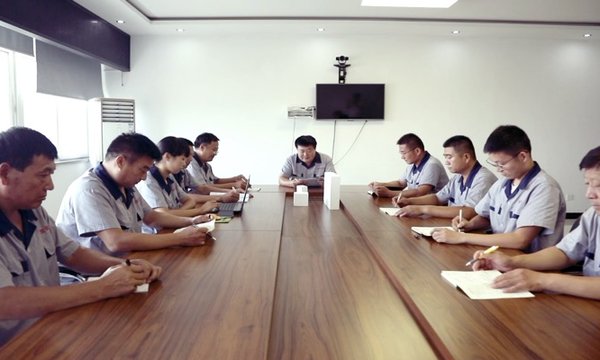
5. Meeting the Technical Team
The people who design formulations, operate the autoclaves, and run the quality control laboratory are the most valuable source of information during a factory visit. A structured technical meeting should cover at minimum these topics. Custom formulation capability: can the factory adjust the formulation to meet specific requirements, such as lower thermal conductivity (via infrared masking agents as used in Mingfa's 30H series), higher strength (via increased density or modified fiber reinforcement), or enhanced chemical resistance? A manufacturer with in-house formulation capability has chemists or materials engineers on staff who can discuss the trade-offs involved in formulation changes. A manufacturer without this capability can only produce what they already make, and any request for a variant formulation will be met with a refusal or, worse, an agreement that they cannot actually fulfill.
CNC machining for complex shapes is a capability that separates basic calcium silicate producers from those serving high-value industrial applications. Curved pipe sections, tapered boards for conical vessels, blocks with cut-outs for penetrations, and boards machined to tight plus or minus 1 millimeter tolerances all require CNC equipment and programming capability. During the factory visit, observe whether CNC machines are in operation, whether they are producing complex geometries (not just straight cuts), and whether the machined product is being dimensionally inspected. If the factory claims CNC capability but the CNC area is idle or producing only simple rectangles, ask for evidence of recent complex-shape orders. Packaging optimization is a technical topic with direct cost impact. Different container sizes (20-foot, 40-foot, 40-foot high cube) and different board dimensions produce different palletization efficiencies. A technical team that can advise on packaging configuration to maximize container utilization -- potentially saving 5 to 15 percent on freight cost per cubic meter of product -- adds value beyond the product price. Ask for examples of packaging configurations used for previous shipments to your region.
Language considerations for technical discussions: Mingfa's export team includes staff with working technical English capability, and many of the senior engineers can discuss process parameters and quality data in English. For detailed discussions involving chemical formulations or test standards, it is helpful to bring key documents in both English and Chinese, and to confirm that technical terms are understood in the same way by both sides. Ongoing quality communication after the first order is a topic to establish during the visit. Agree on who will be the technical point of contact for your company, what format quality data will be shared (typically mill test certificates per EN 10204 3.1 with each shipment), and what response time is committed for technical questions (Mingfa's standard is 24 hours for technical inquiries during business days). Documenting these agreements in the visit report creates a reference for future orders.
6. Post-Visit: Evaluation and Next Steps
Within a week of the factory visit, prepare a written evaluation summarizing what was observed against each item on the pre-visit checklist. The evaluation should be factual and evidence-based: "Observed four autoclaves, each 2.4 meters diameter by 26 meters length, operating two cycles per day, estimated cured output 10 cubic meters per cycle, consistent with stated annual capacity." Include photographs taken during the visit (confirm with the supplier whether photography is permitted in all areas; some factories restrict photography of proprietary equipment). Note any discrepancies between documented claims and observed reality. A discrepancy is not necessarily disqualifying -- a supplier who acknowledges and explains a gap in their systems and has a credible plan to address it may be more trustworthy than one who claims perfection -- but undocumented discrepancies signal a supplier who may not be transparent about other aspects of their operation.
The typical timeline from factory visit to first commercial shipment proceeds through these stages. Sample order: after the visit, if the audit results are satisfactory, place a sample order of 50 to 200 square meters. The sample lot should be manufactured as a normal production run, not as a special laboratory batch. Test the sample material on receipt, comparing results against the supplier's test reports and your own pre-established acceptance criteria. Trial production run: if the sample passes, negotiate the commercial order terms and place a trial production order, typically one container load (20-foot container: roughly 1200 square meters of 50-millimeter board at 240 kg/m³). This order tests the supplier's ability to produce at commercial scale with consistent quality. Long-term quality agreement: after two or three successful commercial shipments, establish a long-term supply agreement that includes the quality benchmarks agreed during the sample evaluation phase, the lead time commitment, and the procedure for handling any non-conforming material. The entire process from initial factory visit to established commercial supply relationship typically spans three to six months, depending on the complexity of the product specification and the length of sample testing and shipment cycles.
A thorough factory audit reduces procurement risk substantially. The cost of the visit -- travel, accommodation, and time -- is a fraction of the cost of receiving a container of insulation that does not perform to specification. For industrial buyers committing to projects where insulation failure means production downtime, a factory visit is not an optional step in the procurement process. It is the single most effective way to verify that the supplier's capabilities match their claims.
| Stage | Activity | Typical Duration |
|---|---|---|
| Pre-visit preparation | Document review, visa application, travel booking | 2 - 4 weeks |
| On-site audit | Production floor tour, QC lab review, technical meeting | 1 - 2 days |
| Post-visit evaluation | Audit report, sample order decision | 1 week |
| Sample order | Manufacture, ship, test 50 - 200 m² | 4 - 6 weeks |
| Trial production order | First container-load commercial order | 4 - 6 weeks |
| Long-term supply agreement | Quality benchmarks, lead time, commercial terms | After 2 - 3 successful shipments |
References: [1] ASTM C533-17(2023); [2] EN 14306:2015+A1:2018; [3] Mingfa QC Laboratory test data. Full certification details
Further Reading
- Mingfa Factory Overview , Production Facility and Quality Systems
- Calcium Silicate Product Range , Industrial Insulation Boards
- Procurement Guide , How to Specify and Purchase Industrial Calcium Silicate Insulation
- Importing from China , A Guide to Importing Calcium Silicate Insulation
- Contact Mingfa , Plan Your Visit or Request Information
Planning a factory visit to Laizhou?
Contact Mingfa to arrange an audit at your convenience. We provide invitation letters for visa applications, hotel recommendations, and airport transfer arrangements from Qingdao or Yantai.
Send an InquiryAbout the Author — Mingfa Insulation Technical Team
Mingfa Insulation's technical content is authored by our in-house engineering team with 34+ years of specialized experience in calcium silicate R&D and manufacturing. Established in 1991 as a joint venture with the China Building Materials Academy, our team holds ~20 national patents. For technical inquiries, contact lzmfgr@163.com.