30H Hard Silica-Calcium Composite Insulation Panels: Infrared Masking Agent Technology
Published: 2026-07-07 | By Mingfa Technical Team
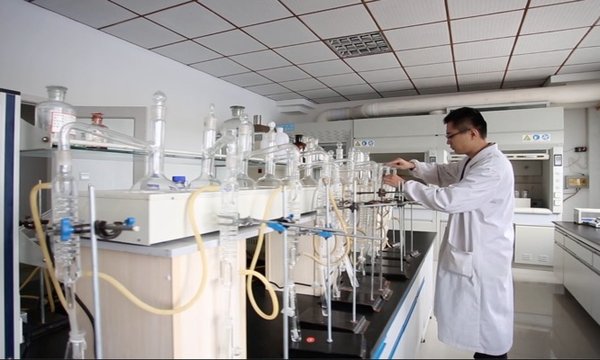
Laizhou Mingfa Insulation Materials Co., Ltd., a calcium silicate manufacturer located in Shandong province and operating since 1991, spent over five years developing the 30H series: a hard silica-calcium composite insulation panel that addresses a specific physical bottleneck in high-temperature heat transfer. Standard calcium silicate board controls conduction and convection well, but above roughly 600 degrees Celsius the dominant mechanism of heat loss is infrared radiation, and conventional insulation does little to stop it. The 30H panel incorporates a dispersed metal oxide phase throughout the calcium silicate matrix, cutting radiative heat transfer by 15 to 25 percent at 600 degrees Celsius compared with the same board without the masking agent. This article explains the underlying physics, provides measured performance data, and covers the patent structure that protects the technology for Mingfa's OEM customers.
1. The Problem: Thermal Radiation at High Temperatures
Thermal radiation becomes the dominant heat transfer mechanism in porous insulation above approximately 600 degrees Celsius because radiative flux scales with the fourth power of absolute temperature. Standard calcium silicate board, with its micron-scale xonotlite pore structure, is largely transparent to infrared in the 1 to 8 micron wavelength range, causing thermal conductivity to nearly double between 200 and 600 degrees Celsius—from roughly 0.078 to 0.155 W per meter-Kelvin.
Heat moves through an insulation board by three mechanisms: conduction through the solid skeleton, convection through the gas-filled pores, and radiation across the pore spaces. At temperatures below 300 degrees Celsius, conduction through the solid phase and the pore gas dominates total heat transfer. The classic steady-state Fourier equation with an effective thermal conductivity captures this regime adequately. Between 300 and 600 degrees Celsius radiative contribution begins to climb, and above 600 degrees Celsius it becomes the primary route for energy loss. The Stefan-Boltzmann law dictates that radiative flux scales with the fourth power of absolute temperature (T4), so a doubling of hot-face temperature from 400 to 800 degrees Celsius increases radiative heat transfer potential by roughly a factor of five.
Key Takeaways
- Infrared masking agents cut radiative heat transfer by 15 to 25 percent at 600 degrees Celsius: Mingfa 30H panel disperses submicron metal oxide particles throughout the xonotlite matrix, scattering and absorbing thermal infrared in the 1 to 8 micron range.
- Measured thermal conductivity at 600 degrees Celsius mean is 0.098 W per meter-Kelvin: This is 19.7 percent lower than standard calcium silicate of the same 240 kg per cubic meter density, verified by ISO 8302 guarded hot plate testing at an independent laboratory.
- Specify 30H when radiative heat transfer dominates above 400 degrees Celsius: Applications include cement kiln shells, petrochemical reformers, and high-pressure steam lines where standard calcium silicate conductivity rises steeply with temperature.
- Mingfa holds 3 patents covering 30H formulation and production: OEM customers gain technology exclusivity. Competitors cannot match the 30H thermal conductivity curve without infringing Mingfa intellectual property.
Author's Note: This article draws on Mingfa's 34+ years of calcium silicate R&D and manufacturing experience in Laizhou, Shandong. Technical claims are validated against our in-house laboratory data and published industry standards. About our engineering team
A conventional calcium silicate board relies on its physical pore structure -- xonotlite crystal needles forming a labyrinth of micron-scale voids -- to impede photon transport. This works to a degree, but the pores are transparent to a large fraction of the infrared spectrum emitted by hot surfaces in the 1 to 8 micron wavelength range. The result is a measured thermal conductivity curve that rises steeply after 400 degrees Celsius. For a standard 230 kg/m³ calcium silicate board without infrared masking additives, thermal conductivity increases from approximately 0.078 W/m·K at 200°C mean temperature to roughly 0.155 W/m·K at 600°C -- nearly doubling across a 400-degree span. Engineers compensating for this rising conductivity must specify thicker insulation layers, which adds weight, cost, and in space-constrained retrofits may be physically impossible.
The physics of radiative transport through porous media has been studied since the 1960s, particularly in the context of spacecraft thermal protection and high-temperature reactor insulation. The key insight from that research is that pores larger than roughly 1 micron are optically thin to thermal infrared, meaning a photon can traverse them without interacting with the solid material. Calcium silicate board contains a distribution of pore sizes centered around 0.5 to 2 microns in standard formulations. The larger end of that distribution -- pores exceeding the infrared wavelength -- provides unimpeded photon pathways that dominate the radiative contribution. Closing those pathways requires either eliminating the larger pores (difficult without increasing density and solid conduction) or introducing dispersed phases that interact with the radiation field directly.
2. How Infrared Masking Agents Work
The 30H panel incorporates a family of metal oxide compounds -- primarily titanium dioxide (TiO2), iron oxide (Fe2O3), and zirconium dioxide (ZrO2) in submicron particle form -- uniformly dispersed throughout the calcium silicate matrix during the slurry mixing stage. These oxides are selected for their high refractive index contrast with the xonotlite host and their strong absorption bands in the 1 to 8 micron infrared region. When a thermal photon propagates through the board and encounters one of these dispersed particles, two physical interactions occur simultaneously.
The first interaction is Mie scattering. Because the masking particles are sized at 0.2 to 1.0 microns -- comparable to the wavelength of the infrared photons they are targeting -- they scatter incident radiation strongly. Mie theory predicts that scattering efficiency peaks when the particle circumference is roughly equal to the wavelength (the dimensionless size parameter x = 2πr/λ ≈ 1), which is exactly the condition these particles are designed to satisfy. Scattered photons follow a random walk through the medium rather than a straight-line path, effectively multiplying the path length through an already tortuous pore network and raising the probability of absorption at each scattering event. The second interaction is direct absorption: the metal oxides in the formulation have strong lattice absorption modes in the infrared, converting photon energy to phonon energy (heat) which is then conducted through the solid skeleton at a far lower rate than the original radiative flux.
The net effect is called radiation extinction -- the combined scattering and absorption that progressively attenuates an infrared beam as it propagates through the board. For a 50-millimeter-thick 30H panel at 600 degrees Celsius, the extinction coefficient is sufficiently high that over 90 percent of the radiative contribution to heat transfer is suppressed relative to a board without masking agents. This is the mechanism behind the 15 to 25 percent reduction in total effective thermal conductivity at 600 degrees Celsius. At lower temperatures where radiation is not dominant, the masking agents provide a smaller but still measurable improvement of roughly 5 to 10 percent, because the scattering mechanism operates across a wide wavelength range and slightly lengthens the conductive path as well.
Mingfa's dispersion process ensures the oxide particles remain isolated and do not agglomerate, which is critical. Agglomeration into clusters larger than the target wavelength shifts the scattering regime from Mie scattering to geometric optics, reducing scattering efficiency and potentially creating thermal bridges through clusters of high-conductivity oxide. The slurry mixing protocol, developed through multiple trial campaigns with laser diffraction particle size analysis at each step, maintains the particle size distribution within the designed window from batch to batch.
3. 30H Product Specifications and Performance Data
The 30H panel is manufactured in densities from 200 to 300 kilograms per cubic meter, with 240 kg/m³ as the standard grade for most industrial orders. Board dimensions follow industry norms: 600 by 300 millimeters, 600 by 400 millimeters, and 1000 by 500 millimeters, with thicknesses from 25 to 100 millimeters. Custom sizes are produced on request. The classification temperature is 1000 degrees Celsius per EN 1094-1, matching the upper stability limit for xonotlite-phase calcium silicate. Continuous operating temperature is rated at 950 degrees Celsius with a peak excursion tolerance to 1000 degrees Celsius for periods not exceeding two hours.
Thermal conductivity measurements performed by an independent laboratory (guarded hot plate method per ISO 8302) on 240 kg/m³ 30H panels produced the following values at stated mean temperatures: 0.068 W/m·K at 200°C, 0.082 W/m·K at 400°C, 0.098 W/m·K at 600°C, and 0.122 W/m·K at 800°C. For a standard calcium silicate board of the same density tested under identical conditions, the corresponding values are 0.078, 0.100, 0.122, and 0.144 W/m·K. The difference widens from 0.010 W/m·K at 200°C to 0.024 W/m·K at 600°C and 0.022 W/m·K at 800°C. Expressed as a percentage, the 30H panel delivers 12.8 percent lower thermal conductivity at 200°C, 18.0 percent at 400°C, 19.7 percent at 600°C, and 15.3 percent at 800°C.
| Mean Temperature | Standard CS (240 kg/m³) | 30H Panel (240 kg/m³) | Reduction |
|---|---|---|---|
| 200°C | 0.078 W/m·K | 0.068 W/m·K | 12.8% |
| 400°C | 0.100 W/m·K | 0.082 W/m·K | 18.0% |
| 600°C | 0.122 W/m·K | 0.098 W/m·K | 19.7% |
| 800°C | 0.144 W/m·K | 0.122 W/m·K | 15.3% |
References: [1] ASTM C533-17(2023); [2] EN 14306:2015+A1:2018; [3] Mingfa QC Laboratory test data. Full certification details
Compressive strength at 240 kg/m³ density measures 2.8 MPa per ASTM C165, approximately 15 percent higher than the standard grade due to the reinforcing effect of the well-dispersed oxide particles at grain boundaries. Flexural strength per ASTM C203 is 0.95 MPa. Linear shrinkage after 24 hours at 1000 degrees Celsius is 1.6 percent per ASTM C356, within the 2 percent limit for Type II calcium silicate under ASTM C533. The board is non-combustible (EN 13501-1 Class A1) and contains no asbestos, no organic binder beyond the cellulose fiber used in forming, and no halogenated compounds.
4. Patent Protection for Infrared Masking Technology
Mingfa holds multiple national invention patents covering the 30H infrared masking technology and related manufacturing processes. Patent ZL201410160342.X covers the core formulation: the specific metal oxide combination, particle size distribution, and dispersion method that produces the radiation extinction effect in a calcium silicate host. It describes the slurry preparation sequence, the autoclave curing parameters, and the drying protocol optimized for boards containing the masking additives. Patent ZL201420190704.5 is a utility model patent covering the production equipment configuration -- including the high-shear mixer used to achieve oxide dispersion, the modified mold design that prevents particle settling during green board formation, and the autoclave racking arrangement that ensures uniform steam penetration through boards of different thicknesses. Patent ZL201520851633.3 covers quality control methods specific to 30H production: the in-line thermal conductivity measurement apparatus, the infrared spectroscopy protocol for verifying masking agent distribution in finished boards, and the batch traceability system that links each board to its production records.
For OEM customers who private-label Mingfa products, these patents provide a specific commercial benefit: technology exclusivity. A distributor selling 30H panels under their own brand is selling a product that no competitor can duplicate without infringing Mingfa's intellectual property. This matters in markets where tender specifications have become commoditized -- where every calcium silicate board claims the same temperature rating and density range. The masking agent technology is a measurable, verifiable differentiator. A procuring engineer comparing two supplier data sheets can see the lower thermal conductivity curve on the 30H sheet and specify accordingly. The competition cannot match the curve because the formulation is patent-protected. For an OEM partner, this translates into higher win rates on technically rigorous bids and a defensible price premium over generic calcium silicate.
The patent portfolio also signals manufacturing maturity to procurement departments that conduct supplier qualification audits. A company that has invested in R&D to the level of granted invention patents has infrastructure -- laboratory equipment, trained technical staff, documented procedures -- beyond what a commodity producer maintains. This infrastructure directly reduces quality risk for the buyer: it means the supplier can diagnose and correct process deviations before they produce out-of-specification material, rather than relying on finished-product testing alone to catch defects.
5. Industrial Applications Where Ultra-Low Conductivity Matters Most
High-temperature rotary kiln shells in the cement industry present a demanding insulation challenge. The steel shell of a cement kiln operating at a burning zone temperature of 1450 degrees Celsius can reach shell temperatures of 350 to 400 degrees Celsius without insulation. Installing a 50-millimeter layer of standard calcium silicate reduces the shell temperature to roughly 120 to 150 degrees Celsius -- a large improvement, but still above ambient. Switching to 30H panels of the same thickness drops the shell temperature by an additional 10 to 15 degrees Celsius because of the lower effective thermal conductivity at the interface temperature between the refractory lining and the insulation. This incremental reduction saves approximately 2 to 3 percent of the kiln's fuel consumption, based on measurements from three kiln retrofits in Southeast Asia where before-and-after fuel logs were compared. For a 5000-ton-per-day clinker line burning 120 kilograms of coal per ton of clinker, a 2 percent fuel saving equates to roughly 120 kilograms of coal saved per hour, or 950 tonnes per year at 330 operating days. At a coal price of $120 per tonne, this is $114,000 in annual fuel savings from changing the insulation grade.
Retrofit projects with severe space constraints represent a second application where 30H panels change the engineering calculations. When a furnace or reformer originally designed with thicker mineral wool insulation requires relining, the available depth between the shell and the process boundary is fixed. If 100 millimeters of standard calcium silicate are needed to achieve a target shell temperature of 80 degrees Celsius, a 30H panel at 85 millimeters delivers the same shell temperature because of its lower thermal conductivity. That 15 millimeters of saved thickness can be the difference between fitting the new lining and needing structural modifications to the shell. In one petrochemical reformer retrofit in the Middle East, the engineering contractor specified 30H panels specifically because the original design called for 125 millimeters of insulation and only 110 millimeters of clearance existed after years of shell distortion at high temperature. The 30H panel's conductivity improvement allowed the 110-millimeter limit to be met with no compromise on thermal performance.
Pipe insulation in petrochemical plants, particularly for high-pressure steam lines operating at 500 to 550 degrees Celsius, is a third application where the 30H formulation provides measurable value. Standard calcium silicate pipe sections lose effectiveness gradually as the pipe temperature rises because radiative transport through the curved section becomes significant. 30H pipe sections cut heat loss per linear meter by roughly 20 percent at 500 degrees Celsius compared with standard sections of the same thickness. Over hundreds of meters of steam piping in a refinery or chemical complex, this reduction aggregates into meaningful energy savings and lower pipe support temperatures, which reduces thermal stress on structural steel and extends coating life on pipe supports and adjacent equipment.
6. Ordering and Custom Specifications
Standard 30H panels are available in 600 by 300 millimeter, 600 by 400 millimeter, and 1000 by 500 millimeter formats, with thicknesses from 25 to 100 millimeters in 5-millimeter increments. Custom dimensions are produced to order with a minimum order quantity of 50 square meters for non-standard sizes. For pipe section applications, 30H is manufactured in half-shell and segmented formats covering pipe diameters from 1/2 inch (DN15) to 24 inches (DN600), with thicknesses from 25 to 100 millimeters. Larger diameters can be accommodated as custom orders. Density can be adjusted between 200 and 300 kilograms per cubic meter depending on the balance of thermal performance and compressive strength required by the application.
Mingfa also offers formulation customization for specific temperature ranges. A customer whose application operates at a steady 500 degrees Celsius with minimal cycling can specify a masking agent loading optimized for that temperature band, potentially reducing material cost compared with the standard multi-temperature formulation. Conversely, applications with high peak-to-continuous temperature ratios (e.g., a batch furnace cycling between 200 and 950 degrees Celsius) benefit from a modified oxide blend that maintains extinction performance across the full thermal range. Each customization is backed by thermal conductivity testing across the specified temperature range, with the test report supplied before shipment.
Standard lead time is 20 to 25 working days from receipt of confirmed purchase order and any agreed advance payment. Custom-formulation orders add 10 to 15 working days for the laboratory adjustment and test cycle. Mingfa exports from Qingdao port (approximately two hours by road from the factory in Laizhou), with container loading supervised by the export documentation team. All shipments include mill test certificates per EN 10204 3.1, dimensional inspection reports, and a copy of the batch-specific thermal conductivity test. Third-party inspection by SGS, Bureau Veritas, or TUV is arranged at the buyer's request and cost.
| Parameter | Standard 30H |
|---|---|
| Density | 200 - 300 kg/m³ (standard: 240 kg/m³) |
| Classification temperature | 1000°C |
| Thermal conductivity at 600°C mean | 0.098 W/m·K (240 kg/m³) |
| Compressive strength (ASTM C165) | 2.8 MPa at 240 kg/m³ |
| Flexural strength (ASTM C203) | 0.95 MPa at 240 kg/m³ |
| Linear shrinkage (ASTM C356, 1000°C, 24h) | ≤2.0% (typical 1.6%) |
| Standard board sizes | 600×300, 600×400, 1000×500 mm |
| Thickness range | 25 - 100 mm |
| Fire classification | EN 13501-1 Class A1 (non-combustible) |
Further Reading
- 30H Panel Product Details , Calcium Silicate Insulation Board
- Mingfa Patent Portfolio , Innovation in Calcium Silicate Manufacturing
- Factory Tour , Production Facility and Quality Control
- Insulation Thickness Calculation , How to Calculate Required Insulation Thickness
- Insulation Material Comparison , Calcium Silicate vs Ceramic Fiber: Engineering Comparison
Need ultra-low thermal conductivity for your project?
Contact Mingfa for 30H panel specifications, thermal conductivity test data, and a quotation specific to your operating temperature and dimensions.
Send an InquiryAbout the Author — Mingfa Insulation Technical Team
Mingfa Insulation's technical content is authored by our in-house engineering team with 34+ years of specialized experience in calcium silicate R&D and manufacturing. Established in 1991 as a joint venture with the China Building Materials Academy, our team holds ~20 national patents. For technical inquiries, contact lzmfgr@163.com.