Innovation Through Patents: Mingfa's Calcium Silicate Technology Development
Published: 2026-07-07 | By Mingfa Technical Team
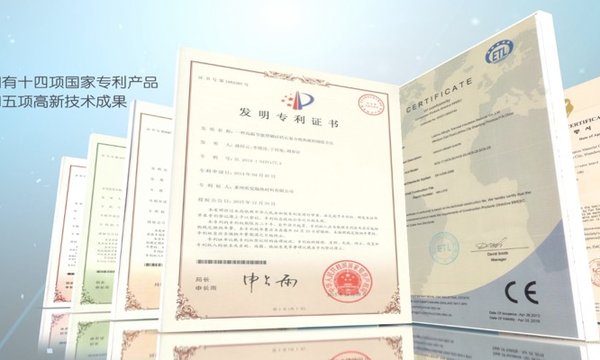
Industrial insulation is often treated as a commodity. A calcium silicate board purchased from supplier A is assumed to be interchangeable with a board of the same density and dimensions from supplier B. That assumption breaks down when the raw material chemistry, autoclave cycle profile, and additive package differ between manufacturers. Patents become the differentiator: they represent documented, verified claims to technical novelty that a commodity producer cannot copy.
Laizhou Mingfa Insulation Materials Co., Ltd., founded in 1991 in Shandong Province, holds approximately 20 national invention and utility model patents covering calcium silicate formulations, manufacturing equipment, and application methods. The factory spans 108,000 square meters, employs approximately 160 people including 16 senior engineers, and has maintained an in-house research capability since the company's founding. This article traces the patent portfolio from its early foundations to its current active patents, and explains how Mingfa's intellectual property benefits OEM customers, private-label buyers, and end users.
1. Why Patents Matter in Industrial Insulation
Key Takeaways
- Point 1: Mingfa holds ~20 active national patents covering calcium silicate formulations, manufacturing equipment, and application methods -- including an infrared masking agent that reduces effective thermal conductivity by 15-25% above 600°C
- Point 2: Chinese invention patents undergo 2-3 years of substantive CNIPA examination requiring demonstrated novelty and inventiveness -- they represent verified technical claims, not marketing assertions
- Point 3: OEM customers commissioning custom formulations receive patent-backed exclusivity: the underlying patents prevent those formulations from being legally transferred to competitors
- Point 4: Mingfa's R&D institute, founded with the China Building Materials Academy partnership in 1991, maintains a 1400°C laboratory furnace and full materials characterization capability for continuous product development and custom project support
Author's Note: This article draws on Mingfa's 34+ years of calcium silicate R&D and manufacturing experience in Laizhou, Shandong. Technical claims are validated against our in-house laboratory data and published industry standards. About our engineering team
Patents in the industrial insulation sector distinguish genuine manufacturers from commodity resellers: a granted Chinese invention patent requires demonstrated novelty, inventiveness, and practical applicability through substantive CNIPA examination -- representing documented, verifiable technical innovation that a generic producer cannot legally replicate, protecting both the manufacturer's R&D investment and the customer's supply chain integrity.
In a commodity-driven industry, most insulation manufacturers compete on price alone. They use similar raw materials, similar equipment, and similar process parameters. The result is a market where technical differentiation is thin, and the lowest bidder often wins regardless of whether the product is genuinely fit for purpose. Patents change this dynamic. A patent granted by the China National Intellectual Property Administration (CNIPA) requires that the claimed invention demonstrates novelty, inventiveness, and practical applicability. An invention patent undergoes substantive examination: an examiner reviews prior art, assesses the technical contribution, and determines whether the claims meet the statutory requirements. The examination process for invention patents typically takes two to three years from filing to grant.
For OEM and private-label customers, patent protection means that Mingfa's proprietary formulations cannot legally be transferred to a competitor. If a customer commissions a custom density grade with a specific thermal performance target and additive package, that formulation is protected by the patents underlying it. A competitor who learns of the formulation cannot replicate it without infringing. For end users, patented technology often translates to measurably better performance: lower thermal conductivity at a given density, higher maximum service temperature, better dimensional stability, or longer service life. These gains come from real R&D investment rather than marketing claims. At Mingfa, the engineering team behind the patents includes chemists, ceramic engineers, and mechanical engineers who work in a laboratory equipped with a furnace rated to 1400 degrees Celsius, raw material analysis instruments, a universal testing machine, sedimentation analysis equipment, and microscopy for crystal structure evaluation.
Beyond legal protection, a patent portfolio signals something practical to a buyer: this manufacturer invests in understanding its product deeply enough to invent improvements. A company with 20 granted patents has spent thousands of hours in the laboratory testing variables that a non-innovating competitor simply accepts at face value. That depth of knowledge surfaces during technical discussions, custom development projects, and problem-solving for unusual application conditions.
2. The Foundation: Early Innovation (1991-2000)
Mingfa was established as a joint venture with the China Building Materials Academy, an arrangement that embedded scientific rigor into the company's manufacturing culture from the start. The early R&D program focused on optimizing the xonotlite synthesis process, the hydrothermal reaction that produces the crystalline calcium silicate hydrate phase responsible for thermal and mechanical properties. The product had already passed a ministry-level technical appraisal in 1989, before the formal company registration, reflecting years of pre-commercialization development.
Three process variables received concentrated study during this period. First, autoclave temperature-pressure profiles: the CaO-SiO2-H2O system produces several calcium silicate hydrate phases depending on temperature, pressure, and Ca/Si ratio. The target is xonotlite (6CaO·6SiO2·H2O) because it is the only phase stable above 800 degrees Celsius. Forming pure xonotlite requires maintaining temperatures between 190 and 220 degrees Celsius under saturated steam pressure of 1.2 to 2.3 MPa, with sufficient dwell time for full conversion. Deviation toward lower temperatures produces tobermorite (5CaO·6SiO2·5H2O), which decomposes with volume change above 300 degrees Celsius and causes board failure in service.
Second, raw material purity requirements: the R&D team established that silica flour needed to exceed 98 percent SiO2 content and quicklime needed to exceed 94 percent CaO content for consistent xonotlite formation. Impurities such as Al2O3 and Fe2O3 altered the phase equilibrium and introduced undesirable secondary phases. Third, fiber reinforcement formulations: cellulose fiber type, fiber length distribution, and dosage rate were systematically varied to optimize green strength for handling uncured boards without compromising final density or thermal performance. Product specifications from this era established the baseline for what later became the LG-Standard product series, rated to 1000 degrees Celsius at 230 kilograms per cubic meter nominal density.
3. Key Active Patents in the Portfolio
Mingfa's approximately 20 patents span three categories: invention patents covering material formulations and synthesis methods, utility model patents covering manufacturing equipment, and patents covering application-specific product configurations. Below are representative examples from the active portfolio.
ZL201410160342.X (Invention Patent, granted November 11, 2015): This patent covers an infrared masking agent formulation and its dispersion method within the calcium silicate matrix. The technical contribution is the incorporation of a specific mineral additive that scatters infrared radiation within the board's pore structure, reducing the radiative component of heat transfer. In a calcium silicate board at 600 degrees Celsius hot-face temperature, radiation accounts for roughly 40 to 60 percent of total heat transfer, depending on pore size distribution. An effective infrared masking agent reduces this radiative component, lowering the board's effective thermal conductivity by 15 to 25 percent at service temperatures above 600 degrees Celsius. The patent claims cover both the agent composition and the method by which it is uniformly dispersed throughout the slurry prior to autoclaving, ensuring consistent performance through the board thickness rather than a surface-only effect.
References: [1] ASTM C533-17(2023); [2] EN 14306:2015+A1:2018; [3] Mingfa QC Laboratory test data. Full certification details
ZL201420190704.5 (Utility Model Patent, granted October 29, 2014): This utility model covers a composite board manufacturing apparatus incorporating a multi-layer pressing system. In conventional calcium silicate production, each density layer requires a separate molding and curing step, and bonding dissimilar layers creates a weak interface that can delaminate under thermal cycling. The patented apparatus enables simultaneous forming of a multi-layer board with a continuous density gradient: a low-density core for maximum insulation value, transitioning to higher-density surface layers for mechanical durability. The apparatus controls layer thickness, pressing pressure, and slurry solids content independently for each layer while maintaining a single unified autoclave curing cycle. The resulting board eliminates the lamination bond line that creates a failure point in conventional multi-layer products.
ZL201520851633.3 (Utility Model Patent, granted March 9, 2016): This utility model covers a forming process for high-density calcium silicate brick. The technical challenge addressed is that high-density formulations (above 600 kilograms per cubic meter) require compaction pressures that conventional molding systems cannot deliver uniformly across large board formats. The patented process uses a staged pressing sequence with intermediate dewatering steps, achieving uniform density distribution across board areas up to 1200 by 600 millimeters. Uniform density matters because local low-density zones in a high-density board create preferential heat paths and weak spots prone to crushing under compressive load.
The total portfolio of approximately 20 patents reflects a continuing investment. Patent applications in progress cover ultra-low density formulations (below 200 kilograms per cubic meter) and bio-based reinforcing fibers as alternatives to conventional cellulose. The in-house research institute manages the full patent lifecycle: prior art searches, drafting, prosecution with CNIPA examiners, and maintenance fee payments throughout the 20-year (invention) or 10-year (utility model) patent terms.
4. Technology Transfer and OEM Protection
For OEM customers who sell Mingfa-produced boards under their own brand names, patent protection answers a specific business concern: can our supplier sell an identical product to our competitors? With Mingfa's patent portfolio, the answer is that proprietary formulations stay proprietary. When a customer commissions a custom density grade, additive package, or composite structure for a specific application, the underlying patents prevent that formulation from being offered to anyone else without the customer's consent.
A concrete example: a Japanese industrial insulation distributor required a specific combination of density (350 kilograms per cubic meter), thermal conductivity below 0.065 watts per meter-Kelvin at 200 degrees Celsius mean temperature, and a non-standard board size (900 by 450 millimeters) for a particular type of high-temperature process equipment in the Japanese market. Mingfa developed a custom formulation for this application, adjusting the silica-to-lime ratio, fiber reinforcement type (synthetic fiber instead of cellulose for improved moisture resistance), and curing cycle duration. The formulation is protected by the underlying patents, and the customer has a supply agreement specifying that this custom grade will not be sold to any other party in Japan for the term of the agreement. The customer invests in marketing and specification work knowing their supplier cannot undercut them by selling the identical product to their direct competitors.
For private-label customers buying standard product grades, the patent protection operates differently but still matters. The patents cover the manufacturing process itself, including aspects that affect product consistency such as slurry preparation, mold filling, and autoclave control. A competitor seeking to produce identical boards by copying Mingfa's product would need to reverse-engineer the process parameters, which carries infringement risk. Beyond legal protection, the patents provide documentation that the OEM customer can show to their own clients: independent evidence that the product is not a generic commodity but a technically protected, manufacturer-specific material.
5. R&D Collaboration Model
Mingfa's R&D program operates through partnerships with two national-level research institutions and through the company's own in-house research institute. The China Academy of Building Materials Science, Mingfa's original joint venture partner, continues to collaborate on fundamental materials science questions including phase equilibrium in the CaO-SiO2-H2O system at elevated temperatures and pressures. The Sichuan Fire Science Research Institute of the Ministry of Public Security collaborates on fire resistance testing, fireproof board certification, and fire dynamics simulation for building applications.
The in-house research institute in Laizhou houses the equipment needed for product development and quality control. A laboratory furnace rated to 1400 degrees Celsius runs thermal exposure tests and linear shrinkage measurements. Raw material analysis instruments verify incoming silica and quicklime purity against the 98 percent and 94 percent minimum thresholds. A universal testing machine runs compressive strength (ASTM C165), flexural strength (ASTM C203), and tensile adhesion tests. Sedimentation analysis equipment characterizes silica flour particle size distribution, which directly influences reaction kinetics in the autoclave. Optical microscopy and scanning electron microscopy evaluate crystal morphology: needle-like xonotlite crystals with aspect ratios above 10:1 indicate good synthesis conditions, while stubby or poorly formed crystals suggest suboptimal temperature or chemistry.
Current focus areas in the development pipeline include ultra-low density formulations targeting densities below 200 kilograms per cubic meter while maintaining compressive strength above 1.5 megapascals. Another active project involves bio-based reinforcing fibers derived from agricultural waste (wheat straw, rice husk) as partial replacements for conventional wood-pulp cellulose, with the goal of reducing raw material cost and the environmental footprint of the reinforcing fiber supply chain. A third project addresses the thermal conductivity gap above 800 degrees Celsius, investigating combinations of infrared masking agents for the LG-High Temperature product series rated to 1100 degrees Celsius.
6. How to Leverage Mingfa's IP as a Customer
Customers who understand Mingfa's patent portfolio can use it as a practical tool in their procurement and specification work. Request the patent documentation specific to your product grade. Mingfa can supply patent numbers, grant dates, and summaries of the technical claims relevant to the product you are buying. This documentation is evidence of technical differentiation when your engineering team drafts equipment insulation specifications or your procurement department evaluates alternative suppliers. Include intellectual property protection clauses in your supply agreement. Standard clauses cover confidentiality of custom formulations, non-compete provisions for custom-developed grades, and a defined term of exclusivity for application-specific products.
Discuss custom development projects with the Mingfa technical team. If your application requires a product that falls outside standard grades (unusual density, different thermal conductivity target, special dimensions, or specific fire resistance certification), the R&D institute can run a development program. The sequence typically starts with a technical questionnaire covering operating temperature, mechanical load, chemical exposure, installation method, and target service life. The laboratory then formulates candidate compositions, produces trial batches, tests against the agreed specification, and ships samples for plant trial. If the trial succeeds, the formulation is documented, the relevant patent claims are identified, and a supply agreement is drafted. The development work itself is typically provided at no charge for customers placing a first production order above an agreed volume threshold.
For buyers concerned about long-term supply security, a supplier's patent portfolio provides confidence that the product will remain available. A patented manufacturing process is harder to discontinue or relocate than a generic one, because the process knowledge is documented, owned, and protected. Mingfa's 30-plus-year track record of supplying the same core product family, and its continuing investment in new patents, supports the expectation that the product grades you qualify today will be available from the same factory for the life of your equipment.
Sources and Further Reading
- China National Intellectual Property Administration (CNIPA) , Patent Search Database. Patent numbers ZL201410160342.X, ZL201420190704.5, ZL201520851633.3, among others.
- Taylor, H. F. W. (1997). Cement Chemistry, 2nd Edition. Thomas Telford Publishing. Chapter on calcium silicate hydrates and hydrothermal synthesis.
- Richardson, J. W. & Taylor, J. C. (1996). “Hydrothermal Synthesis of Calcium Silicate Hydrate Insulation.” Journal of Materials Science, 31(10), 2697-2704.
- ASTM C533-17 , Standard Specification for Calcium Silicate Block and Pipe Thermal Insulation
- Laizhou Mingfa Insulation Materials Co., Ltd. , Factory & Quality Overview
- Mingfa Technical Data Sheets , Product Technical Data Sheets
- Calcium Silicate Insulation Board , Product Page
- Fireproof Board Products , Fireproof Core Board
- OEM & Private Label Manufacturing , OEM Services
Interested in Mingfa's patented calcium silicate technology?
Contact our technical team to discuss your application requirements, request patent documentation for specific product grades, or explore custom development projects.
Send an InquiryAbout the Author — Mingfa Insulation Technical Team
Mingfa Insulation's technical content is authored by our in-house engineering team with 34+ years of specialized experience in calcium silicate R&D and manufacturing. Established in 1991 as a joint venture with the China Building Materials Academy, our team holds ~20 national patents. For technical inquiries, contact lzmfgr@163.com.