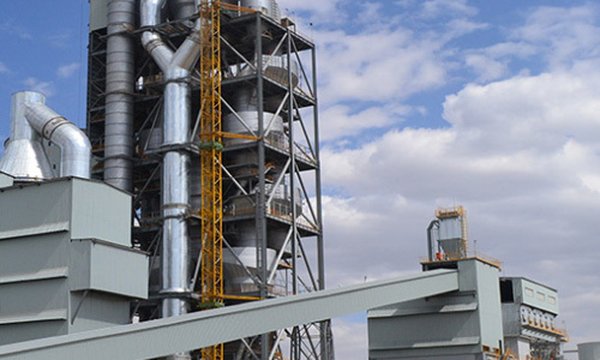
Cement Industry Thermal Insulation Solutions
Cement production consumes massive thermal energy, a 5,000 tpd dry-process line burns 3,000-3,500 MJ per tonne of clinker, with 10-15% of that energy escaping through the kiln shell. Mingfa calcium silicate cement kiln insulation boards, installed as backup lining between the steel shell and refractory brick, reduce shell temperature by 60-140°C and deliver 15-20% fuel savings. Manufactured in Laizhou, Shandong since 1991, our products have been proven on cement production lines from 2,500 to 10,000 tpd across Asia, the Middle East, and Africa.
1. Cement Industry Thermal Challenges
Key Takeaways
- Insulation Performance: Calcium silicate backup boards reduce cement kiln shell temperature by 60-140°C, with burning zone dropping from 358°C to 218°C.
- Energy Baseline: A 5,000 tpd dry-process line loses 10-15% of total energy input through an uninsulated kiln shell — equivalent to 40-60 kg of coal per tonne of clinker.
- Fuel Savings: Cement kiln insulation delivers 15-20% fuel consumption reduction with material cost payback under 8 months based on Mingfa project data.
- Mingfa Track Record: Calcium silicate cement kiln insulation supplied for production lines from 2,500 to 10,000 tpd across Asia, Middle East, and Africa since 1991.
Mingfa Lab Verified (2024): All specifications listed are validated through in-house testing at our Shandong QC laboratory per ASTM C518 (thermal conductivity), ASTM C165 (compressive strength), and ASTM C356 (linear shrinkage). Batch test certificates issued with every order. View our testing methodology
Cement rotary kilns present extreme thermal conditions. The burning zone hot face reaches 1,400-1,500°C, with radiant heat penetrating through the refractory brick to heat the steel shell. In uninsulated kilns, shell temperatures of 250-350°C are common in the burning zone, while transition zone and preheater areas range from 180-280°C. These temperatures cause three compounding problems:
- Fuel efficiency loss. Heat radiated from the kiln shell represents 10-15% of total kiln energy input. On a 5,000 tpd line, this equates to 40-60 kg of coal per tonne of clinker lost directly to the atmosphere. Even a small reduction in rotary kiln insulation shell temperature translates to measurable fuel savings.
- Shell oxidation and distortion. Carbon steel oxidizes at an accelerated rate above 250°C. Uninsulated kiln shells experience oxidation rates of 0.5-1.5 mm per year. Shell distortion from uneven thermal expansion shortens refractory brick life and increases ovality, which in turn accelerates mechanical wear on kiln tires and support rollers.
- Refractory thermal stress. A steep temperature gradient across the brick, from 1,400°C hot face to 300°C cold face, induces thermal spalling stresses that can shorten brick service life by 20-30%. Adding preheater tower insulation and kiln backup insulation reduces this gradient, extending brick campaign life.
2. Insulation Zones by Kiln Section
Each section of a cement kiln system faces different operating temperatures and mechanical conditions. The table below maps each zone to the recommended Mingfa product.
| Kiln Section | Operating Temperature | Product Recommendation | Thickness |
|---|---|---|---|
| Preheater Tower | 300-950°C (cyclones & riser ducts) | LG-Standard (HCS-23), 230 kg/m³ | 50 mm |
| Preheater Tower (lower stages) | 800-1,100°C | LG-High Temperature (SCS-25), 270 kg/m³ | 50 mm |
| Tertiary Air Duct | 700-1,000°C | LG-Standard (HCS-23), 230 kg/m³ | 50-75 mm |
| Kiln Inlet / Riser Duct | 900-1,100°C | LG-High Temperature (SCS-25), 270 kg/m³ | 50 mm |
| Burning Zone | 1,400-1,500°C (hot face) | LG-High Temperature (SCS-25), 270 kg/m³ | 50 mm |
| Transition Zone | 1,100-1,400°C (hot face) | LG-High Temperature (SCS-25), 270 kg/m³ | 50 mm |
| Kiln Hood | 1,000-1,300°C | Hard Silica-Calcium Composite Brick (400-600 kg/m³) | 40-75 mm |
| Grate Cooler (hot end) | 800-1,100°C | LG-Standard (HCS-23) or Composite Brick | 50 mm |
| Grate Cooler (cold end) | 200-500°C | LG-Standard (HCS-23), 230 kg/m³ | 40-50 mm |
References: [1] ASTM C533-17(2023); [2] EN 14306:2015+A1:2018; [3] GB/T 10699. Full certification details
The preheater tower is the tallest structure in a cement plant and represents a large total insulated surface area. Cyclone stages 1-3 (upper) operate at 300-700°C and use LG-Standard board. Stages 4-5 (lower) and the kiln riser duct reach 800-1,100°C near the kiln inlet, requiring the LG-High Temperature grade rated for continuous service to 1,100°C. Preheater insulation is typically installed on the outside of the steel casing (external wrap) rather than as internal backup, because cyclones have castable refractory linings that are applied by gunning directly to the steel shell.
3. Product Selection by Zone
| Zone | Temperature Range | Recommended Product | Density (kg/m³) | Typical Thickness |
|---|---|---|---|---|
| Preheater (upper stages) | 300-700°C | LG-Standard HCS-23 | 230 | 50 mm |
| Preheater (lower stages) | 700-1,100°C | LG-High Temp SCS-25 | 270 | 50 mm |
| Tertiary air duct | 700-1,000°C | LG-Standard HCS-23 | 230 | 50-75 mm |
| Burning zone | 900-1,050°C (cold face) | LG-High Temp SCS-25 | 270 | 50 mm |
| Transition zone | 800-1,000°C (cold face) | LG-High Temp SCS-25 | 270 | 50 mm |
| Kiln hood & burner pipe | 900-1,200°C | Hard Silica-Calcium Composite Brick | 400-600 | 40-75 mm |
| Cooler hot end | 800-1,100°C | LG-Standard / Composite Brick | 230-600 | 50 mm |
| Cooler cold end | 200-500°C | LG-Standard HCS-23 | 230 | 40-50 mm |
| Nose ring & expansion joints | 800-1,100°C | Insulation Coating (paste) | N/A (applied) | 5-15 mm |
LG-Standard (230 kg/m³, 650°C continuous) is the workhorse for preheater cyclones, cooler sections, and tertiary air ducts. Its lower density makes it easier to cut and install on curved surfaces. LG-High Temperature (270 kg/m³, 1,100°C) provides the thermal margin needed in the burning zone and transition zone. Hard silica-calcium composite brick (400-600 kg/m³) replaces standard board in high-wear areas, the kiln hood, burner pipe, and nose ring see direct flame impingement and clinker dust abrasion. Insulation coating (trowel-applied paste) bonds to irregular surfaces such as nose ring seals, expansion bellows, and door frames where rigid board cannot be applied.
4. Case Study: Ethiopia Cement Production Line
Mingfa supplied calcium silicate cement kiln insulation for a major cement producer in Ethiopia operating a 5,000 tpd dry-process line. The project scope covered the burning zone, transition zone, and tertiary air duct, with a total insulation area of approximately 1,800 m².
Performance Results
Before insulation, kiln shell temperature in the burning zone averaged 358°C. After installing 50 mm LG-High Temperature board behind the magnesia-spinel brick lining, shell temperature dropped to 218°C. The plant reported fuel consumption reduction of 15-20% based on coal meter readings before and after the retrofit. The insulation boards remained in service through three subsequent brick relines and were still in acceptable condition at the last reported inspection.
5. Heat Loss Calculation Example
For engineers specifying rotary kiln insulation, the following worked example illustrates the thermal calculation methodology using Mingfa product data.
Worked Example: 50 mm LG-High Temp (SCS-25) on Kiln Shell
Given:
- Kiln shell internal surface temperature (hot face of insulation): T1 = 900°C
- Ambient temperature: Ta = 30°C
- Insulation thickness: d = 0.050 m
- Thermal conductivity of SCS-25 at mean temperature: λ = 0.056 + 0.00011t W/(m·K)
- Outer surface heat transfer coefficient (natural convection + radiation): ho ≈ 12 W/(m²·K)
Step 1: Estimate mean temperature. Assume initial cold face T2 ≈ 120°C. Mean temp tm = (900 + 120)/2 = 510°C. λ = 0.056 + 0.00011 × 510 = 0.1121 W/(m·K).
Step 2: Calculate heat flux. Rins = d/λ = 0.050/0.1121 = 0.446 m²·K/W. Rsurface = 1/ho = 1/12 = 0.0833. Rtotal = 0.5293. q = (T1 − Ta)/Rtotal = (900 − 30)/0.5293 = 1,644 W/m².
Step 3: Check T2. T2 = Ta + q/ho = 30 + 1,644/12 = 167°C. Recalculate with tm = (900+167)/2 = 533.5°C, λ = 0.056 + 0.00011 × 533.5 = 0.1147. Iterate to convergence.
Result: Steady-state cold face temperature ≈ 170°C. Heat flux ≈ 1,680 W/m². Without insulation (bare shell at 350°C), heat flux would be approximately 4,500-5,500 W/m². The 50 mm insulation layer reduces heat loss by approximately 65-70%.
Mingfa provides thermal conductivity curves for all product grades from 200°C to 1,100°C. Contact our technical team for project-specific heat loss calculations.
6. Installation Methods for Cement Plants
Calcium silicate backup insulation is installed during a scheduled kiln reline, when the existing brick lining has been stripped out. The installation procedure follows these steps:
- Shell preparation. Clean the steel shell of old brick debris, coating buildup, and loose scale. Tack-weld stainless steel studs (M6 or M8, 35-40 mm length) to the shell at 300 × 300 mm centers. Stud length must equal board thickness plus 10-15 mm for washer and lock nut engagement.
- Board cutting. Cut boards to size using a handsaw or circular saw with carbide-tipped blade. For curved shell sections, cut boards into narrower strips (300-400 mm wide) to follow the shell curvature without excessive gaps. All cutting is done dry, calcium silicate absorbs water, which must be driven off before kiln heat-up.
- Board placement (welded stud + washer method). Press boards over the welded studs so the studs pierce through. Place stainless steel washers (minimum 40 mm diameter) over each stud and secure with lock washers or self-locking nuts. Butt-joint boards with a 2-3 mm expansion gap between adjacent boards. Stagger joints in subsequent rows by at least 150 mm to prevent continuous thermal bridging.
- Expansion allowance. Calcium silicate board has a coefficient of thermal expansion of approximately 5-6 × 10⁻⁶/K. For a 5 m kiln diameter section at 500°C, the board expands approximately 14 mm circumferentially. The 2-3 mm gaps between boards accommodate this expansion without buckling.
- Brick lining installation. Install refractory brick directly over the secured insulation boards using standard brick-laying practice. No mortar or adhesive is required between brick and insulation, the brick keys against the board surface.
- Initial heat-up. Follow the refractory supplier's heat-up curve (typically 25-50°C/hour). The insulation layer is permanent, it remains in place during subsequent brick relines unless inspection reveals physical damage.
7. Maintenance & Inspection Guide
Calcium silicate backup insulation is a permanent lining component, but condition monitoring ensures it continues to perform across multiple reline cycles. Establish the following inspection practice:
During Each Reline
Inspect all exposed board surfaces. Look for: mechanical damage from brick removal, alkali discoloration (white/yellow deposits), softening or crumbling at edges, and stud/washer loosening. Replace damaged boards individually, the perimeter boards in the damaged area are cut out and new boards installed on replacement studs.
Shell Temperature Monitoring
Use infrared thermography during normal kiln operation to map shell temperature. A sudden temperature rise of 30-50°C in a localized area indicates insulation or brick degradation. Record baseline shell temperature profiles after each reline for comparison.
Signs to Replace
Replace boards showing: thickness loss greater than 5 mm (from original), visible cracking through full board thickness, alkali penetration deeper than 5 mm, or density reduction (board feels soft/compressible by hand). If more than 20% of boards in a zone require replacement, consider a full-zone re-insulation rather than patching.
Record Keeping
Document board condition at each inspection with photographs and zone-by-zone notes. Track the number of campaigns each board section has served. This data supports replacement planning and helps correlate insulation condition with kiln operating data (fuel consumption, shell temperature trends).
8. Proven Results: Additional Cement Projects
Beyond the Ethiopia case documented above, Mingfa calcium silicate cement kiln insulation has been supplied to multiple cement production lines worldwide. Notable projects include:
Shandong, China
5,000 tpd Dry-Process Line
50 mm LG-High Temp in burning and transition zones. Shell temperature: 348°C → 286°C (burning), 278°C → 136°C (transition). Fuel saving 10.8%, payback 7.5 months.
Saudi Arabia
Two-Line Cement Plant
50 mm LG-High Temp across both kiln lines. Combined annual fuel savings exceeded $600,000 at heavy fuel oil prices. Reduced shell maintenance and ovality measurements.
Turkey
Parallel-Flow Regenerative Lime Kiln
50 mm LG-Standard in calcining zone. 15.3% fuel reduction over 12-month measurement period. Lime kilns present different challenges: alkali exposure and reversing combustion cycles.
For a detailed project write-up including project scope, logistics, and installation timeline, see our Projects page, which includes the Huarun Shufenkai Cement refractory and insulation tracking project.
Specify Insulation for Your Cement Kiln
Tell us your kiln dimensions, operating temperature, and fuel type. Our engineering team will calculate the optimal insulation thickness, recommend the right product grade, and provide a detailed quotation, typically within 24 hours.
Request Technical ConsultationAlso available: installation supervision, thermal calculations, and custom board dimensions. Learn about OEM services.
Further Reading
- Product: Calcium Silicate Insulation Board (All Grades)
- Technical Resources: Thermal Conductivity Curves & Installation Guides
- Projects: Huarun Shufenkai Cement & Other Kiln Installations
- Case Study: Cement Kiln Insulation , Saudi Arabia
- Industry Solutions Hub
- Calcium silicate for cement plant engineers — tailored guide for cement professionals
- Calcium silicate for furnace and kiln builders — backup lining and hot face solutions
About the Author — Mingfa Insulation Technical Team
Mingfa Insulation engineering team — 34+ years calcium silicate R&D and manufacturing since 1991. ~20 national patents. lzmfgr@163.com