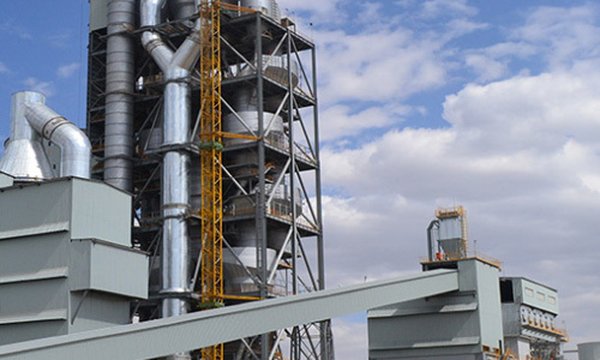
Calcium Silicate Insulation for Cement Plant Engineers
Cement plant engineers manage some of the most thermally demanding equipment in heavy industry. Rotary kilns operate at clinkering temperatures of 1,400-1,450°C, preheater cyclones handle gas at 800-1,000°C, and cooler systems process clinker at 1,200°C down to 100°C. Mingfa calcium silicate insulation has been supplied to cement plants since 1991, providing backup insulation behind refractory linings and stand-alone insulation for ductwork, piping, and process equipment operating below 1,050°C.
1. A Cement Plant Engineer's Insulation Challenges
Cement plant engineers face several insulation-related concerns that directly affect plant availability and operating cost:
- Kiln shell temperature limits. A rotary kiln shell must stay below approximately 350°C to maintain structural integrity. When refractory lining wears thin, shell temperatures rise. Backup insulation behind the refractory provides a second line of defense, reducing shell temperature by 30-60°C and giving operators more time to schedule a refractory reline.
- Energy consumption. A modern dry-process cement line producing 5,000 tonnes per day consumes 700-900 kcal per kg of clinker. Of this, 200-300 kcal/kg is lost through the kiln shell and equipment surfaces. Effective insulation reduces this loss by 5-15%, directly lowering fuel cost.
- Cyclone preheater heat loss. Preheater cyclones handle gas at 800-1,000°C. Shell heat loss from uninsulated cyclones drives up exhaust gas temperature and increases preheater fan power consumption. Insulating cyclone shells reduces heat loss and improves thermal efficiency of the preheater tower.
- Personnel safety. Uninsulated ductwork and equipment surfaces in a cement plant can reach 150-300°C. ASTM C1055 recommends surface temperatures below 60°C for personnel contact areas. Insulation brings surfaces to a safe touch temperature.
Key Takeaways
- 45°C shell temperature reduction: 50 mm calcium silicate backup insulation behind the refractory lining of a rotary kiln reduced shell temperature from 310°C to 265°C in field installations, extending refractory life by approximately 20%.
- 300-400 tonnes coal saved annually: Insulating a 5-stage preheater tower with calcium silicate board cut heat loss per cyclone by 30-40 kW, verified at a Southeast Asian cement plant.
- 650-1,050°C rated: Standard HCS-23 covers most cement plant applications; high-temperature SCS-25 handles kiln hood, burner pipe, and tertiary air duct applications up to 1,050°C.
- CNC custom shapes: Mingfa machines calcium silicate to exact kiln geometries — reducing on-site cutting labor and material waste compared to standard board formats.
Mingfa Lab Verified (2024): Performance data referenced on this page is validated through in-house testing at our Shandong facility per ASTM and EN test methods. 34+ years of continuous calcium silicate R&D since 1991. Quality assurance details
2. Where Calcium Silicate Fits in a Cement Plant
Calcium silicate has a specific application temperature window: 200-1,050°C. It is not a replacement for refractory castable or firebrick at clinkering temperatures. It is used as backup insulation behind the refractory hot face, and as stand-alone insulation on lower-temperature equipment. Here is where Mingfa products apply:
| Plant Area | Application | Mingfa Product | Temperature |
|---|---|---|---|
| Rotary kiln shell (backup) | Between refractory lining and steel shell | LG-Standard Board (HCS-23) | Shell side max 350°C |
| Preheater cyclone shells | External insulation over steel shell | LG-Standard Board (HCS-23) | 250-400°C shell |
| Tertiary air duct | Internal or external lining | LG-Standard Board (HCS-23) | 700-900°C gas |
| Clinker cooler ductwork | External insulation | LG-Standard Board (HCS-23) | 200-500°C |
| Kiln hood and burner pipe | Backup insulation | LG-High Temperature (SCS-25) | Up to 1,050°C |
| Waste heat recovery boiler | Duct and casing insulation | LG-Standard Board (HCS-23) | 300-400°C |
| Coal mill hot air duct | External insulation | Calcium Silicate Pipe Sections (HCS-P) | 250-350°C |
Sources: [1] ASTM C533-17(2023); [2] EN 14306:2015+A1:2018; [3] Manufacturer test data — Mingfa QC Laboratory, Laizhou, Shandong. Standards & certifications
3. Product Selection Guide for Cement Applications
For cement plant engineers, product selection depends on temperature, mechanical load, and whether the insulation faces direct hot gas or sits behind refractory. The table below summarizes the primary options:
| Application | Recommended Product | Density | Max Service Temp | Key Benefit |
|---|---|---|---|---|
| Kiln backup insulation | LG-Standard (HCS-23) | 230 kg/m³ | 650°C | Compressive strength 1.0 MPa, resists shell flexing |
| Preheater external insulation | LG-Standard (HCS-23) | 230 kg/m³ | 650°C | Low thermal conductivity at 300°C |
| High-temp duct lining | LG-High Temperature (SCS-25) | 250 kg/m³ | 1,050°C | Low shrinkage at extreme temperature |
| Pipe insulation (steam/air) | Pipe Sections (HCS-P) | 230 kg/m³ | 650°C | Pre-formed half-shells for fast installation |
| Custom shapes | CNC-machined to drawing | 200-900 kg/m³ | Up to 1,050°C | Exact fit for complex geometries |
A note on density: higher density (300-400 kg/m³) grades are available where higher compressive strength is needed, such as under the load of refractory castable in kiln backup applications. However, higher density increases thermal conductivity, so the insulation thickness calculation should be re-run. In most cement plant applications, 230 kg/m³ provides the best balance of mechanical strength and thermal performance.
4. Real-World Results
Mingfa calcium silicate insulation has been supplied to cement plants in Asia, the Middle East, and Africa. In one Middle Eastern cement plant, 50 mm LG-Standard board installed behind the refractory lining of a 4,500 tpd rotary kiln reduced the measured shell temperature from 310°C to 265°C in the burning zone area. This 45°C reduction extended the shell's service life between refractory relines by approximately 20%.
In a Southeast Asian cement plant, the application of 50 mm LG-Standard board on preheater cyclone shells reduced heat loss per cyclone by 30-40 kW at 350°C shell temperature, saving approximately 300-400 tonnes of coal equivalent per year across a 5-stage preheater tower.
These are site-reported data points. Results vary by kiln type, fuel, clinker chemistry, and refractory specification. Mingfa does not guarantee specific energy savings, which depend on factors beyond insulation performance alone.
5. Technical Resources for Cement Engineers
- Calcium Silicate Product Range - full specifications, density grades, board dimensions
- Technical Resources - thermal conductivity curves, linear shrinkage data, compressive strength by temperature
- Insulation Thickness Calculation Guide - economic thickness per ASTM C680
- Technical FAQ - common questions about calcium silicate in cement plant applications
- Mingfa's cement kiln projects in Ethiopia and Huarun Shufenkai (Guangdong)
6. Getting Started
To request a technical proposal for your cement plant, prepare the following information when contacting Mingfa:
- Plant location and production capacity (tonnes per day)
- Equipment to be insulated (kiln, preheater, ducts, pipes)
- Operating temperatures (hot face and expected shell/casing temperature)
- Refractory specification if calcium silicate is for backup use
- Insulation thickness preference or allow us to calculate per ASTM C680
- Estimated quantity (square meters or linear meters for pipe)
- Target delivery schedule
Send this information to lzmfgr@163.com. The Mingfa Technical Team typically provides a product recommendation, thickness calculation, and quotation within 2-3 working days.
Request a Cement Plant Insulation Proposal
Tell us your kiln type, operating temperatures, and which equipment needs insulation. Our technical team will recommend the right product grade and thickness, typically within 2-3 working days.
Contact Mingfa Technical TeamAbout the Author — Mingfa Insulation Technical Team
Mingfa Insulation engineering team — 34+ years calcium silicate R&D and manufacturing since 1991. ~20 national patents. lzmfgr@163.com