On-Site Technical Support, Installation Guidance, and Engineering Services for Calcium Silicate Insulation
Published: 2026-07-07 | By Mingfa Technical Team
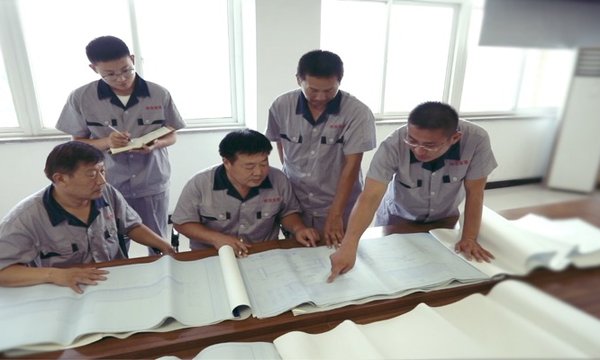
Buying the right insulation board is half the equation. The other half is installing it correctly. Even a board with the right density, temperature rating, and thermal conductivity will underperform if it arrives on site and the installation team has never worked with calcium silicate before. At Laizhou Mingfa Insulation Materials Co., Ltd., technical support is not an add-on service. It is built into the supply relationship from the first inquiry through the years after the product is installed.
Mingfa has been supplying calcium silicate insulation since 1991 from its 108,000-square-meter factory in Laizhou, Shandong. The company employs approximately 160 people including 16 senior engineers, several of whom travel to customer sites for installation supervision and training. This article covers the full support cycle: pre-sale engineering, on-site installation guidance, detailed installation methods, after-sales quality handling, and long-term technical partnership.
1. Beyond the Product: Why Technical Support Determines Insulation Performance
Key Takeaways
- Installation errors are the #1 failure mode: Gaps between improperly fitted boards can raise shell temperatures at joints by 50-150deg;C, bypassing the insulation entirely.
- Pre-sale engineering is free: Mingfa provides written technical recommendations, thermal calculations, and installation drawings within 2-3 working days before an order ships.
- Plan for installation support early: First-time calcium silicate installations benefit most from on-site supervision -- Mingfa dispatches engineers for 5-14 day site visits at no charge for engineering time.
- Batch-level traceability is standard at Mingfa: Every shipment includes batch-specific test certificates cross-referenced to production records maintained for 10 years, unlike suppliers offering only generic data sheets.
Author's Note: This article draws on Mingfa's 34+ years of calcium silicate R&D and manufacturing experience in Laizhou, Shandong. Technical claims are validated against our in-house laboratory data and published industry standards. About our engineering team
A correctly specified calcium silicate board will deliver its designed thermal performance in service, but only if the installation meets basic requirements that are easy to get wrong. The most common installation failures observed in the field fall into predictable categories. Insufficient fasteners cause boards to sag over time, opening gaps at the top of vertical panels under their own weight. Gaps between adjacent boards create thermal bridges where hot gas or radiant heat bypasses the insulation entirely, raising shell temperatures at joints by 50 to 150 degrees Celsius compared to the insulated areas. Incorrect cutting exposes the board's internal pore structure to moisture ingress if the edges are not sealed. Wrong adhesive selection leads to debonding when the operating temperature exceeds the adhesive's service limit.
These failure modes are well understood, yet they recur on project sites where the installation crew is experienced with other materials (mineral wool, ceramic fiber) but unfamiliar with calcium silicate's specific handling requirements. Calcium silicate is rigid and machinable, but it is also brittle in thin sections and can chip at edges if mishandled. It can be cut with carbide-tipped tools, but the dust requires standard particulate masks. It can be fixed with mechanical fasteners or adhesives, but the choice depends on the substrate, temperature, and whether the board is in a vertical or overhead orientation. A boiler repair crew accustomed to stuffing ceramic fiber blanket into irregular cavities will need different instructions for cutting and fitting rigid board.
Mingfa's support approach addresses this from two directions: engineering support before the material ships, so the right products reach the right locations, and on-site guidance during installation, so the products are installed to the documented standard. Both are provided at no additional charge for the engineering time. Customers cover travel and accommodation costs for on-site visits; the engineering hours are part of Mingfa's commitment to long-term supply relationships.
2. Pre-Sale Engineering Support
Before an order is placed, Mingfa engineers review the application data provided by the customer and make specific product recommendations. The review covers operating temperature (continuous and peak), mechanical load on the insulation (compressive, wind, vibration), chemical exposure (acid gases, alkalis, oils, steam), installation access (vertical wall, overhead ceiling, curved surface), and target shell temperature if specified. The operating temperature determines the product grade: LG-Standard up to 1000 degrees Celsius, LG-High Temperature up to 1100 degrees Celsius. The mechanical load determines the density: standard 230 kilograms per cubic meter for non-load-bearing applications, 400 to 600 kilograms per cubic meter for moderate loads, 800 to 850 kilograms per cubic meter for ladle and furnace backup lining.
Based on this review, Mingfa provides a written technical recommendation that includes the recommended product grade, density, and board thickness, calculated thermal performance including estimated shell temperature at the specified insulation thickness, installation drawings showing board layout, joint pattern, and fastener positions, and estimated material quantities and container load calculations. For a standard inquiry with complete operating data, the turnaround is typically two to three working days. For complex multi-zone projects (such as a cement kiln with different insulation requirements for the burning zone, transition zone, and preheater), the review takes four to five working days and may involve a video call with the customer's engineering team to clarify installation details. This pre-sale service is free of charge. The goal is to ensure the specification is correct before the order ships, because correcting an under-specified installation after construction is far more expensive than getting it right at the design stage.
For projects requiring thermal calculations beyond simple one-dimensional steady-state conduction, Mingfa can arrange for computational analysis through the in-house research institute, though this is typically reserved for large-scale projects where the insulation specification has major cost or safety implications. Examples include furnace crown insulation where hot spots could compromise structural steel, or petrochemical reactor insulation where a specified shell temperature must be maintained for personnel protection and process reasons.
3. On-Site Installation Guidance
Mingfa dispatches engineers to customer project sites worldwide for first-installation supervision, worker training, and quality inspection during installation. This service is most commonly used when a customer is installing calcium silicate for the first time, when the installation involves complex geometries or multi-layer systems, or when the project scale justifies a dedicated technical presence to prevent installation errors that would be costly to correct.
The on-site engineer's scope of work includes a pre-installation briefing with the site supervisor and installation crew, covering product handling, cutting methods, fixing systems, and joint treatment specific to the project. During installation, the engineer inspects completed sections daily: checking fastener spacing, board alignment, joint gaps, edge sealing, and overall conformance to the installation drawing. Any non-conformance is documented and discussed with the site supervisor on the same day, before the crew proceeds further. The engineer also trains the customer's workers directly: demonstrating cutting technique, showing how to drill and countersink for mechanical fasteners, and explaining how to mix and apply inorganic adhesive for gap filling. After the training period, the crew should be self-sufficient for the remainder of the installation.
An on-site visit typically lasts 5 to 14 days depending on project scale. A single kiln section or vessel might require 5 to 7 days for first-installation supervision of a crew of 4 to 6 workers. A full cement production line with multiple insulation zones might require 10 to 14 days. The customer covers international airfare, local transport, accommodation, and meals for the Mingfa engineer. The engineering time itself is provided at no additional charge. Mingfa engineers communicate in Chinese and English. For projects where neither language is spoken by the installation crew, the customer arranges a translator. The engineer prepares a site visit report within one week of returning to the factory, summarizing the installation quality, any deviations from the specification, and recommendations for future projects.
4. Installation Methods for Calcium Silicate Boards
The following installation guidance reflects Mingfa's standard practice based on three decades of site experience across cement, steel, glass, aluminum, and petrochemical applications. Local codes, project specifications, and equipment manufacturer requirements may supersede these general recommendations.
Cutting. Straight cuts are made with a carbide-tipped circular saw. Blade speed should be moderate; excessive speed generates heat that can glaze the cut surface and reduce bond strength if adhesive is used. Curved cuts and cut-outs are made with a jigsaw fitted with a carbide-grit blade. For boards 25 millimeters and thinner, a score-and-snap method works: score the board surface with a utility knife along a straightedge, then snap the board over the edge of a table. This produces a clean break without dust. All cutting should be done in a well-ventilated area with workers wearing N95 or FFP2 dust masks and safety glasses. The dust is a nuisance particulate, not a respirable fiber hazard, but standard dust control applies.
Fixing. For steel shell applications, M6 stainless steel (grade 304 or 316 depending on corrosion environment) studs are welded to the shell at 300-millimeter centers in both directions. Each board should have a minimum of four fixing points. Stainless steel washers with a diameter of 40 millimeters distribute the clamping load and prevent the fastener from pulling through the board. The washer should seat firmly against the board surface without crushing it; overtightening cracks the board around the fastener hole. For vertical walls, fixing at 300-millimeter centers prevents sagging over time. For overhead installations, reduce the spacing to 200-millimeter centers and use larger washers (50-millimeter diameter) because the board's full weight hangs from the fasteners. In applications where welding is not permitted (explosive atmosphere, existing equipment), high-temperature inorganic adhesive can be used as the primary fixing method for boards up to 10 kilograms per square meter, provided the substrate is clean, dry, and free of loose scale.
Joints. Butt joints between boards are acceptable for single-layer installations. Leave a 2 to 3-millimeter gap between boards to accommodate thermal expansion. The xonotlite crystal structure has a coefficient of thermal expansion of approximately 5 to 7 by 10 to the power of minus 6 per degree Celsius. A 600-millimeter board heated from 20 to 600 degrees Celsius expands by approximately 1.7 to 2.4 millimeters. If boards are butted tightly at ambient temperature, they will press against each other at operating temperature and can buckle or crack. For double-layer installations, stagger the joints between layers so that no joint in the inner layer aligns with a joint in the outer layer. This prevents a direct through-path for heat. High-temperature inorganic adhesive or calcium silicate-based joint compound fills gaps between boards. Do not use organic sealants (silicone, polyurethane) at temperatures above 200 degrees Celsius; they will decompose and leave open gaps.
Edge sealing. Exposed cut edges should be sealed to prevent moisture absorption. The board's internal pore structure readily wicks water, and moisture trapped in the board can flash to steam during initial heat-up, causing spalling. Aluminum foil tape with an acrylic adhesive rated to 120 degrees Celsius is suitable for edges that will not see temperatures above this limit. For edges exposed to higher temperatures, brush-apply an inorganic coating based on sodium silicate or colloidal silica, which forms a moisture barrier after drying and remains stable to 1000 degrees Celsius. Edge sealing is particularly important for outdoor installations, unheated storage areas, and applications where the equipment may be shut down for extended periods in humid conditions.
5. After-Sales Service and Quality Guarantee
Every Mingfa shipment includes batch-specific test certificates, not generic data sheets. A test certificate reports the actual test results for the production batch being shipped: bulk density per ASTM C303, compressive strength per ASTM C165, flexural strength per ASTM C203, linear shrinkage after reheating per ASTM C356, and thermal conductivity per ASTM C177 or C518. If a customer later raises a quality concern, the batch number on the product packaging is cross-referenced with the test certificate and the production records for that batch. Mingfa maintains production records for all batches going back 10 years, including raw material lot numbers, autoclave cycle data, drying curve, and QC test results. This traceability enables root cause analysis when a field issue is reported.
References: [1] ASTM C533-17(2023); [2] EN 14306:2015+A1:2018; [3] Mingfa QC Laboratory test data. Full certification details
The quality claims process is straightforward. The customer documents the issue with photographs showing the product condition, the batch number label, and the installation context. The documentation is sent to Mingfa's quality department, which acknowledges receipt within 24 hours and completes a technical review within 48 hours. The review determines whether the issue is a manufacturing defect (density out of specification, incomplete curing, dimensional error), a handling or installation issue (impact damage, incorrect fixing, moisture exposure), or an application issue (product used above its rated temperature, chemical attack from process fluids). For confirmed manufacturing defects, replacement product is dispatched from the next available production slot, typically within two weeks. For installation-related issues, Mingfa provides technical guidance on corrective action. The goal is resolution, not blame allocation, and most quality cases are resolved within two weeks of initial notification.
Mingfa's standard warranty covers the product's conformity to the agreed specification at the time of shipment. The warranty period is 12 months from shipment or the product's documented shelf life, whichever is longer. Calcium silicate board stored in dry conditions has an indefinite shelf life; the material does not degrade, oxidize, or lose strength at ambient temperature. Boards should be stored flat, protected from rain and ground moisture, with the original packaging intact until use.
6. Long-Term Technical Partnership
Mingfa's support does not end when the shipment arrives and the on-site engineer returns to China. Repeat customers receive ongoing technical partnership as part of the supply relationship. An annual technical review covers product performance feedback from the previous year's installations, any quality observations, upcoming projects that may require different product grades, and advance notice of formulation improvements. If Mingfa has developed an improved additive package that raises the maximum service temperature or reduces thermal conductivity for a given density, existing customers are informed before the change is publicly announced, giving them the option to transition to the new formulation at their preferred pace.
Emergency orders receive priority production scheduling. For customers with ongoing operations that depend on Mingfa insulation (for example, a steel plant that uses MF-HD high-density board as ladle backup lining and cannot operate without it), an emergency order of up to 500 square meters can typically be produced and dispatched within 7 to 10 working days, subject to raw material availability. This is not a contractual guarantee but a demonstrated practice based on the company's production flexibility. Mingfa also invites long-term customers to the Laizhou factory for new product demonstrations. Seeing a trial run of a new density grade or a fire resistance test in the company's laboratory furnace builds confidence that the product data sheet corresponds to real-world performance.
The underlying principle is that Mingfa aims for a technical partnership, not a transactional sale. A kiln operator who buys insulation once every five years during a scheduled reline is more valuable as a repeat customer who refines the specification each cycle than as a one-time buyer who treats insulation as a commodity. The engineering support, installation guidance, quality traceability, and long-term partnership elements are all designed to make that repeat purchase decision straightforward: the product performed, the support was reliable, and the supplier knows the application.
Sources and Further Reading
- ASTM C533-17 , Standard Specification for Calcium Silicate Block and Pipe Thermal Insulation
- ASTM C165 , Standard Test Method for Measuring Compressive Properties of Thermal Insulations
- ASTM C203 , Standard Test Methods for Breaking Load and Flexural Properties of Block-Type Thermal Insulation
- ASTM C356 , Standard Test Method for Linear Shrinkage of Preformed High-Temperature Thermal Insulation Subjected to Soaking Heat
- EN 13501-1:2018 , Fire classification of construction products and building elements
- Laizhou Mingfa Insulation Materials Co., Ltd. , Installation Guides
- Mingfa Technical Data Sheets , Product Technical Data Sheets
- Calcium Silicate Insulation Board , Product Page
- High-Temperature Insulation Panel , Product Page
- Factory & Quality , Factory Overview
- Contact Mingfa , Inquiry Form
Planning a calcium silicate insulation installation?
Contact Mingfa for pre-sale engineering support, installation drawings, or to arrange on-site technical guidance for your project.
Send an InquiryAbout the Author — Mingfa Insulation Technical Team
Mingfa Insulation's technical content is authored by our in-house engineering team with 34+ years of specialized experience in calcium silicate R&D and manufacturing. Established in 1991 as a joint venture with the China Building Materials Academy, our team holds ~20 national patents. For technical inquiries, contact lzmfgr@163.com.