Calcium Silicate Production and Manufacturing Plant Cost Overview
1. What Goes Into Calcium Silicate Manufacturing
Verified Manufacturing Data: Mingfa Insulation — established 1991, joint venture with China Building Materials Academy. 108,000 m² facility, ~20 national patents, ISO 9001:2015 certified. Annual capacity: 50,000+ tonnes. Full company profile
Manufacturing calcium silicate insulation involves capital-intensive equipment and precise process control. The production line centers on the autoclave, a large pressure vessel where the chemical reaction that forms the calcium silicate hydrate crystal structure takes place. This is the single most significant piece of equipment in the factory, and its capacity largely determines the plant's annual output. The gel reaction that precedes autoclaving takes place in large reaction kettles, where lime, silica, reinforcing fibers, and water are mixed under controlled temperature conditions. After the gel forms, the slurry is dewatered in filter presses and shaped into boards, pipe sections, or blocks. The shaped products are loaded onto kiln cars and moved into the autoclave for high-pressure steam curing. After autoclaving, the products pass through tunnel drying kilns and then through CNC sanding and finishing lines to achieve precise thickness and surface quality.
Standards: [1] ASTM C533-17(2023); [2] EN 14306:2015+A1:2018; [3] GB/T 10699. Certifications
A complete production line capable of producing industrial-grade calcium silicate insulation for export markets requires investment across all of these stages. The capital cost depends primarily on the autoclave capacity, the degree of automation, and whether the facility is built new or expanding an existing plant. Production lines range from small, semi-manual operations producing a few thousand cubic meters per year to large, automated facilities producing over one hundred thousand cubic meters annually.
2. Key Equipment for a Calcium Silicate Board Factory
| Equipment | Function | Why It Matters |
|---|---|---|
| Reaction kettles | Controlled gel reaction of lime, silica, fibers, and water at 80 to 230 degrees Celsius | Kettle size determines batch size. Multiple kettles allow continuous production. |
| Filter presses | Dewatering and shaping of the gel slurry into board or pipe form | Press tonnage affects final density and uniformity. 400-ton presses are typical for industrial-grade production. |
| Autoclaves | High-pressure steam curing at 190 to 220 degrees Celsius and 12 to 18 bar | The heart of the process. Autoclave diameter and length determine throughput per cycle. Multiple autoclaves allow staggered cycles for continuous output. |
| Tunnel drying kilns | Removing residual moisture after autoclaving at 150 to 200 degrees Celsius | Kiln length and temperature uniformity affect final moisture content and dimensional stability. |
| CNC finishing lines | Precision sanding to achieve thickness tolerance and surface finish | Determines final product appearance and dimensional accuracy. Tolerance of plus or minus 1 millimeter is standard for export-grade products. |
| Boilers and hot air furnaces | Generating steam for autoclaves and hot air for drying kilns | Energy efficiency of boilers directly impacts production cost. 2.5 megapascal boilers are typical for calcium silicate production. |
| QC laboratory | Testing density, compressive strength, thermal conductivity, and shrinkage | Required for export certification. ISO 17025 accredited labs add capability but also cost. |
3. Scale Economies in Calcium Silicate Production
Calcium silicate production exhibits significant economies of scale. A small workshop with one autoclave may produce a few thousand cubic meters per year. A mid-size factory with multiple autoclaves and integrated drying lines can produce tens of thousands of cubic meters. A large industrial plant with multiple production lines, automated material handling, and in-house quality control laboratory can exceed one hundred thousand cubic meters annually.
Larger plants achieve lower per-unit costs through several mechanisms. Raw materials can be purchased in bulk quantities at better prices. Fixed costs of quality control, management, and facility maintenance are distributed across more units of output. Larger autoclaves use energy more efficiently per unit of product because heat loss from the vessel surface relative to the volume of product inside decreases as autoclave size increases. Multiple autoclaves allow staggered cycles so that steam from a vessel completing its cycle can pre-heat another vessel starting its cycle, recovering energy that would otherwise be lost.
Shandong Province in China has become the global center for calcium silicate manufacturing partly because the concentration of manufacturers has created a complete supplier ecosystem. Raw material suppliers, equipment manufacturers, spare parts vendors, and testing laboratories are all located within the province, reducing logistics costs and lead times for everyone in the cluster. Qingdao port, one of the largest container ports in the world, provides direct shipping routes to global markets.
4. Raw Material Costs and Supply Chain
The cost structure of calcium silicate production splits roughly into four categories. Raw materials, primarily lime and silica with smaller quantities of reinforcing fibers, represent the largest share at approximately 35 to 45 percent of unit cost. Energy for the autoclave cycle and drying kilns accounts for 20 to 30 percent. Labor represents 10 to 15 percent in a mid-size automated facility. The remainder covers equipment depreciation, maintenance, quality control, packaging, and overhead.
Lime and silica are widely available industrial minerals. Lime is produced by calcining limestone, and Shandong has significant limestone deposits within the province. Silica is available as quartz sand, diatomaceous earth, or industrial byproducts such as silica fume. The proximity of raw material sources to the factory affects inbound logistics costs. This is one reason why Shandong, with its geological resources and industrial infrastructure, developed into the dominant production region.
5. Why Factory-Direct Purchasing Matters for Buyers
When you buy calcium silicate insulation directly from the manufacturer, you benefit from the production economics described above. The manufacturer's cost structure, production efficiency, and raw material purchasing power determine the base price. A trading company or distributor adds its own margin on top of the manufacturer's price, and may source from different factories for different orders, creating quality inconsistency between shipments. Factory-direct purchasing gives you a single point of accountability for quality, documentation, and after-sales support. It also gives you direct access to technical expertise. If you need to know whether a particular density grade will work for your application, you are talking to the engineers who designed and tested the product.
6. Mingfa's Production Infrastructure
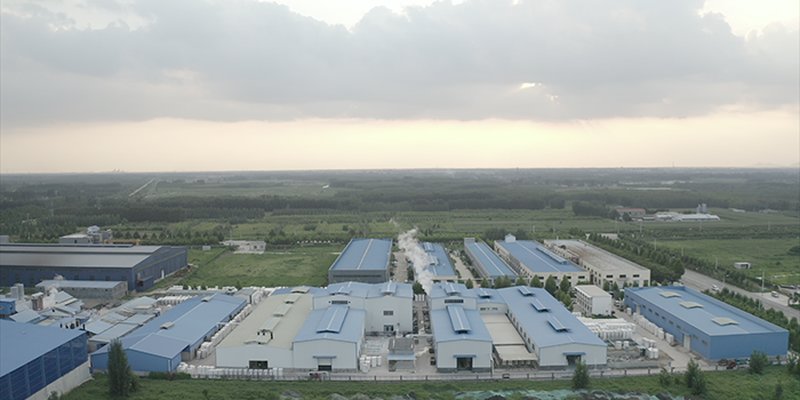
Mingfa operates two production bases with a combined area of 108,000 square meters and approximately 560 employees. The facility houses 15 reaction kettles of 30 cubic meters each, 8 vacuum filter presses rated at 400 tons, multiple 100-ton hydraulic presses, 9 tunnel drying kilns each 62 meters long, 3 autoclave boilers operating at 2.5 megapascals, and 9 hot air furnaces. CNC sanding and finishing lines achieve thickness tolerances of plus or minus 1 millimeter. The annual production capacity is 80,000 to 110,000 cubic meters.
Mingfa has manufactured calcium silicate insulation since 1991, holding 14 national patents and maintaining ISO 9001 certification. The combination of production scale, specialized equipment, and multi-decade experience produces consistent, export-grade calcium silicate insulation at competitive factory-direct pricing. For more detail on the manufacturing process and quality control systems, see the factory overview page and the guide to evaluating calcium silicate manufacturers.
Frequently Asked Questions
What is the largest cost in calcium silicate manufacturing?
Raw materials, primarily lime and silica, typically represent the largest single cost category at 35 to 45 percent of unit cost. Energy for autoclave curing is the second largest at 20 to 30 percent. The autoclave is also the largest single capital equipment cost in setting up a production line. Its capacity determines the plant's throughput, and its operating efficiency significantly affects unit production cost.
Why are Shandong factories more cost-competitive?
Shandong manufacturers benefit from the province's industrial cluster. Raw materials are available locally, reducing inbound logistics costs. A complete supplier ecosystem for equipment, spare parts, and testing services exists within the province. Qingdao port provides direct shipping access with competitive freight rates. The concentration of manufacturers also creates a deep labor pool of experienced production workers and engineers who understand calcium silicate manufacturing. These cluster advantages compound, making Shandong the most efficient location globally for calcium silicate production.
How much does it cost to set up a calcium silicate production line?
The capital cost of a calcium silicate production line depends on autoclave capacity, automation level, and whether the facility is a new build or an expansion. A complete turnkey production line for industrial-grade calcium silicate insulation represents a significant capital investment. The autoclave system is the largest single equipment cost. Production economics favor larger scale because fixed costs are distributed across more output, and larger autoclaves achieve better energy efficiency per unit of product. For detailed feasibility analysis, industry research firms such as IMARC Group and Syndicated Analytics offer comprehensive project reports covering capital expenditure, operating costs, and return on investment.